
Description
Balmar Centerfielder II 12/24V Alternator Combiner | Boat Supply Store
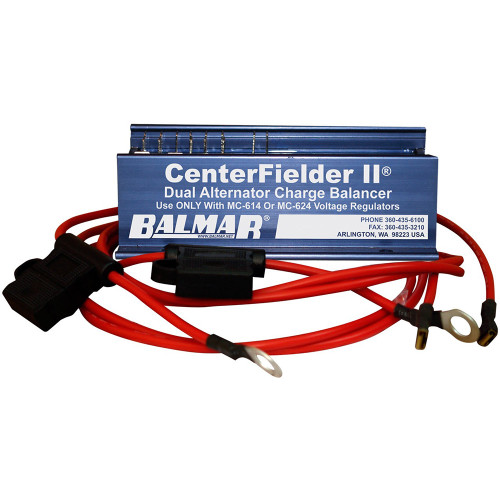
For boat owners navigating with twin-engine configurations, this system effectively consolidates charging output from two separate alternators into a single battery bank. It operates seamlessly within 12/24V marine electrical systems, ensuring optimal battery health and consistent power availability for critical onboard electronics. This device is specifically engineered to prevent overcharging and maintain balanced charge rates, which is crucial for extended voyages and offshore fishing expeditions in the Gulf of Mexico.
Key Features
- Manages charging input from two distinct engine alternators.
- Optimizes battery bank health by combining outputs.
- Ensures consistent power for onboard systems.
- Compatible with both 12V and 24V marine electrical systems.
- Includes necessary wiring for straightforward installation.
- Designed for reliability in demanding marine environments.
- Streamlines electrical setup for twin-engine vessels.
- Engineered by Balmar for superior performance.
Specifications
| Product Specifications | |
|---|---|
| Voltage Compatibility | 12/24V |
| Engine Input Configuration | 2 Engines |
| Battery Bank Output Configuration | 1 Bank |
| Includes Wiring | Yes |
Who This Is For
Boat owners equipped with twin-engine setups that require efficient charging of a singular battery bank. This unit is ideal for those seeking to maximize alternator performance and battery longevity without complex rewiring.
How It Compares
| Feature | Balmar Centerfielder II 12/24V Alternator Combiner | Blue Sea Systems ML |
|---|---|---|
| Primary Function | Manages charging from 2 engines to 1 battery bank | Automatically combines and isolates battery banks, Combines two battery banks |
| Voltage Compatibility | 12/24V | 12/24V DC, 12/24V |
| Engine Input Configuration | 2 Engines | 2 Inputs, 2 Inputs |
| Battery Bank Output Configuration | 1 Bank | 2 Banks, 2 Banks |
| Includes Wiring | Yes | Sold Separately, Sold Separately |
Common Concerns Answered
What is the return policy for the Balmar Centerfielder II?
Returns are not processed through the original point of purchase. For any issues or return requests, direct contact with the manufacturer is required.
Is installation of the Centerfielder II straightforward for a novice?
Installation can be complex for individuals unfamiliar with marine electrical systems. Professional installation is recommended to ensure proper integration and function.
What is the general customer sentiment regarding this product?
Customers express positive sentiment, particularly valuing its specialized functionality for twin-engine setups and overall reliability in managing charging processes.
Frequently Asked Questions
How does the Balmar Centerfielder II manage charging from two engines to one battery bank?
The Centerfielder II utilizes advanced circuitry to accept the charging outputs from two independent alternators and intelligently combine them into a single feed for one battery bank, ensuring balanced charging and preventing over-discharge or over-charge scenarios.
What is the voltage compatibility of the Balmar Centerfielder II?
The Balmar Centerfielder II is designed to be compatible with both 12V and 24V DC marine electrical systems.
Can the Balmar Centerfielder II be used with different battery types?
While the primary function is to manage alternator output, compatibility with specific battery chemistries (e.g., AGM, Gel, Lead-Acid) should be confirmed with the alternator's regulation system and potentially a charge controller for optimal performance. The Centerfielder II itself facilitates the combined charging input.
What is the warranty on the Balmar Centerfielder II?
Warranty information is typically detailed by the manufacturer. Please refer to the Balmar website or contact their support directly for specific warranty terms and duration for the CFII-12/24 model.
What are the wire gauge requirements for installing the Balmar Centerfielder II?
Recommended wire gauge is critical for safe and efficient operation. Consult the installation manual (URL provided) for specific wire gauge requirements based on cable runs and expected current loads to prevent voltage drop and overheating.