
-
On Sale!
-
On Sale!

Majestic Global USA
Majestic 19" 12V Smart LED TV WebOS, Mirror Cast & Bluetooth - North America Only
$599.99$503.99 -
On Sale!

-
On Sale!

-
On Sale!
-
On Sale!
-
On Sale!
-
On Sale!

-
On Sale!

-
On Sale!
-
On Sale!

-
On Sale!
-
On Sale!
-
On Sale!

-
On Sale!

-
On Sale!

Fusion
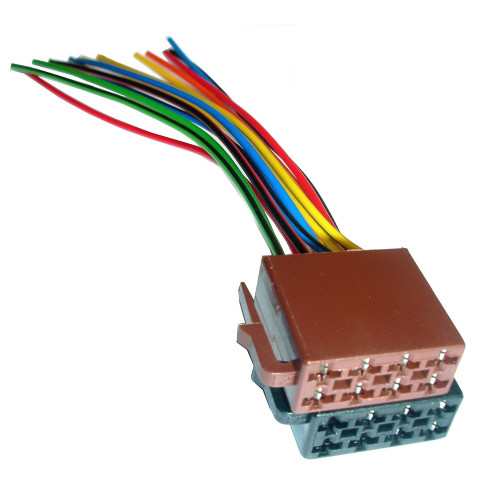
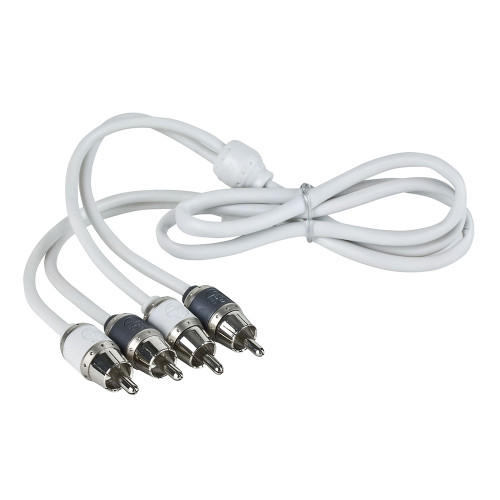
Fusion Apollo Multichannel Amplifier Speaker Connector w/High Power Mode Adapter
$24.99$21.99 -
On Sale!

-
On Sale!

-
On Sale!

-
On Sale!
Entertainment
Marine entertainment systems are audio, video, and satellite communication components engineered to withstand saltwater spray, UV exposure, temperature extremes, and vibration that would destroy standard consumer electronics within a season. Boat Supply Store stocks 253 marine-grade entertainment products from 21 manufacturers, ranging from basic stereo head units to integrated satellite television systems for offshore cruising.
Choosing the Right Entertainment for Your Vessel
The most common mistake boaters make is installing automotive or home audio equipment on boats because the initial cost looks attractive. Within months, corrosion penetrates circuit boards through unsealed connections, speakers fail as paper cones absorb moisture, and UV radiation degrades plastic housings until they crack and flood with water. Marine entertainment components use conformal coating on electronics, UV-stabilized polymers, sealed connector backs, and corrosion-resistant terminals specifically because the marine environment is exponentially more destructive than any land-based application.
Key Specifications to Evaluate
The IP rating determines how well a component resists water and dust intrusion. IPX6 means the unit survives powerful water jets from any direction—the minimum acceptable for helm-mounted stereos. IPX7 components survive temporary submersion to one meter, appropriate for speakers in open cockpits. Anything below IPX5 will fail in direct spray conditions. Look for units that specify IP ratings rather than vague "water resistant" marketing language.
Power handling in marine speakers requires different evaluation than home audio. A speaker rated for 100 watts RMS with 90dB sensitivity will produce adequate volume in an open cockpit where sound dissipates immediately. The same specification that sounds impressive in a car becomes inadequate on a 30-foot boat at cruising speed with wind and engine noise. Plan for 50-75 watts RMS per pair of speakers minimum for cockpit installations, and verify sensitivity ratings above 88dB for efficient performance without overtaxing your electrical system.
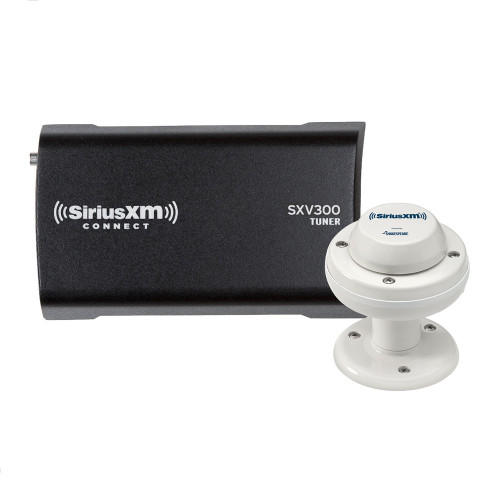
Integration with existing systems separates entry-level from premium entertainment components. Basic head units provide Bluetooth streaming and AM/FM tuning. Mid-tier units add NMEA 2000 connectivity to display navigation data, DSP processing for acoustic tuning in difficult environments, and multi-zone control for separate volume in cabins. Premium systems include satellite radio compatibility, full-color displays, and integration with vessel monitoring systems through your electrical network.
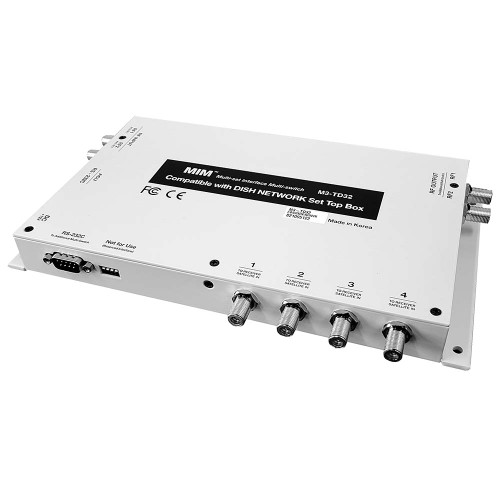
Satellite television systems require careful matching between reflector size, LNB type, and your cruising area. A 23.6-inch reflector provides reliable signal acquisition in moderate sea states for coastal and offshore use. Smaller 14-inch domes work for calm conditions and inland use but struggle to lock signal when rocking. Verify the LNB matches your broadcast region—Americas LNBs operate on different frequencies than European or Asian systems. Auto-skew and three-axis stabilization are essential for vessels that experience significant roll and pitch offshore.
Marine Entertainment System Component Guide
| Component Type | Minimum IP Rating | Installation Location | Critical Features |
|---|---|---|---|
| Helm Stereo Head Unit | IPX6 | Protected helm console | Sealed rear connections, UV-stable face |
| Cockpit Speakers | IPX7 | Open cockpit, exposed | Polypropylene cone, stainless grilles |
| Cabin Speakers | IPX5 | Interior protected areas | Moisture-resistant cone, sealed magnets |
| Marine Amplifiers | IPX5 | Protected equipment compartment | Conformal coated PCB, stainless hardware |
| Satellite TV Antenna | IP66 | Hardtop or arch mount | Auto-skew, 3-axis stabilization |
| Antenna Cables | N/A | Through-deck routing | Double-shielded RG6, sealed connectors |
Price Guide: What to Expect at Each Budget Level
Budget tier: $12.99–$100 — Basic marine speakers, replacement speaker grilles, auxiliary cables, and entry-level stereo accessories. Suitable for small boats in protected waters where failure represents inconvenience rather than safety concerns. Expect IPX5 ratings and limited UV resistance.
Mid-range tier: $100–$500 — Quality marine stereos with Bluetooth and full IPX6/IPX7 protection, speaker pairs with 80+ watt handling, basic amplifiers, and marine-grade wiring kits. This range delivers reliable performance for most coastal cruisers and represents the sweet spot between durability and value. Components at this level include proper conformal coating and stainless mounting hardware.
Premium tier: $500–$5192.99 — Integrated entertainment systems with NMEA 2000 connectivity, high-output amplifiers with DSP processing, satellite radio receivers, and complete satellite television systems like the Intellian i6 System w/23.6" Reflector & All Americas LNB for offshore vessels. Premium systems deliver features that matter for serious cruising: multi-zone control, acoustic calibration for open-air environments, and integration with your vessel's data network.
How the Top Entertainment Systems Compare
| Feature | Intellian i6 System |
|---|---|
| Primary Application | Offshore satellite television reception |
| Reflector Size | 23.6 inches (60cm) |
| Stabilization | 3-axis with auto-skew |
| Coverage Area | All Americas (dedicated LNB) |
| Ideal Vessel Size | 30+ feet, offshore capable |
Our Top Picks for Entertainment
These systems represent proven performance across different vessel types and usage patterns, selected for reliability in actual marine environments.
Intellian i6 System w/23.6" Reflector & All Americas LNB
Intellian | $5192.99
The 23.6-inch reflector with three-axis stabilization maintains satellite lock in sea states that disable smaller dome systems.
- Auto-skew functionality eliminates manual adjustment when cruising across satellite footprints, essential for extended offshore passages where signal acquisition must be automatic regardless of vessel orientation
Trusted Entertainment Brands We Carry
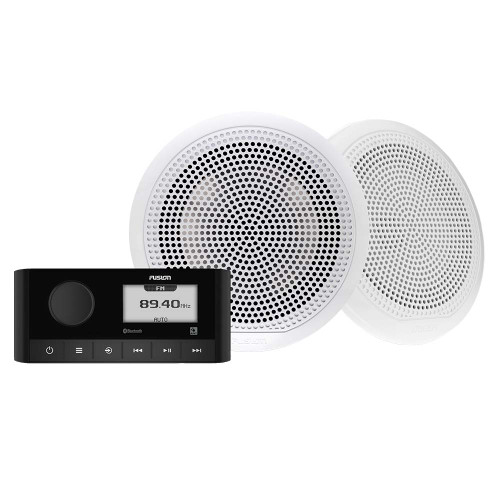
Fusion dominates the marine audio market because their head units and speakers undergo salt-fog testing that exceeds ASTM B117 standards, and their digital signal processing accounts for the acoustic challenges of open cockpits where reflected sound paths don't exist. Intellian systems are specified by yacht builders for satellite television because their three-axis stabilization algorithms track satellites through 25-degree rolls that cause competing systems to lose lock. Poly-Planar speakers use titanium dome tweeters and butyl rubber surrounds that survive UV exposure 300% longer than standard marine speakers. These brands earn their premium pricing through engineering specific to marine applications rather than adapting consumer electronics with waterproof housings.
Frequently Asked Questions
Can I use regular car speakers on my boat if I mount them under the hardtop?
Automotive speakers fail on boats even when protected from direct water because marine humidity saturates paper cones and corrodes tinsel leads where they connect to voice coils. The vibration frequency range on boats includes low-frequency pounding that automotive speakers never experience in vehicles with suspension systems. Marine speakers use polypropylene or synthetic fiber cones that don't absorb moisture, sealed magnet structures that prevent corrosion of the motor assembly, and tinsel leads with three times the fatigue resistance of automotive specifications. Even protected automotive speakers typically fail within one season of coastal use.
What reflector size do I need for satellite TV on a 35-foot cruiser?
A 23.6-inch reflector like the Intellian i6 system provides reliable signal acquisition for vessels operating offshore where four-foot seas are routine. Smaller 14-inch domes work for vessels under 28 feet that stay in protected waters where wave height rarely exceeds two feet, but they struggle to maintain lock when the boat experiences significant pitch and roll. The reflector diameter directly determines how much motion the stabilization system can compensate for before losing the satellite signal. For a 35-foot vessel capable of offshore passages, the 23.6-inch reflector represents the minimum reliable specification.
How many watts do I need for cockpit speakers on a 28-foot center console?
Plan for minimum 60 watts RMS per speaker pair in an open cockpit environment where you'll operate at cruising speeds above 20 knots. Wind noise and engine sound increase exponentially with speed, and open cockpits provide zero acoustic reinforcement since sound energy dissipates immediately. A system that sounds adequate at the dock becomes inaudible at cruising speed unless you have both adequate power and efficient speakers above 88dB sensitivity. Four speakers totaling 240 watts RMS provides comfortable listening volume on a 28-foot center console at typical cruising speeds.
Do I need to run dedicated power wires for a marine stereo or can I tap into existing circuits?
Marine stereos require dedicated power runs from your electrical distribution panel with appropriate fusing at the source, not tapped into convenience circuits shared with other loads. Shared circuits create voltage drop when multiple devices draw power simultaneously, causing the stereo to reset or introduce noise into the audio signal. Use 14 AWG wire minimum for runs under 20 feet to a stereo drawing up to 5 amps, and install an inline fuse rated at 125% of the stereo's maximum draw within 7 inches of the power source per ABYC E-11 standards. Proper power distribution eliminates the alternator whine and voltage-related failures that plague improperly wired systems.
Will Bluetooth audio quality be noticeably worse than wired connections on a marine stereo?
Bluetooth aptX codec provides audio quality indistinguishable from wired connections for typical marine entertainment use, and the convenience of wireless streaming from multiple devices outweighs the theoretical fidelity difference. The limiting factor in marine audio quality is ambient noise from wind, engines, and water, not the transmission method. Bluetooth eliminates the corrosion-prone auxiliary input jacks that are common failure points on marine stereos, and modern implementations maintain stable connections even with the RF interference from radar, VHF radios, and other marine electronics. For critical audio applications like sonar or communication systems, use wired connections, but entertainment audio performs well via Bluetooth.
Need help selecting the right Entertainment for your vessel? Contact our technical support team for a free system review — we'll help you spec the right components for your boat's requirements.