
-
On Sale!

Barton Marine
Barton Marine SkyDock Storage System 3 to 1 Reduction Up to 175 LBS 4-Point Lift
$351.29$294.99 -
On Sale!

Barton Marine
Barton Marine SkyDock Storage System 4 to 1 Reduction Up to 175 LBS 4-Point Lift
$548.28$305.99 -
On Sale!
-
On Sale!
-
On Sale!

-
On Sale!

-
On Sale!
-
On Sale!

-
On Sale!

-
On Sale!

Onyx Outdoor
Onyx M-24 Essential Manual Inflatable Life Jacket - Red - Adult Universal
$104.99$101.99 -
On Sale!

-
On Sale!
-
On Sale!
-
On Sale!

-
On Sale!

-
On Sale!

-
On Sale!
-
On Sale!
-
On Sale!

-
On Sale!
Paddlesports
Paddlesports equipment encompasses accessories and systems designed specifically for kayaks, canoes, and stand-up paddleboards, including rod holders, mounts, racks, anchor systems, and specialized hardware that withstands continuous UV exposure and water immersion. At Boat Supply Store, our 249-product paddlesports selection prioritizes marine-grade materials and proven compatibility with the unique demands of paddle craft applications.
Choosing the Right Paddlesports Gear for Your Vessel
The most common mistake in paddlesports outfitting is installing hardware designed for powerboats or freshwater-only use. Kayaks and SUPs flex under load, have thinner hull sections than traditional boats, and require mounting solutions that distribute pressure without creating stress cracks. A rod holder that works perfectly on a 20-foot center console can crack a kayak gunwale in rough conditions because the load concentration exceeds what the composite material can handle. Marine-specific paddlesports hardware accounts for these structural differences with wider mounting footprints, flexible bases, and corrosion-resistant fasteners sized appropriately for thinner deck sections.
Key Specifications to Evaluate
Material composition determines longevity in paddlesports applications. Glass-filled nylon and UV-stabilized polymers resist degradation from continuous sun exposure better than standard plastics, which become brittle and fail within two seasons. Stainless steel components should be 316-grade for saltwater use; 304 stainless corrodes rapidly in marine environments despite being adequate for freshwater. Mounting hardware thickness matters critically—through-bolting with backing plates is essential for any accessory that bears load, as adhesive mounts and self-tapping screws cannot provide adequate holding power in composite hulls under stress.
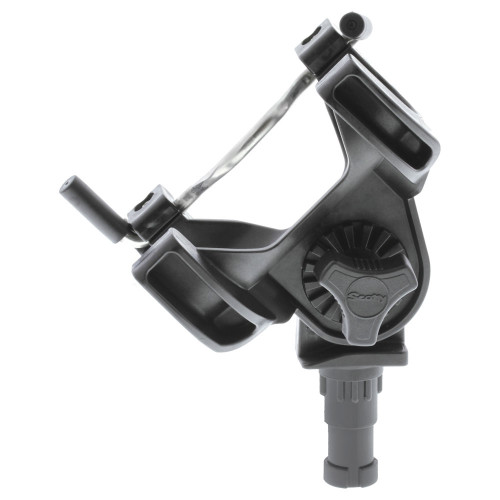
Rod holder positioning requires understanding of paddling mechanics. Forward-mounted holders interfere with paddle stroke unless angled at 30 degrees or more from vertical. Flush-mount designs work well for fishing kayaks with molded recesses, but rail-mounted systems offer better adjustability for changing fishing techniques. Scotty mounts have become the de facto standard because their quick-release mechanism allows swapping accessories without tools while maintaining waterproof integrity—critical when a mount penetrates the deck.
Storage and transport systems must account for hull shapes that lack the flat surfaces found on powerboats. Kayak and SUP racks need wide cradles with protective padding that conform to rounded hulls without creating pressure points. Adjustable width is essential because beam measurements vary significantly between touring kayaks, fishing kayaks, and paddleboards. Weight capacity specifications matter less than cradle design—a rack rated for 150 pounds can damage a hull if contact points are too narrow, concentrating the entire load on a few square inches.
Anchor systems for paddle craft differ fundamentally from traditional boat anchors. A 3-pound folding grapnel on 50 feet of line suits most kayak applications, deployed from a stern-mounted cleat with a quick-release float system. This allows the paddler to release the anchor line under emergency conditions without losing the anchor, as the float marks its position for later retrieval. Standard mushroom anchors and plow anchors are too heavy for paddle craft and create dangerous situations in current when they grab bottom unexpectedly.
Paddlesports Mounting Hardware Load Ratings
| Mount Type | Typical Load Rating | Required Backing Plate | Best Application |
|---|---|---|---|
| Flush deck mount | 15-25 lbs vertical | 3" diameter minimum | Rod holders, camera mounts |
| Rail mount clamp | 10-15 lbs lateral | Not required | Accessories on factory rails |
| Through-hull rod holder | 30-40 lbs vertical | 4" diameter minimum | Heavy trolling rods |
| Scotty gear-head mount | 20 lbs multi-directional | 2.5" diameter minimum | Quick-release accessories |
| Anchor cleat | 50 lbs pull force | 6" backing plate | Anchor line attachment |
Price Guide: What to Expect at Each Budget Level
Budget tier: $13.99–$40 — Basic rod holders, paddle clips, and simple mounting hardware constructed from UV-stabilized plastic. Adequate for freshwater recreational use with light tackle. Mounting systems in this range typically use self-tapping screws rather than through-bolting, limiting their suitability for high-stress applications. Expect 2-3 season lifespan with moderate use.
Mid-range tier: $40–$150 — This is where most serious paddlers invest, accessing glass-filled nylon construction, adjustable mounting systems, and Scotty-compatible quick-release mechanisms. Products in this range include proper backing plates, stainless fasteners, and designs that account for hull flex. Rod holders feature adjustable angles, and storage solutions include multiple mounting positions. Expect 5+ year lifespan with proper maintenance.
Premium tier: $150–$443.99 — Professional-grade storage racks like the Dock Edge SUP/Kayak Rack, heavy-duty cart systems with oversized pneumatic tires, and complete rigging kits with integrated electronics mounts. Premium products use 316 stainless exclusively, feature tool-free adjustments, and include protective padding that won't degrade in UV exposure. These systems accommodate multiple craft or provide dock-side storage solutions that protect significant investments in paddle craft.
How Top Paddlesports Products Compare
| Feature | Dock Edge SUP/Kayak Rack |
|---|---|
| Construction | Marine-grade aluminum frame |
| Capacity | Multiple craft storage |
| Corrosion Resistance | Anodized finish, saltwater rated |
| Adjustability | Width-adjustable cradles |
| Installation | Dock-mount or wall-mount capable |
Our Top Picks for Paddlesports
These products represent the best combination of marine-grade construction and proven compatibility with paddle craft applications.
Dock Edge SUP/Kayak Rack
Dock Edge | $443.99
Anodized aluminum construction provides corrosion-resistant storage for multiple paddle craft with adjustable cradle spacing that accommodates vessels from 24 to 36 inches beam.
- Wide padded cradles distribute weight across hull curves without creating pressure points that can deform composite materials during long-term storage
Trusted Paddlesports Brands We Carry
Scotty dominates paddlesports accessories because their mount system became the industry standard—their 244 base is pre-installed on most fishing kayaks from major manufacturers, and their extensive accessory ecosystem means a single mount can accommodate rod holders, electronics, cup holders, and tool caddies through simple swaps. With 64 Scotty products averaging $37.60, paddlers can build comprehensive rigging systems incrementally without committing to a single expensive solution. Dock Edge brings four decades of dock hardware expertise to their paddle craft storage systems, using the same marine-grade materials and UV inhibitors proven in commercial marina applications. YakAttack has earned reputation among kayak anglers for their innovative track systems that allow sliding accessories fore and aft without tools, addressing the reality that optimal rod holder position changes with fishing technique and conditions.
Frequently Asked Questions
Can I use standard boat rod holders on my kayak?
Standard boat rod holders concentrate stress in ways that can crack kayak hulls. Kayak-specific holders use larger mounting footprints with backing plates that distribute load across a wider area, accounting for the thinner composite construction and inherent flex of paddle craft hulls. The angle requirements also differ—kayak rod holders need 30-45 degree angles to clear paddle strokes, while boat holders are typically designed for vertical or slight aft angles. Additionally, kayak holders should have positive retention mechanisms like spring-loaded clips because the rocking motion of a kayak is more severe than a powerboat's movement, making rods more likely to bounce free.
What's the advantage of Scotty mounts over permanent rod holders?
Scotty's gear-head system allows swapping multiple accessories through a single hull penetration, critical for kayaks where deck space is limited and each hole is a potential leak point. A paddler can use a rod holder while fishing, swap to a camera mount for photography, then install a cup holder for casual paddling—all using one mount location with waterproof integrity maintained by the twist-lock mechanism. The system also allows tool-free angle adjustment under load, so you can reposition a rod holder mid-trip when conditions change. Permanent holders lock you into a single function and position, often resulting in kayaks riddled with multiple holes as paddlers' needs evolve.
How do I determine proper backing plate size for kayak accessories?
Backing plate diameter should be at least three times the mounting bolt spread for accessories under 20 pounds, and four times the bolt spread for heavier items or high-load applications like anchor cleats. For a typical Scotty mount with a 2.5-inch bolt pattern, use a minimum 3-inch diameter backing plate, preferably marine-grade starboard or aluminum that won't corrode. The backing plate must be larger than the hull penetration area by at least 1.5 inches on all sides to distribute stress beyond the immediate mounting zone. For accessories that see lateral loads like rod holders with fighting fish, increase backing plate size by 25% to account for the magnified stress from torque forces.
What anchor weight is appropriate for kayak fishing?
Most kayak applications require only 3-4 pounds of anchor weight using a folding grapnel design that grabs bottom structure without the excessive holding power that makes retrieval difficult from a seated position with limited leverage. A 3-pound grapnel on 50 feet of 3/8-inch line handles currents up to 2 knots for kayaks under 14 feet, which covers most fishing scenarios. Heavier anchors create dangerous situations because they can hold too effectively—if you need to leave a position quickly due to weather or boat traffic, you may be unable to break the anchor free. Always rig a quick-release float system that allows dropping the anchor line with a buoy marker so you can return for retrieval rather than fighting an anchor in emergency conditions.
Do I need different hardware for saltwater versus freshwater paddling?
Saltwater demands 316 stainless steel fasteners exclusively; 304 stainless and zinc-plated hardware corrode rapidly in salt environments, typically failing within one season. UV inhibitors in plastic components matter more in saltwater applications because the combination of salt and sun accelerates polymer degradation. Rinse all hardware with fresh water after every saltwater use, paying particular attention to moving parts in mount systems where salt crystals bind mechanisms. Freshwater paddlers can use 304 stainless and basic UV-stabilized plastics with acceptable longevity, though 316 stainless still represents the better long-term investment. Backing plates should be marine-grade starboard or aluminum in both environments, as plywood and composite backing plates delaminate when repeatedly exposed to water regardless of salinity.
Need help selecting the right paddlesports gear for your vessel? Contact our technical support team for a free system review — we'll help you spec the right components for your boat's requirements.