
-
On Sale!
-
On Sale!

-
On Sale!
-
On Sale!

-
On Sale!
-
On Sale!

-
On Sale!
-
On Sale!
-
On Sale!
-
On Sale!
-
On Sale!
-
On Sale!
-
On Sale!
-
On Sale!
-
On Sale!

-
On Sale!
-
On Sale!
-
On Sale!

-
On Sale!

-
On Sale!
Anchoring & Docking
Anchoring and docking equipment keeps your vessel secure whether you're moored at a slip, rafted alongside another boat, or anchored in open water. From windlasses and ground tackle to fenders and dock lines, Boat Supply Store stocks 583 products across 29 trusted marine brands to handle every mooring scenario you'll encounter.
Choosing the Right Anchoring & Docking for Your Vessel
The most expensive mistake boaters make is buying anchoring gear based on price rather than holding power, or selecting fenders and lines without matching them to their vessel's displacement and freeboard height. An undersized anchor drags when conditions deteriorate, while improperly sized fenders concentrate impact loads that crack gelcoat and damage topsides. The result is either a vessel that won't stay put when you need it to, or cosmetic and structural damage that costs far more than the price difference between adequate and proper equipment.
Key Specifications to Evaluate
Anchor selection starts with your boat's length and displacement, then factors in the seabed composition where you typically anchor. A Danforth-style fluke anchor excels in sand and mud but skates across rock and grass, while a plow or claw design offers better all-around holding in mixed bottoms. Holding power is measured as a ratio to anchor weight—premium designs deliver 200:1 or better in ideal conditions, while budget anchors may only achieve 50:1. For every foot of boat length, plan on one pound of anchor weight as a baseline, then upsize if you cruise in exposed anchorages or your vessel has high windage from a flybridge or tall mast.
Windlass sizing depends on your anchor and rode weight, not just your boat length. Calculate the total weight of anchor, chain, and rope you'll retrieve, then select a windlass with a working load at least 3-4 times that figure. A 12V system handles boats up to about 35 feet, while larger vessels need 24V motors to maintain acceptable duty cycles. Match the gypsy to your chain size exactly—3/8-inch chain requires a 3/8-inch gypsy, and mixing sizes causes jams and premature wear. Horizontal windlasses mount on the foredeck and work well on boats with limited anchor locker depth, while vertical models install below deck for a cleaner appearance but require more vertical clearance.
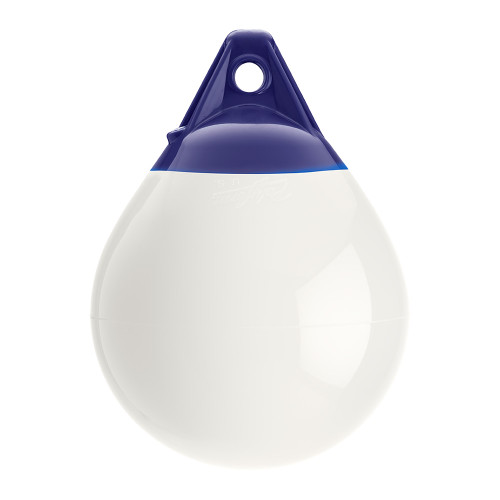
Fender sizing follows a simple rule: one inch of fender diameter per five feet of boat length. A 30-foot boat needs 6-inch fenders minimum, while a 40-footer requires 8-inch diameter. Cylindrical fenders with ribbed construction resist abrasion better than smooth vinyl and maintain shape under repeated compression. For docking alongside pilings or rough seawalls, center-hole fenders hang vertically and won't roll out of position. Dock lines should measure two-thirds of your boat's length at minimum—a 36-foot vessel needs at least 24-foot lines. Three-strand nylon offers the best combination of stretch for shock absorption and strength, with 1/2-inch diameter adequate for boats up to 35 feet and 5/8-inch for vessels to 50 feet.
Anchor Sizing Guide by Boat Length
| Boat Length | Minimum Anchor Weight | Recommended Chain Size | Chain Length (All-Chain Rode) | Rode Length (Chain + Rope) |
|---|---|---|---|---|
| 20-25 ft | 15-20 lbs | 1/4 inch | 100 ft | 25 ft chain + 150 ft rope |
| 26-30 ft | 20-25 lbs | 5/16 inch | 125 ft | 30 ft chain + 200 ft rope |
| 31-35 ft | 25-35 lbs | 5/16 inch | 150 ft | 40 ft chain + 250 ft rope |
| 36-40 ft | 35-45 lbs | 3/8 inch | 200 ft | 50 ft chain + 300 ft rope |
| 41-50 ft | 45-60 lbs | 3/8 inch | 250 ft | 75 ft chain + 350 ft rope |
| 51-60 ft | 60-90 lbs | 1/2 inch | 300 ft | 100 ft chain + 400 ft rope |
Price Guide: What to Expect at Each Budget Level
Budget tier: $11.99–$100 — Basic fenders, manual anchor pulleys, cleats, and dock line sets fall into this range. Vinyl construction with single-layer walls, basic galvanized hardware, and entry-level rope materials. Adequate for seasonal boaters in protected slips who dock in calm conditions and rarely anchor out overnight.
Mid-range tier: $100–$500 — Reinforced fenders with ribbed construction, quality three-strand nylon dock lines, premium anchors from established manufacturers, and galvanized chain in common sizes. This is where most cruising boaters land because the durability and performance gains over budget gear justify the cost. Expect multi-season service life and reliable performance in typical conditions.
Premium tier: $500–$4101.99 — Electric windlasses with wireless remotes, high-tensile stainless steel anchors with roll bars, all-chain rodes, and premium fender systems with custom covers. Commercial-grade construction, extended warranties, and engineering that handles severe weather and demanding duty cycles. Essential for liveaboards, offshore cruisers, and vessels that anchor frequently in exposed locations.
How the Top Anchoring & Docking Compare
| Feature | Maxwell RC12/10 12V Windlass |
|---|---|
| Voltage | 12V |
| Chain Capacity | 3/8 inch |
| Rope Capacity | 3/4 inch |
| Suitable Vessel Length | Up to 40 ft |
| Best For | Cruisers needing reliable electric retrieval with dual rode capability |
Our Top Picks for Anchoring & Docking
These products represent the best combination of proven reliability and real-world performance across different vessel types and use cases.
Maxwell RC12/10 12V Windlass - f/3/8" Chain & 3/4" Rope
Maxwell | $4101.99
Dual-gypsy design handles both 3/8-inch chain and 3/4-inch three-strand rope without changing drums, eliminating the need to splice dissimilar rode materials.
- Maxwell's sealed motor design and stainless steel construction provide the corrosion resistance and duty cycle needed for frequent anchoring in saltwater environments.
Trusted Anchoring & Docking Brands We Carry
The anchoring and docking category relies on manufacturers who understand marine corrosion, load dynamics, and the consequences of equipment failure. Polyform U.S. dominates our fender selection with proprietary vinyl formulations that resist UV degradation and maintain elasticity through years of compression cycles. Maxwell windlasses are engineered in New Zealand specifically for harsh saltwater duty, with sealed motors and bronze internals that outlast cheaper alternatives by decades. Rocna and Manson anchors have proven themselves in independent holding power tests, consistently outperforming legacy designs in sand, mud, and mixed bottoms. These brands invest in marine-specific engineering rather than adapting industrial hardware, which is why they command premium prices and deliver reliable performance when your vessel's security depends on it.
Frequently Asked Questions
What scope ratio should I use when anchoring?
A 7:1 scope ratio is the standard recommendation for all-chain rode in moderate conditions—if you're anchoring in 20 feet of water, deploy 140 feet of chain. For combination chain and rope rode, increase to 8:1 or 10:1 depending on conditions. The scope ratio is measured from the bow roller to the seabed, not from the waterline, so add your bow height to the charted depth. In storm conditions or when anchoring overnight, increase scope to 10:1 or higher. Insufficient scope reduces the anchor's holding power by allowing the pull angle to lift the anchor rather than keeping it horizontal against the bottom.
Can I mix different chain sizes with my windlass?
Never mix chain sizes with a windlass gypsy designed for a specific diameter. A 3/8-inch gypsy will jam with 5/16-inch chain because the smaller links drop too deep into the pockets, and it will skip or damage 7/16-inch chain because the links are too large to seat properly. If you need to change chain size, you must replace the gypsy with one machined for the new diameter. Most windlass manufacturers offer interchangeable gypsies, but some models require complete drum assembly replacement. Always verify compatibility before purchasing chain, and consider that upgrading chain size often means upgrading the entire ground tackle system including anchor, shackles, and swivel.
How do I prevent fender squeak against my hull?
Fender squeak results from dry vinyl sliding against gelcoat under compression. Apply a silicone-based fender protectant to the fender surface—never use petroleum-based products which degrade vinyl. Fender covers made from acrylic or cotton fabric eliminate squeak entirely while protecting both the fender and your hull from abrasion and UV damage. For a quick fix at the dock, spray the contact area with diluted dish soap, though this requires reapplication after rain. Ribbed fenders generate less noise than smooth designs because the ribs reduce the contact surface area. If squeaking persists despite these measures, the fender is likely undersized for your boat's weight and displacement, causing excessive compression that increases friction.
What's the difference between galvanized and stainless steel chain?
Galvanized chain costs roughly one-third the price of stainless and offers adequate corrosion protection for most recreational boating. The zinc coating gradually depletes in saltwater, requiring replacement every 5-10 years depending on use. Stainless steel chain, typically 316L grade for marine applications, resists corrosion indefinitely but is prone to crevice corrosion in tropical waters with low oxygen content, and it can work-harden and fail without visible warning. Galvanized chain shows obvious rust as a wear indicator. For vessels that anchor frequently in the same location, galvanized is the practical choice. For offshore cruisers covering thousands of miles, stainless justifies its cost. Both require regular inspection for elongated links and worn metal, and both should be replaced when diameter reduces by 10% or any link shows cracks.
Do I need a windlass for a small boat?
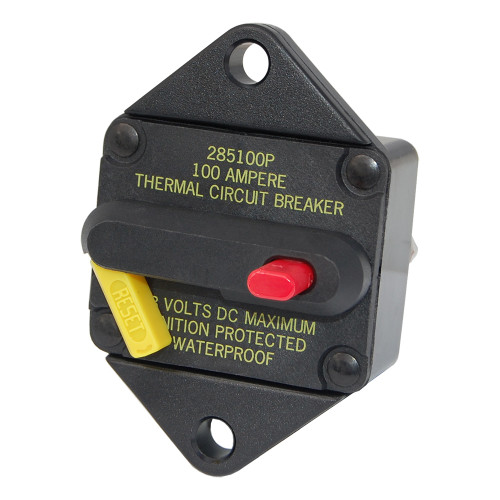
Boats under 25 feet can typically retrieve anchors manually unless they use all-chain rode or anchor frequently in deep water. A 20-pound anchor with 30 feet of chain and 150 feet of rope is manageable to pull by hand in moderate conditions, though it becomes exhausting if you anchor multiple times daily. The decision point is whether you anchor in depths exceeding 20 feet regularly, have physical limitations that make manual retrieval difficult, or use chain rode exclusively. A manual windlass with a handle and gypsy costs $200-400 and eliminates the electrical installation complexity of a powered system while still providing mechanical advantage. If you're adding an electric windlass to a boat that never had one, budget for battery capacity upgrades and proper circuit protection in addition to the windlass cost.
Need help selecting the right Anchoring & Docking for your vessel? Contact our technical support team for a free system review — we'll help you spec the right components for your boat's requirements.