

Description
Barton Continuous Line Furler | Boat Supply Store
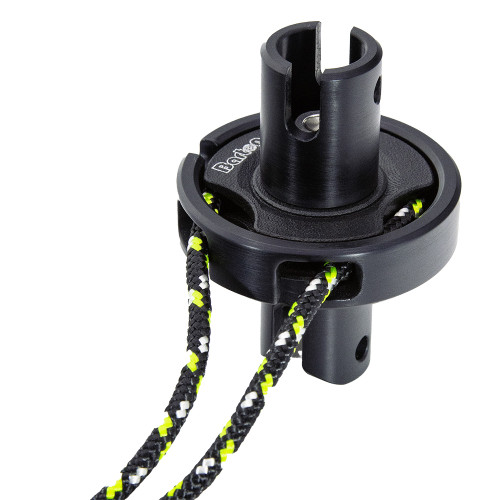
For sailors demanding reliable headsail furling in challenging conditions, the Barton Continuous Line Furler offers robust performance. Its HBT1 hybrid-bearing technology, incorporating Torlon ball bearings, ensures smooth operation under substantial loads, rated up to a 600kg safe working load. Designed for sails up to 12m sq, this unit facilitates efficient sail deployment and reefing, ideal for offshore passages or competitive racing environments.
Key Features
- Advanced HBT1 Hybrid-Bearing Technology for balanced, low-friction furling
- Torlon Ball Bearings engineered to withstand extreme loads
- 3D Printed Tri-Rotor Wheel provides superior, consistent rope grip
- Toolless Rope Insertion simplifies line management and setup
- Integrated Fairlead directs furling line for optimized sheeting angles
- High-Grade 316 Stainless Steel Shaft ensures maximum corrosion resistance
- Anodized 6061 Aluminum Chassis and Fork offer exceptional durability
- Compact Overall Length of 90mm for versatile forestay integration
Specifications
| Product Specifications | |
|---|---|
| Designed for sails up to | 12m sq (130ft sq) |
| Bearing Technology | HBT1 hybrid-bearing with Torlon ball bearings |
| Safe Working Load (SWL) | 600kg (1320lbs) |
| Break Load | 1200kg (2640lbs) |
| Furling Line Diameter Compatibility | 4mm - 6mm (3/16" - 1/4") |
| Central Shaft Material | 316 Stainless Steel |
| Chassis/Fork Material | 6061 Aluminum |
| Overall Length | 90mm (3-9/16") |
Who This Is For
Discerning sailors requiring a high-performance, exceptionally durable, and user-friendly continuous line furler. It is particularly suited for those who demand reliability in demanding sailing conditions.
How It Compares
| Feature | Barton Continuous Line Furler | Competitor |
|---|---|---|
| Maximum Sail Area | 12 m sq | 10.2 m², 12 m² |
| Working Load Limit | 600kg | — |
| Furling Line Diameter | 4mm - 6mm | — |
| Bearing Technology | HBT1 hybrid-bearing (solid-state & Torlon ball bearings) | Sealed ball bearings, Roller bearings |
| Rope Grip Feature | 3D printed tri-rotor wheel, toolless rope insertion | Grooved drum, Grooved drum |
Common Concerns Answered
Is the price point a barrier for entry?
While the Barton Continuous Line Furler represents an investment, its advanced HBT1 hybrid-bearing technology, Torlon ball bearings, and robust construction offer superior longevity and performance. This justifies the cost for serious sailors prioritizing reliability under load.
How does its performance compare to other furling systems?
This furler excels with its balanced bearing system and 3D printed wheel for exceptional rope grip, offering a distinct advantage in smooth operation and load handling compared to simpler grooved drum designs.
Are there any known issues with this furler?
Product descriptions do not highlight specific complaints. The design focuses on durability and ease of use, addressing common pain points in furling systems.
Frequently Asked Questions
What is the maximum sail area this furler is designed for?
The Barton Continuous Line Furler is engineered for sails up to a maximum area of 12 square meters (130 square feet).
What size furling line is compatible with the Barton Continuous Line Furler?
This furler accommodates standard furling lines with diameters ranging from 4mm to 6mm (approximately 3/16" to 1/4").
What is the working load limit of the Barton Continuous Line Furler?
The unit features a safe working load (SWL) of 600kg (1320lbs) and a break load of 1200kg (2640lbs).
What materials are used in the construction of the Barton Continuous Line Furler?
It is constructed with a high-grade 316 stainless steel central shaft and an anodized 6061 aluminum main chassis and fork for durability and corrosion resistance.
How is the Barton Continuous Line Furler installed?
Installation involves basic rigging knowledge: attaching the furler to the forestay and connecting the furling line. The toolless rope insertion feature simplifies the line setup process.

