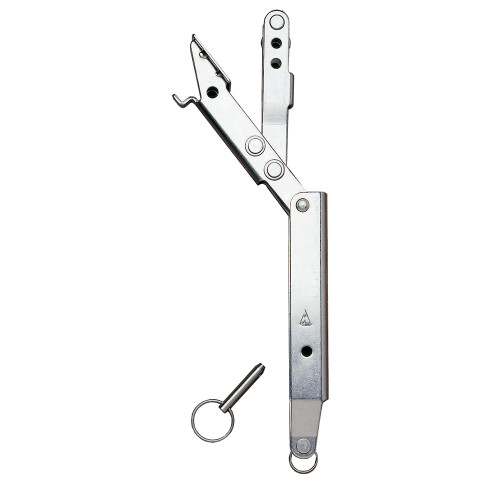


Description
C. Sherman Johnson Hinged Pad Eye 5/16" | Boat Supply Store
For effective line management and reduced deck clutter on your vessel, the C. Sherman Johnson Hinged Pad Eye provides a critical advantage. Engineered with a T-316 stainless steel construction for superior corrosion resistance in marine environments, this 5/16" pad eye features a unique hinged design that folds flat when not in use, preventing trip hazards. Its integrated friction drag system ensures the eye remains stationary and eliminates annoying rattles, a common issue with standard padeyes, even under load, thus reducing stress on fastenings.
Key Features
- Space-saving hinged design folds completely flat
- Rattle-free operation via integrated friction drag
- Load-distributing eye flexes to reduce stress on fastenings
- Corrosion-resistant T-316 stainless steel construction
- Secure installation with included backing plate
- Robust 5/16" application size
- Durable marine-grade hardware
- Versatile for various securing needs
Specifications
| Product Specifications | |
|---|---|
| Brand | C. Sherman Johnson |
| SKU | CWR71563 |
| MPN | 48-585 |
| Material | T-316 Stainless Steel |
| Application Size | 5/16" |
| Includes | Backing Plate |
Who This Is For
Sailors and boaters requiring robust, corrosion-resistant hardware for securing lines or covers will find this pad eye ideal. Those prioritizing efficient deck space and a quiet, rattle-free operation will benefit from its unique features.
How It Compares
| Feature | C. Sherman Johnson Hinged Pad Eye 5/16" | Competitor |
|---|---|---|
| Material | T-316 Stainless Steel | 316 Stainless Steel |
| Hole Size | 5/16" | 5/16" |
| Hinged Design | Yes, folds flat | Yes |
| Load Flexing | Yes, eye gives with load | Not specified |
| Rattle-Free Mechanism | Yes, friction drag | Not specified |
| Includes Backing Plate | Yes | Not specified |
Common Concerns Answered
What is the weight capacity of the C. Sherman Johnson Hinged Pad Eye - 5/16"?
Specific load ratings are not detailed in the available product information. However, its robust T-316 stainless steel construction and load-distributing flex are designed for significant marine applications. For critical load-bearing scenarios, consult with a marine rigging professional.
What type of stainless steel is used for this pad eye?
This C. Sherman Johnson Hinged Pad Eye is constructed from premium T-316 stainless steel, renowned for its exceptional corrosion resistance in harsh saltwater environments.
Does this pad eye come with mounting hardware?
This pad eye is supplied with a backing plate, which is essential for secure installation. However, fasteners such as bolts or screws are not included and will need to be selected based on your specific mounting surface and required load-bearing capacity.
Frequently Asked Questions
How does the hinged design benefit the user?
The hinged design allows the pad eye to fold flat against the deck or bulkhead when not in use, significantly reducing the risk of tripping hazards and keeping the deck area clear, particularly beneficial on smaller vessels or high-traffic areas.
Is this pad eye suitable for saltwater environments?
Yes, the pad eye is constructed from T-316 stainless steel, which is the marine industry's standard for superior corrosion resistance in challenging saltwater conditions.
How does the pad eye prevent rattling?
A built-in friction drag mechanism within the eye ensures it stays in its deployed position and eliminates movement, thus preventing annoying rattles that can occur from wind or boat motion.
What does the 'eye flexes with load' feature mean?
This feature indicates that the pad eye's eyelet has a degree of flexibility, allowing it to subtly move or 'flex' when under load. This action helps to distribute stress more evenly across the mounting fastenings, potentially reducing wear and tear over time.
What are common uses for a hinged pad eye?
Common uses include securing boat covers, bimini tops, dinghy tie-downs, fender lines, kayak or paddleboard straps, and general gear attachment points where a low-profile, non-obstructive hardware solution is desired.