

Description
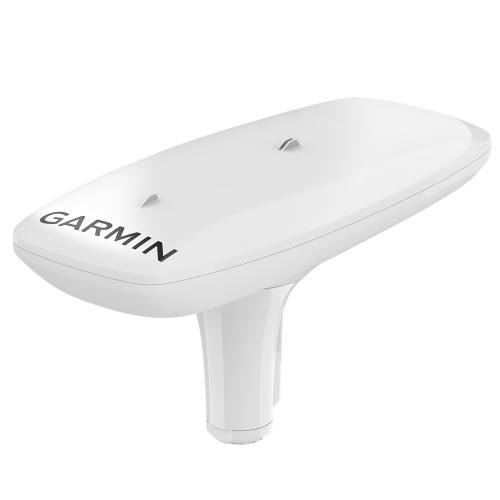
Garmin MSC 10 Satellite Compass | Boat Supply Store
For navigators demanding absolute directional certainty and critical motion data even in the most challenging offshore conditions, this device provides heading accuracy within 2 degrees. Its integrated Attitude Heading Reference System (AHRS) delivers reliable pitch, roll, and heave data at all vessel speeds, including during dynamic maneuvers or while stationary. Utilizing a multi-band GNSS receiver, it ensures precise positioning and heading for critical systems like autopilots and radar stabilization, offering a robust solution for serious ocean-going vessels.
Key Features
- Achieve unmatched heading accuracy within 2 degrees, unaffected by magnetic interference.
- Gain critical vessel motion data, including heave, pitch, and roll, even in severe sea states.
- Benefit from an integrated AHRS for precise GPS heading at any speed or vessel attitude.
- Utilize multi-band GNSS with GPS, Galileo, GLONASS, and BeiDou for superior positioning.
- Serve as the primary sensor for autopilots and other critical navigation systems.
- Seamlessly integrate via NMEA 2000 with compatible Garmin chartplotters and displays.
- Experience fast, detailed tracking with a 10 Hz position update rate.
- Maintain backup heading capability with a magnetometer-based sensor if satellite signal is interrupted.
Specifications
| Product Specifications | |
|---|---|
| GNSS Receiver | Multi-band GNSS (L1/L5 GPS, Galileo, GLONASS, BeiDou) |
| Heading Accuracy | Within 2 degrees |
| Motion Data | Heave, Pitch, Roll |
| Update Rate | 10 Hz |
| Network Compatibility | NMEA 2000 |
| Backup Heading Sensor | Magnetometer-based |
| Integrated System | AHRS |
Who This Is For
Boaters requiring highly accurate and reliable heading, pitch, roll, and heave data for navigation, autopilot, and other onboard systems, especially in challenging sea conditions. This includes serious offshore cruisers and sportfishing enthusiasts who prioritize precise situational awareness.
How It Compares
| Feature | Garmin MSC 10 Satellite Compass | Simrad HS60 GPS Compass |
|---|---|---|
| Heading Accuracy | ± 2 degrees | ± 0.5° |
| Pitch, Roll, Heave Data | Yes | Pitch, Roll |
| GNSS Receiver Type | Multi-band GNSS (L1/L5 GPS, Galileo, GLONASS, BeiDou) | GPS, GLONASS, Galileo |
| Update Rate | 10 Hz | 20 Hz |
| Backup Heading | Magnetometer-based | null |
Common Concerns Answered
Does the Garmin MSC 10 require frequent calibration?
The MSC 10 may occasionally require magnetometer calibration for optimal performance of its backup heading sensor, ensuring reliable directionality even if satellite signals are temporarily lost.
Is the heading accuracy sufficient for all navigation needs?
The Garmin MSC 10 offers heading accuracy within 2 degrees, which is highly precise for most marine applications. For extremely specialized applications requiring sub-degree accuracy, alternative solutions might be considered.
What if the satellite signal is lost?
In the rare event of satellite signal loss, the MSC 10 seamlessly transitions to its integrated magnetometer-based heading sensor, providing continuous directional data for safe navigation.
Frequently Asked Questions
What is the heading accuracy of the Garmin MSC 10?
The Garmin MSC 10 provides heading accuracy within 2 degrees.
Does the MSC 10 provide pitch, roll, and heave data?
Yes, the MSC 10 provides reliable vessel heave, pitch, and roll information, even in rough waters.
Can the MSC 10 be used as a primary sensor for other marine systems?
Yes, the MSC 10 can serve as the primary heading sensor for autopilots and other onboard systems that require accurate directional input.
What type of GNSS receiver does the MSC 10 use?
The MSC 10 utilizes a multi-band GNSS receiver, supporting L1 and L5 GPS frequencies, as well as Galileo, GLONASS, and BeiDou constellations.
Is the MSC 10 compatible with NMEA 2000 networks?
Yes, the MSC 10 is fully NMEA 2000 compatible for seamless data integration with compatible Garmin marine electronics.
