

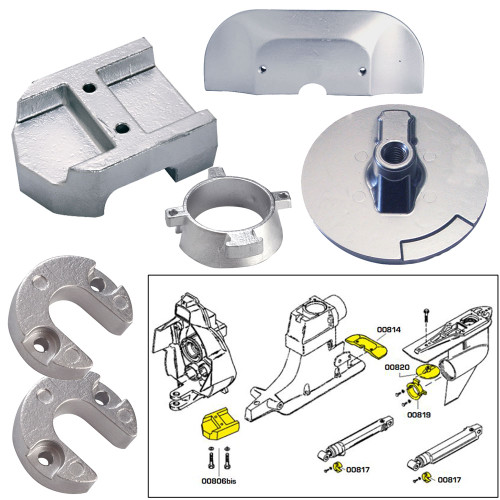
Description
Tecnoseal Anode Kit Mercury Alpha 1 Gen 2 Aluminum | Boat Supply Store
Safeguard your Mercury Alpha 1 Gen 2 outdrive from destructive galvanic corrosion with this comprehensive Tecnoseal aluminum anode kit. Engineered specifically for this sterndrive, the kit ensures vital underwater components are protected from electrochemical degradation, extending the operational lifespan of your propulsion system. This kit includes precisely manufactured aluminum anodes: one 00806BISAL, one 00814AL, one 00819AL, two 00817AL, and one 00820AL, all fabricated from a durable aluminum alloy essential for maintaining integrity in saltwater or brackish environments.
Key Features
- Complete Protection for Mercury Alpha 1 Gen 2 outdrives.
- Durable Aluminum Construction actively prevents galvanic corrosion.
- Includes All Necessary Hardware for a streamlined installation process.
- Specifically Engineered Fitment ensures precise compatibility and optimal performance.
- Multi-Piece Design provides comprehensive coverage across critical outdrive surfaces.
- Direct Replacement for standard anode configurations.
- Professional Grade Material for extended service life.
- Easy Identification with included part numbers for each anode.
Specifications
| Product Specifications | |
|---|---|
| Material | Aluminum |
| Compatibility | Mercury Alpha 1 Gen 2 outdrives |
| Included Components | 00806BISAL, 00814AL, 00819AL, two 00817AL, 00820AL |
| Hardware Included | Yes |
| Packaging | Polybag |
Who This Is For
Boat owners operating vessels equipped with Mercury Alpha 1 Gen 2 sterndrives are the primary beneficiaries. This kit is ideal for those seeking proactive corrosion mitigation to preserve their outdrive's structural integrity and performance.
How It Compares
| Feature | Tecnoseal Anode Kit Mercury Alpha 1 Gen 2 Aluminum | Competitor |
|---|---|---|
| Material | Aluminum | Aluminum, Aluminum |
| Compatibility | Mercury Alpha 1 Gen 2 | Mercury Alpha One Gen 1 & Gen 2, Mercury Alpha 1 Gen 2 |
| Hardware Included | Yes | Yes, Yes |
Common Concerns Answered
What if a specific anode piece in the kit is damaged?
While this kit provides a comprehensive set, if an individual anode piece is damaged beyond repair, it may be necessary to source that specific part number (e.g., 00817AL) separately to maintain the complete sacrificial protection system.
Is it easy to tell where each anode piece goes?
While the kit includes all necessary pieces for complete protection, a detailed installation diagram for precise anode placement would significantly aid novices. Familiarity with sterndrive maintenance is recommended for optimal installation.
Are aftermarket anodes as effective as OEM?
Tecnoseal is a reputable manufacturer specializing in marine anodes, engineered to meet or exceed OEM specifications for corrosion protection. This aluminum kit is specifically designed for the Mercury Alpha 1 Gen 2 outdrive, ensuring effective galvanic corrosion mitigation.
Frequently Asked Questions
What is the purpose of an anode kit for a Mercury Alpha 1 Gen 2 outdrive?
An anode kit, also known as a sacrificial anode, is designed to corrode in place of critical metal components on your outdrive, preventing galvanic corrosion that can lead to structural damage and component failure.
What material is the Tecnoseal Anode Kit made from?
This Tecnoseal Anode Kit is constructed from a durable aluminum alloy, which is ideal for saltwater and brackish water environments for effective galvanic corrosion protection.
Is hardware included with this Tecnoseal Anode Kit?
Yes, this Tecnoseal Anode Kit includes all the necessary hardware required for a complete and proper installation onto your Mercury Alpha 1 Gen 2 outdrive.
Which Mercury outdrive models is this anode kit compatible with?
This specific Tecnoseal Anode Kit is precisely engineered for compatibility with the Mercury Alpha 1 Gen 2 outdrive model.
How often should I replace my anodes?
Anode replacement frequency depends on operating environment and usage, but typically anodes should be inspected annually and replaced when they are visibly eroded by at least 50% or show signs of significant pitting and degradation.


