

Description
Blue Sea 7622100 ML ACR 12V 500A | Boat Supply Store
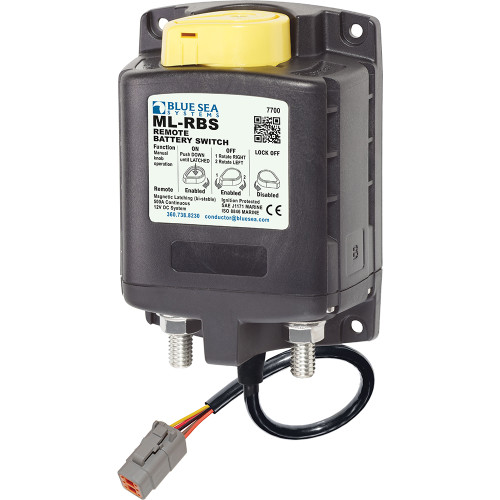
Designed to prevent deep discharge of the starting battery, this advanced relay automatically combines battery banks when the engine is running and isolates them at rest. It handles a substantial 500A continuous current and 700A intermittent current, making it suitable for high-output alternators found on larger sportfishing vessels or yachts. The magnetic latching technology minimizes parasitic power draw, and integrated Start Isolation (SI) and Engine Isolation (EI) functionalities provide critical protection for sensitive onboard electronics and prevent starter motor drain.
Key Features
- Reliable 500 Amp magnetic latching (bi-stable) relay operation
- Automated Battery combining and isolation prevents discharge
- Versatile Manual control switch with LOCK OFF capability
- Protected Start Isolation (SI) and Engine Isolation (EI) configurations
- Durable Deutsch DTM control circuit connection
- Informative LED indicators for system status
- Robust 3/8"-16 tin-plated copper studs for secure connections
- Long-lasting Silver alloy contacts ensure conductivity
Specifications
| Product Specifications | |
|---|---|
| Voltage | 12VDC |
| Continuous Rating | 500A |
| Intermittent Rating | 700A (5 min) |
| Cranking Rating | 1450A (30 sec) |
| Relay Type | Magnetic Latching ACR with Manual Control |
| Control Connector | Deutsch DTM |
| Isolation Features | Start Isolation, Engine Isolation |
| Indicators | LEDs |
| Stud Size | 3/8"-16 |
Who This Is For
Boaters with dual battery systems requiring robust, automatic battery management, including those with high-output alternators, sensitive electronics, or dual engines.
How It Compares
| Feature | Blue Sea 7622100 ML ACR 12V 500A | Victron Energy Cyrix |
|---|---|---|
| Continuous Rating | 500A | 400A, 100A |
| Manual Control | Yes | No, No |
| Start Isolation | Yes | No, No |
| Engine Isolation | Yes | No, No |
| Control Circuit Connector | Deutsch DTM | Screw Terminals, Screw Terminals |
Common Concerns Answered
Installation complexity is a concern for this advanced relay. How can I ensure a proper setup?
While advanced, the Blue Sea 7622100's complexity translates to superior system protection. Referencing the comprehensive manual, available at bluesea.com, and consulting with a qualified marine electrician for the Deutsch connector crimping and wiring ensures optimal performance and safety.
The price point is higher than simpler isolators. Is it worth the investment?
The higher price reflects the Blue Sea 7622100's advanced magnetic latching technology, substantial 500A rating, and critical isolation features (Start and Engine Isolation) that protect sensitive electronics and ensure reliable starting power. This robust build quality and functionality offer long-term value and system reliability.
I'm concerned about the complexity of the advanced features.
The advanced features, including Start Isolation and Engine Isolation, are designed to safeguard your sensitive electronics and ensure the starting battery remains robust. The manual control offers an added layer of command, providing peace of mind for critical situations.
Frequently Asked Questions
What is the continuous amperage rating of the Blue Sea 7622100 ML ACR?
The Blue Sea 7622100 ML ACR has a continuous amperage rating of 500A.
Can the Blue Sea 7622100 be manually controlled?
Yes, the Blue Sea 7622100 features a manual control switch with a LOCK OFF capability for direct command over battery combining.
What type of connector does the Blue Sea 7622100 use for its control circuit?
The Blue Sea 7622100 utilizes a Deutsch DTM connector for its control circuit connection.
What is the purpose of the Start Isolation feature on this relay?
The Start Isolation (SI) feature prevents the house battery from discharging when the engine is cranking, ensuring sufficient power for starting the engine.
What is the difference between magnetic latching and non-latching ACRs?
Magnetic latching (bi-stable) ACRs, like the Blue Sea 7622100, use a momentary pulse of power to switch states and maintain that state without continuous power draw, minimizing parasitic drain. Non-latching ACRs require constant power to remain engaged.