
Description
Bluewater 4 Gang Negative Busbar | Boat Supply Store
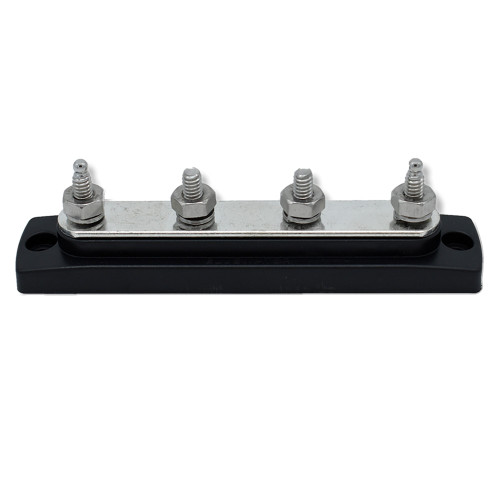
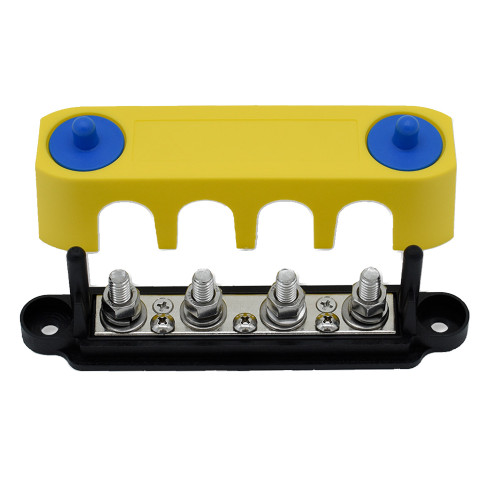
Establish a secure and efficient central point for all negative electrical returns on your vessel with this Bluewater common stud busbar. Engineered for demanding marine environments, it handles high current loads up to 250 Amps via a robust 5/16" common input stud. This terminal block significantly simplifies complex wiring, reducing clutter and ensuring consistent grounding essential for critical systems like engine electronics or bilge pumps.
Key Features
- Organizes wiring by consolidating negative connections
- Secures grounding with a common input stud
- Resists corrosion for harsh marine and off-road use
- Handles high currents up to 250 Amps
- Simplifies negative distribution with 4 gangs
- Reduces wire clutter for cleaner installations
- Ensures consistent grounding for system reliability
- Built for demanding electrical applications
Specifications
| Product Specifications | |
|---|---|
| Number of Gangs | 4 |
| Max Amperage Rating | 250 Amp |
| Stud Size | 5/16" |
| Input Type | Common Stud |
| Material | Corrosion-Resistant |
| Application | Marine and Off-Road Negative Distribution |
Who This Is For
Boat owners, RV enthusiasts, trailer owners, and custom electrical panel builders who require an organized, robust solution for managing negative electrical connections. This product is ideal for those operating in demanding environments where reliability and efficient wiring are paramount.
How It Compares
| Feature | Bluewater 4 Gang Negative Busbar | Competitor |
|---|---|---|
| Number of Gangs | 4 | 4, 4 |
| Maximum Amperage Rating | 250 Amp | 200 Amp, 150 Amp |
| Stud Size | 5/16" | 5/16", 5/16" |
| Primary Application | Negative Distribution (Battery/Chassis Returns) | Busbar, Busbar |
| Corrosion Resistance | Designed for harsh marine and off-road environments | Marine Grade, Marine Grade |
Common Concerns Answered
How robust is this busbar for marine environments?
This Bluewater busbar is specifically constructed with corrosion-resistant materials, making it highly durable for the demanding conditions encountered in marine settings and other harsh environments. Customers consistently praise its robustness for reliable grounding.
I'm concerned about the terminal screws loosening over time. How can I prevent this?
To ensure long-term security, it is crucial to properly tighten all terminal screws during installation. Periodic checks and re-tightening, especially after initial use or in high-vibration applications, will prevent any potential issues with connection integrity over time.
Are installation diagrams readily available?
While some packaging may occasionally lack detailed diagrams, the design of this 4-gang negative busbar is inherently straightforward. Basic electrical knowledge is sufficient for mounting and connecting wires to the common input stud and individual terminals.
Frequently Asked Questions
What is the maximum current rating for the Bluewater Common Stud 4 Gang Negative Busbar Terminal Block?
The Bluewater Common Stud 4 Gang Negative Busbar Terminal Block is rated for a maximum of 250 Amps.
What size stud does this negative busbar use?
This negative busbar utilizes a 5/16" common input stud.
How does this busbar simplify negative distribution?
It simplifies negative distribution by providing a single common input stud where all main negative wires connect, and then branching out to four individual terminal points, consolidating multiple runs into one organized unit.
Is this busbar suitable for marine environments?
Yes, this busbar is designed with corrosion-resistant construction specifically for harsh marine and off-road environments, ensuring durability and reliability on the water.
What are the benefits of using this busbar for battery or chassis returns?
Using this busbar for battery or chassis returns ensures a single, secure, and organized point for all negative connections. This improves the overall integrity of the electrical system, reduces the risk of stray voltage, and makes troubleshooting and maintenance more efficient.