
Description
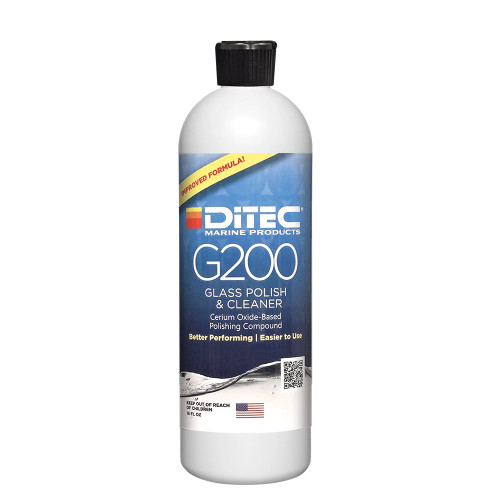
DiTEC G200 Glass Polish Compound 16oz | Boat Supply Store
Restore critical visibility on your vessel by eradicating stubborn blemishes from glass surfaces. DiTEC G200 leverages advanced ceramic and nano technologies with mild abrasives to precisely lift water spots, fine-to-medium wiper scratches, and surface contamination without inducing glass distortion. This 16oz, 100% water-soluble formulation is engineered for optimal performance with dual action or forced rotation polishers operating between 320-420 RPM, ensuring crystal-clear results for navigation in coastal or inland waterways.
Key Features
- Advanced ceramic and nano technology blend for superior clarity
- Effortlessly removes water spots and surface contamination
- Eliminates fine-to-medium wiper scratches and unsightly swirls
- Preserves glass integrity by preventing distortion or warping
- User-friendly and highly effective for professional results
- Quickly restores a crystal-clear appearance to marine glass
- 100% Water-soluble for easy cleanup and application
- Versatile application on glass, ceramic, stone, and tile
Specifications
| Product Specifications | |
|---|---|
| Size | 16oz |
| Formulation | Cerium oxide-based with ceramics and nano components |
| Appearance | Clear liquid |
| Solubility | 100% water soluble |
| Application Surfaces | Glass, ceramic, stone, tile |
| Polisher Recommendation | Dual action or forced rotation polisher |
| Recommended RPM | 320-420 RPM |
Who This Is For
Boat owners and professional marine detailers seeking to restore compromised glass clarity on vessels or coastal properties. Ideal for addressing common issues like water spots, etching, and minor abrasion marks.
How It Compares
| Feature | DiTEC G200 Glass Polish Compound 16oz | Competitor |
|---|---|---|
| Primary Active Ingredient | Cerium Oxide, Ceramics, Nano Components | Mild Abrasives, Mild Abrasives |
| Scratch Removal Capability | Fine-to-medium wiper scratches and swirls | Minor scratches and imperfections, Light scratches and haze |
| Risk of Glass Distortion | Low (does not distort or warp glass) | Moderate (can cause micro-scratches if misused), Low |
| Water Spot Removal | Effective | Moderate, Light |
| Recommended Polisher Type | Dual action or forced rotation | Rotary or Dual Action Polisher, Hand or Machine Applicator |
Common Concerns Answered
Is this difficult to use?
While not a simple spray-and-wipe, DiTEC G200 requires specific equipment like a dual action or forced rotation polisher and adherence to recommended RPM speeds (320-420 RPM) for optimal results and safety, making the installation difficulty rated at 3 out of 5.
Is this product expensive?
DiTEC G200 is priced at $48.99, reflecting its advanced ceramic and nano technology formulation which offers superior performance and reduced risk of glass distortion compared to more basic glass cleaners.
Will this damage my glass?
No, DiTEC G200 is specifically formulated to avoid glass distortion and warping, a common risk with traditional cerium oxide compounds. Its mild abrasives, combined with advanced ceramic and nano technologies, ensure safe and effective removal of imperfections.
Frequently Asked Questions
What type of polisher is recommended for DiTEC G200 Glass Polishing Compound?
A dual action or forced rotation polisher is recommended for optimal results with DiTEC G200.
What RPM speed is suggested for using DiTEC G200?
The suggested RPM speed for using DiTEC G200 is between 320-420 RPM.
What surfaces can DiTEC G200 be used on?
DiTEC G200 can be used on glass, ceramic, stone, and tile surfaces.
How does DiTEC G200 differ from traditional cerium oxide compounds?
DiTEC G200 utilizes advanced ceramic and nano technologies alongside mild abrasives, offering effective stain and scratch removal without the risk of glass distortion common with traditional cerium oxide compounds.
What kind of pad should be used with DiTEC G200?
While not explicitly stated, the recommendation for a dual action or forced rotation polisher suggests using appropriate polishing pads designed for those machines, typically foam or wool pads suited for glass polishing compounds.