
Description
Garmin SteadyCast Heading Sensor | Boat Supply Store
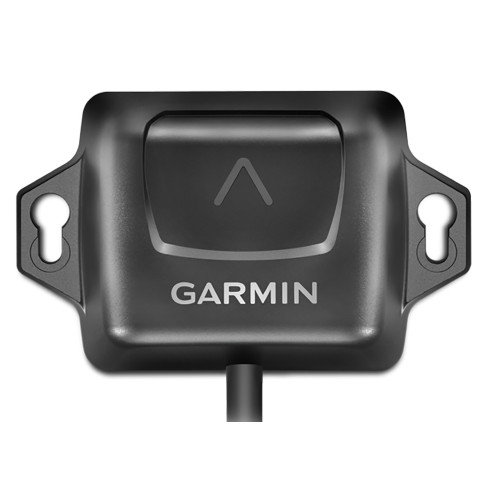
Resolve chartplotter disorientation during critical maneuvers with the Garmin SteadyCast Heading Sensor. This sensor provides superior heading accuracy, delivering a precise +/- 3 degrees of deviation, and features a 10 Hz output rate vital for slow-speed trolling or navigating rough Gulf Coast chop. Its 9-axis MEMS technology allows for flexible installation in any orientation, directly integrating into your vessel's NMEA 2000 network for straightforward setup.
Key Features
- Ensures bow orientation on chartplotter matches actual vessel heading
- Delivers heading accuracy of +/- 3 degrees
- Integrates via NMEA 2000 plug-and-play interface
- Features a simple 2-step calibration process
- Utilizes 9-axis MEMS technology for versatile installation
- Provides accurate heading at low speeds with a 10 Hz output rate
- Performs effectively in challenging rough water conditions
- Withstands typical bilge environments for durability
Specifications
| Product Specifications | |
|---|---|
| Heading Accuracy | +/- 3 degrees |
| Output Rate | 10 Hz |
| Technology | 9-axis MEMS |
| Interface | NMEA 2000 |
| Calibration | 2-step process |
| Operating Conditions | Rough waters, low speeds, bilge environments |
Who This Is For
Boaters requiring precise chartplotter orientation to match their vessel's actual heading, particularly those engaged in trolling or complex navigation. This sensor is ideal for individuals seeking an accurate, easy-to-install heading solution.
How It Compares
| Feature | Garmin SteadyCast Heading Sensor | Competitor |
|---|---|---|
| Heading Accuracy | +/- 3 degrees | +/- 1 degree, +/- 2 degrees |
| Technology | 9-axis MEMS | GPS and 9-axis IMU, 3-axis solid-state compass and 9-axis attitude sensor |
| Interface | NMEA 2000 | NMEA 2000, SeaTalkNG / NMEA 2000 |
| Output Rate | 10 Hz | 10 Hz, 20 Hz |
Common Concerns Answered
Will magnetic interference affect its accuracy?
While the 9-axis MEMS technology is designed to minimize interference, optimal placement away from strong magnetic sources is crucial for maintaining the +/- 3-degree accuracy. The manual provides guidance on suitable mounting locations.
Is recalibration ever necessary?
In certain environments with significant magnetic anomalies, recalibration might be occasionally required to ensure peak performance. The simple 2-step calibration process makes this straightforward when needed.
Is the +/- 3-degree accuracy sufficient for my needs?
For precise navigation, trolling, and ensuring accurate chartplotter orientation, +/- 3 degrees offers a significant improvement over uncorrected data. While higher-accuracy sensors exist, the SteadyCast provides excellent value and performance for most recreational boating applications.
Frequently Asked Questions
What is the heading accuracy of the Garmin SteadyCast Heading Sensor?
The Garmin SteadyCast Heading Sensor provides a heading accuracy of +/- 3 degrees.
How is the Garmin SteadyCast Heading Sensor installed?
Installation is achieved via a simple NMEA 2000 plug-and-play interface, requiring connection to your boat's existing NMEA 2000 network.
Can the Garmin SteadyCast Heading Sensor be installed in any orientation?
Yes, the 9-axis MEMS technology allows for installation in any orientation, providing flexibility in mounting location to avoid interference.
What technology does the Garmin SteadyCast Heading Sensor use for accuracy?
The sensor utilizes advanced 9-axis MEMS technology to ensure precise heading data.
What is the heading output rate of the Garmin SteadyCast Heading Sensor?
The heading output rate is 10 Hz, which is ideal for maintaining accurate heading information even at low vessel speeds.