

Description
Garmin GFS 10 Fuel Sensor | Boat Supply Store
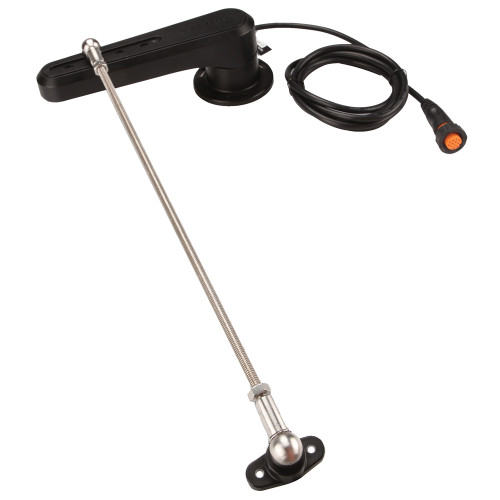
Optimize your gasoline-powered vessel's fuel efficiency and gain precise consumption data with the Garmin GFS 10 Fuel Sensor. This unit accurately tracks fuel flow from a minimum of 2 GPH up to a maximum of 50 GPH, transmitting critical metrics to compatible Garmin chartplotters. When integrated with existing analog gauges or resistive sensors, it also provides fuel level monitoring, offering a consolidated view of your vessel's fuel status. Ideal for offshore fishing boats operating in the Gulf of Mexico, this sensor enhances planning and operational awareness.
Key Features
- Tracks fuel flow and consumption for precise usage monitoring.
- Optimizes your vessel's fuel economy through accurate data.
- Integrates seamlessly with Garmin chartplotters via CANet or NMEA 2000.
- Provides fuel level sensing when connected to existing analog gauges or resistive sensors.
- Supports a maximum fuel flow rate of 50 gallons per hour.
- Measures fuel flow down to a minimum of 2 gallons per hour.
- Enhances operational awareness for efficient voyage planning.
- Consolidates fuel data for a comprehensive overview.
Specifications
| Product Specifications | |
|---|---|
| Max flow rate | 50 GPH |
| Min flow rate | 2 GPH |
| Compatibility | Gasoline Engines Only |
| Connectivity | CANet or NMEA 2000 |
| Fuel Level Sensing | When connected to existing analog fuel gauge or resistive fuel tank sensor |
Who This Is For
Boaters operating gasoline engines who require detailed fuel flow and level monitoring to optimize performance and range. This sensor is essential for integrating critical fuel data with their existing Garmin marine electronics suite.
How It Compares
| Feature | Garmin GFS 10 Fuel Sensor | Competitor |
|---|---|---|
| Fuel Flow Sensing | Yes | Yes, Yes |
| Fuel Level Sensing | Yes (with existing analog gauge or resistive sensor) | No, No |
| Connectivity | CANet / NMEA 2000 | Analog, NMEA 2000 |
| Engine Type Compatibility | Gasoline Engines Only (No fuel return line for injected) | Gasoline Engines, Gasoline Engines |
| Max Fuel Flow Rate | 50 GPH | Not specified, Not specified |
| Min Fuel Flow Rate | 2 GPH | Not specified, Not specified |
Common Concerns Answered
Will the Garmin GFS 10 work with my diesel engine?
No, the Garmin GFS 10 is exclusively designed for gasoline engines and is not compatible with diesel power plants.
Can I use the GFS 10 with a fuel-injected gasoline engine that has a return line?
The GFS 10 is not compatible with fuel-injected gasoline engines that feature a fuel return line; it is intended for systems without such a return.
Do I need additional components to connect the GFS 10 to my chartplotter?
For GPSMAP 4xx/5xx series chartplotters, a separate CANet kit is required for connection. Other Garmin chartplotters may utilize NMEA 2000 or CANet directly.
Frequently Asked Questions
What is the maximum fuel flow rate the Garmin GFS 10 can measure?
The Garmin GFS 10 Fuel Sensor can accurately measure a maximum fuel flow rate of 50 gallons per hour (GPH).
What is the minimum fuel flow rate detectable by the GFS 10?
The GFS 10 is designed to detect fuel flow rates as low as 2 gallons per hour (GPH).
Does the Garmin GFS 10 provide fuel level information?
Yes, the GFS 10 uniquely offers fuel level sensing capabilities when connected to an existing analog fuel gauge or a resistive fuel tank sensor.
How does the GFS 10 communicate with a Garmin chartplotter?
Data from the GFS 10 is transmitted to compatible Garmin chartplotters via the CANet or NMEA 2000 networking standards.
What is the recommended installation difficulty for the Garmin GFS 10?
Installation is rated at a 3/5 difficulty, requiring basic knowledge of marine fuel lines and network connections (NMEA 2000 or CANet). Professional installation is advised for those unfamiliar with these systems.