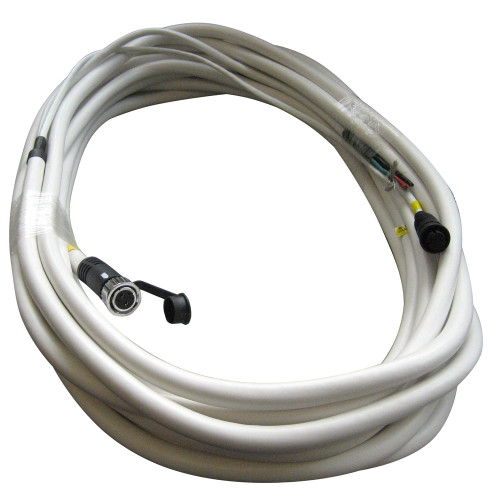


Description
Raymarine 10M Digital Radar Cable w/ RayNet | Boat Supply Store
Establish a robust data link for your Raymarine digital radar system with this 10-meter cable. It ensures high-performance signal integrity for accurate target detection, crucial for navigating complex waterways or pinpointing fishing structure. The dedicated RayNet connector on one end facilitates a secure, plug-and-play interface with compatible Raymarine Multi-Function Displays or radar processors, delivering essential target data without signal degradation.
Key Features
- Reliable 10-meter cable length for optimal scanner-to-display reach.
- Dedicated RayNet connector for secure, high-speed data transfer.
- Optimized for Raymarine digital radar systems ensuring compatibility.
- Durable marine-grade construction built to withstand harsh offshore environments.
- Facilitates seamless integration with Raymarine MFDs.
- Ensures consistent data transmission for accurate radar imagery.
- Plug-and-play RayNet interface simplifies installation.
- High-performance connection for critical navigational data.
Specifications
| Product Specifications | |
|---|---|
| 10-meter digital radar cable with a RayNet connector on one end, designed for Raymarine digital radar systems | 10-meter digital radar cable with RayNet connector |
Who This Is For
Boat owners and marine electronics installers requiring a direct 10-meter connection for Raymarine digital radar scanners to their compatible MFDs. Ideal for those needing to integrate radar data with a RayNet port on one end of the cable.
How It Compares
| Feature | Raymarine 10M Digital Radar Cable w/ RayNet | Competitor |
|---|---|---|
| Connector Type (One End) | RayNet | Proprietary Garmin, Proprietary Simrad |
| Cable Length | 10 meters | 10 meters, 10 meters |
| Brand Compatibility | Raymarine | Garmin, Simrad |
Common Concerns Answered
Will I need an adapter for the non-RayNet end of this cable?
Yes, this cable features a RayNet connector on only one end. Depending on your specific Raymarine MFD or radar processor, you may need to verify its input port or acquire an appropriate adapter to ensure full compatibility. Always check your device's specifications prior to purchase.
Is the 10-meter length sufficient for my vessel?
The 10-meter length is suitable for many mid-sized vessels, but it may be insufficient for larger yachts or specific installation requirements. Measure your intended cable run carefully to confirm suitability. Longer or custom cable solutions may be available for extended reaches.
Can I use this cable for other Raymarine devices?
This cable is specifically engineered and optimized for Raymarine digital radar systems. While RayNet connectors are used on other Raymarine products, using this cable for non-radar applications may not yield the expected performance or compatibility and is not recommended.
Frequently Asked Questions
What Raymarine radar units is the A80228 cable compatible with?
The Raymarine A80228 cable is designed for direct connection with Raymarine digital radar scanners and compatible Raymarine Multi-Function Displays (MFDs) or radar processors that feature a RayNet port. Consult your specific radar scanner and MFD's installation manual for definitive compatibility confirmation.
What is the length of the Raymarine A80228 cable?
The Raymarine A80228 cable has a length of 10 meters.
Does the Raymarine A80228 cable have a RayNet connector on both ends?
No, the Raymarine A80228 cable features a RayNet connector on only one end. The other end is designed for connection to the radar scanner or display unit via its proprietary interface.
Can I use the Raymarine A80228 cable for other Raymarine devices besides radar?
This cable is specifically designed for Raymarine digital radar systems. Using it with other types of Raymarine equipment may not be supported and could lead to performance issues or damage. Always use cables specified for the intended application.
What is the difference between a digital radar cable and an analog radar cable?
Digital radar cables, like the A80228, transmit radar data as digital signals, offering higher resolution, faster refresh rates, and better target separation than older analog radar cables. Analog cables transmit raw RF signals which are processed by the display, often resulting in lower fidelity and more susceptibility to interference.