

Description
14 3/4x17 S3r Prop for Yamaha | Boat Supply Store
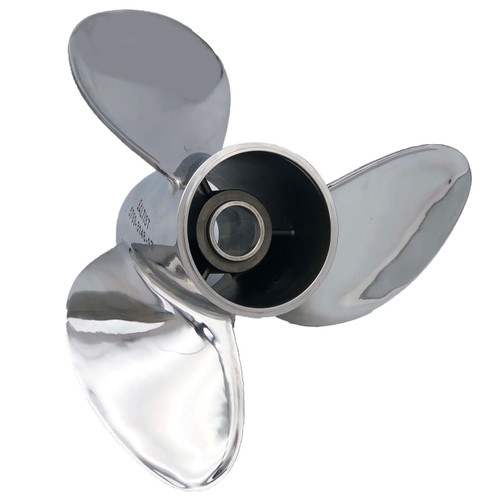
This 14 3/4 x 17 inch, three-blade S3r stainless steel propeller from POLARIS PROPELLER USA, INC. is engineered to deliver superior thrust and efficiency for Yamaha outboard engines F115 through F225. Its advanced blade design, featuring a high-performance rake angle and specialized cupping, minimizes ventilation and cavitation, providing optimal grip in a variety of marine environments. Ideal for center console boats or bass boats operating in coastal waters or large inland lakes, this prop ensures consistent hole-shot performance and high-speed cruise capabilities.
Key Features
- Optimizes thrust for improved hole-shot and top-end speed.
- Engineered with stainless steel for maximum durability and corrosion resistance.
- Features a 14 3/4 inch diameter and 17 inch pitch for precise engine matching.
- S3r blade geometry reduces ventilation and cavitation for smoother operation.
- Enhances fuel efficiency through optimized hydrodynamic design.
- Designed for demanding marine environments and extended use.
- Direct replacement for specific Yamaha F115-F225 outboards.
- Expertly balanced for vibration-free performance.
Specifications
| Product Specifications | |
|---|---|
| Diameter | 14 3/4" |
| Pitch | 17" |
| Blades | 3 |
| Material | Stainless Steel |
| Rotation | Right Hand |
Who This Is For
Boaters with Yamaha F115-F225 outboard engines seeking to maximize performance and efficiency. This propeller is ideal for those who prioritize a responsive engine and improved planing capabilities.
How It Compares
| Feature | 14 3/4x17 S3r Prop for Yamaha | Yamaha |
|---|---|---|
| Diameter | 14 3/4" | 14 1/2" |
| Pitch | 17" | — |
| Blades | 3 | 3 |
| Material | Stainless Steel | Aluminum |
Common Concerns Answered
Will this propeller fit my specific Yamaha outboard model?
This 14 3/4x17 S3r propeller is designed as a high-performance upgrade for Yamaha F115 through F225 outboard engines. Always verify your engine's specific requirements and recommended propeller specifications to ensure optimal compatibility and performance.
How does stainless steel compare to aluminum for propellers?
Stainless steel propellers offer significantly greater durability and resistance to erosion and damage compared to aluminum, leading to a longer service life and maintaining their performance characteristics over time. This makes them ideal for the rigors of marine use.
What is 'ventilation' and 'cavitation' in relation to propellers?
Ventilation occurs when exhaust gases from the engine are drawn into the propeller blades, reducing thrust. Cavitation is the formation of vapor bubbles on the blades due to low pressure, which can lead to blade damage and reduced efficiency. The S3r design is engineered to minimize both these phenomena.
Frequently Asked Questions
What is the recommended application for a 14 3/4 x 17 propeller?
This propeller size is generally well-suited for mid-range to larger horsepower outboards, providing a balance of acceleration and top-end speed for a variety of hull types including center consoles and V-hulls, particularly in saltwater environments.
Does the S3r designation indicate a specific blade design feature?
Yes, the S3r designation refers to a specific blade profile developed by POLARIS PROPELLER USA, INC. that incorporates features such as high rake and specialized cupping to enhance hydrodynamic efficiency and grip.
What does a 'right-hand rotation' propeller mean?
A right-hand rotation propeller turns clockwise when viewed from the rear of the boat, which is standard for most single-engine configurations and aids in forward propulsion.
How do I determine if a 17-inch pitch is correct for my boat?
The correct pitch is determined by your engine's wide-open throttle (WOT) RPM range. A 17-inch pitch typically matches engines that achieve their WOT RPM at a certain point within their specified operating range; consult your engine's manual for precise recommendations.
Is professional installation recommended for this propeller?
While propeller installation is straightforward, ensuring correct torque on the propeller nut and proper alignment is critical. A '1' for InstallDifficulty suggests it's manageable for experienced DIYers, but consulting your owner's manual or a marine mechanic is always advised for critical components.


