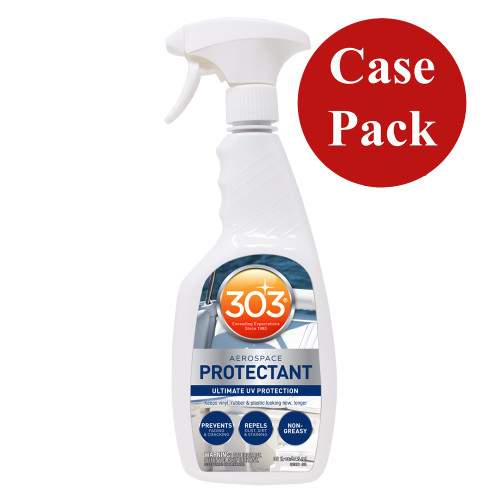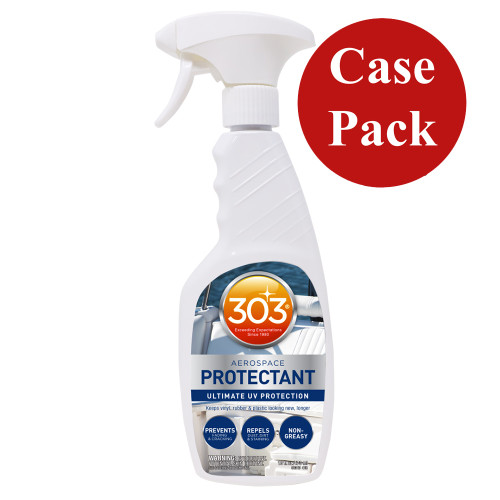


Description
303 Marine Aerospace Protectant 1 Gallon | Boat Supply Store
Combat the destructive effects of solar radiation and environmental contaminants with 303 Marine Aerospace Protectant. This advanced formulation provides a critical barrier against UV damage, preventing premature aging, cracking, and fading on numerous marine materials. Its capacity to restore lost color and luster, while repelling stains, ensures aesthetic integrity and functional longevity for your watercraft, particularly in high-salinity coastal environments like those found along the Texas Gulf Coast.
Key Features
- Powerful UV blockers prevent fading, cracking, and premature aging
- Restores lost color and luster to dulled surfaces
- Dries to a clear matte finish, avoiding gloss or glare
- Easy to use application process: spray on and wipe dry
- Safe and effective on vinyl, Plexiglas®, carbon fiber, rubber, plastics, and finished leather
- Repels stains and prevents water spotting
- Keeps fishing gear clean and protected from sun degradation
- 100% free of grease-producing silicone oils and petroleum distillates for a clean finish
Specifications
| Product Specifications | |
|---|---|
| Volume | 1 Gallon |
| Finish | Clear Matte |
| Silicone/Petroleum Free | Yes |
Who This Is For
Boat owners and RV owners requiring robust protection against UV degradation and the elements for their specialized materials. Individuals seeking to preserve the visual appeal and extend the service life of their outdoor equipment and watercraft will find this product indispensable.
How It Compares
| Feature | 303 Marine Aerospace Protectant 1 Gallon | Competitor |
|---|---|---|
| Volume | 1 Gallon | — |
| Primary Function | UV Protectant | Protectant, Cleaner and Protectant |
| Finish | Clear Matte | Matte, Satin |
| UV Protection | High | Yes, Yes |
| Silicone/Petroleum Free | Yes | Yes, Unknown |
Common Concerns Answered
Why is the price higher than other protectants?
While the initial investment may be higher, the concentrated formula and superior UV blocking capabilities of 303 Marine Aerospace Protectant deliver extended protection and material longevity, offering a demonstrably greater return on value over time compared to less potent alternatives.
Can I use this on clear plastics like headlights?
303 Marine Aerospace Protectant is not recommended for use on clear plastics, gauge panels, or headlights. Its formulation is optimized for materials like vinyl, rubber, and fiberglass, and specific warnings are in place to prevent unintended hazing or damage on sensitive surfaces.
Is this product safe for all boat materials?
This product is safe and effective for vinyl, rubber, fiberglass, carbon fiber, plastics, and finished leather. However, it is explicitly not intended for use on unfinished leathers, fabrics, floorings, clear plastics, gauge panels, or headlights to ensure optimal results and prevent material damage.
Frequently Asked Questions
What surfaces can I use 303 Marine Aerospace Protectant on?
You can confidently apply 303 Marine Aerospace Protectant to vinyl, rubber, fiberglass, carbon fiber, plastics, and finished leather. It is designed to safeguard these common marine materials.
What surfaces should I avoid using 303 Marine Aerospace Protectant on?
Avoid using 303 Marine Aerospace Protectant on unfinished leathers, fabrics, floorings, clear plastics, gauge panels, or headlights. These surfaces require different care or are not compatible with the product's formulation.
How often should I apply 303 Marine Aerospace Protectant?
The application frequency depends on exposure levels, but generally, reapplying every 30-45 days for high-use items or every 2-3 months for less exposed surfaces provides optimal protection against UV degradation.
Does 303 Marine Aerospace Protectant leave a greasy residue?
No, 303 Marine Aerospace Protectant dries to a clear matte finish and is formulated to be 100% free of grease-producing silicone oils and petroleum distillates, ensuring a non-tacky, clean surface.
Is 303 Marine Aerospace Protectant safe for inflatable boats?
Yes, it is safe for inflatable boats and is specifically beneficial for preventing them from sticking together during storage, ensuring they remain in good condition.