

Description
Airmar B175H 1kW Bronze Transducer | Boat Supply Store
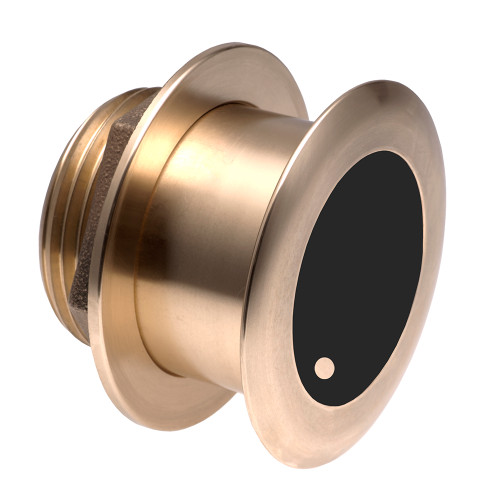
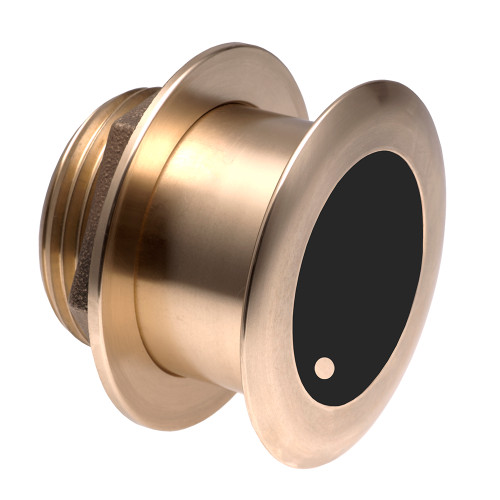
For serious anglers demanding unparalleled underwater clarity, this Airmar B175H bronze thru-hull transducer provides an 80 kHz total bandwidth within a single installation, delivering five to ten times greater detail and resolution. It effectively distinguishes individual baitfish, game fish, and complex underwater structures down to 3,000 meters. Operating with 1kW power, it CHIRPS across a 130 kHz to 210 kHz frequency range with a variable beamwidth of 15 to 9 degrees, ideal for deep-water applications found in Gulf of Mexico canyons.
Key Features
- Unrivaled Detail: Delivers up to 80 kHz of total bandwidth in one installation for superior fish and structure identification.
- Deep Water Performance: Effectively penetrates depths up to 3,000m (10,000') with precision.
- Exceptional Resolution: Provides 5 to 10 times greater detail for distinguishing individual targets.
- Powerful 1kW Output: Ensures strong signal penetration for clear readings in challenging depths.
- Wide CHIRP Bandwidth: CHIRPS from 130 kHz to 210 kHz, offering versatile detection capabilities.
- Variable Beamwidth: Features a 15 to 9 degree beamwidth, narrowing for improved target resolution at depth.
- Integrated Sensors: Includes a depth and fast-response water temperature sensor for comprehensive data.
- Durable Bronze Housing: Engineered for longevity and optimal performance in harsh marine environments.
Specifications
| Product Specifications | |
|---|---|
| Brand | Airmar |
| Model | B175H |
| Housing Material | Bronze |
| Power Output | 1kW |
| CHIRP Frequency Range | 130 kHz to 210 kHz |
| Beamwidth | 15° to 9° |
| Tilt Angle | 20° |
| Depth Sensor | Yes |
| Water Temperature Sensor | Yes |
| Xducer ID® Technology | Yes |
| Hull Type Compatibility | Fiberglass or Wood |
| Recommended Boat Size | Up to 11m (36') |
| Maximum Depth | 3,000m (10,000') |
Who This Is For
Commercial fishermen, charter captains, and tournament anglers who require high-detail bottom detection and precise fish identification capabilities. This transducer is designed for those who demand the utmost in sonar performance for deep-water reconnaissance and target acquisition.
How It Compares
| Feature | Airmar B175H 1kW Bronze Transducer | Mid-band CHIRP |
|---|---|---|
| Power Output | 1kW | 600W |
| CHIRP Frequency Range | 130 kHz - 210 kHz | 80 kHz - 160 kHz |
| Beamwidth | 15° to 9° | 25°x16° @ 80 kHz |
| Transducer Housing Material | Bronze | Plastic |
| Tilt Angle | 20° | null |
| Depth & Temperature Sensor | Yes | Yes |
| Xducer ID® Technology | Yes | Yes |
Common Concerns Answered
Is a cable included with the Airmar B175H transducer?
No, this Airmar B175H transducer requires a separate Mix and Match cable, which is not included. This allows for flexible integration with compatible Airmar sounder modules and displays.
Can this transducer be returned to BoatSupplyStore.com if there's an issue?
Due to manufacturer policy, this Airmar transducer is not returnable to the point of purchase. For any warranty claims or product issues, direct contact with Airmar customer support is necessary.
Is the high cost of the Mix and Match cable a significant factor?
Yes, the requirement for a separate Mix and Match cable can increase the overall cost and installation complexity. It is essential to factor this additional component into your budget and installation plan.
Frequently Asked Questions
What is the frequency range of the Airmar B175H transducer?
The Airmar B175H transducer CHIRPS from 130 kHz to 210 kHz.
What is the power output of the Airmar B175H transducer?
The Airmar B175H transducer has a power output of 1kW.
What is the beamwidth of the Airmar B175H transducer?
The beamwidth of the Airmar B175H transducer ranges from 15 degrees at the lower frequency to 9 degrees at the higher frequency.
What type of hull is the Airmar B175H transducer suitable for?
The Airmar B175H transducer is suitable for fiberglass or wood hulls.
What is Xducer ID® technology?
Xducer ID® technology is Airmar's exclusive feature that allows the transducer to communicate its own identification information and operating parameters to the sounder module, simplifying setup and optimization.