

Description
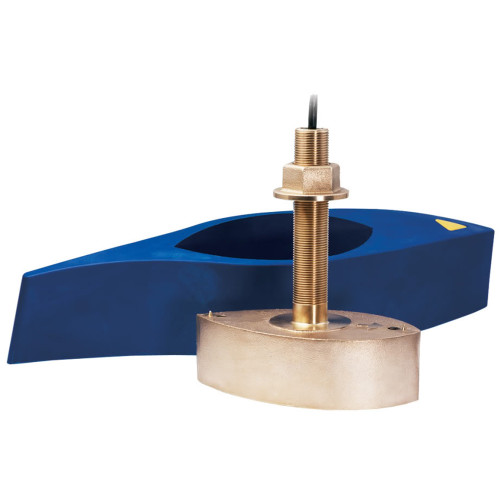
Airmar B275C-LHW Bronze CHIRP Transducer | Boat Supply Store
This Airmar B275C-LHW transducer overcomes the limitations of narrow sonar beams in deeper waters by providing a broad 25° beam width across its entire 150-250 kHz CHIRP band. Its 1 kW power output effectively penetrates water to deliver detailed bottom structure and fish targets. Constructed from durable bronze for thru-hull mounting, this unit also incorporates precise depth and temperature sensing capabilities, making it ideal for serious anglers targeting structure or seeking improved baitfish detection in offshore environments.
Key Features
- Unrivaled Coverage: Constant 25° beam width across the entire high-frequency CHIRP band delivers twice the coverage of standard transducers.
- Enhanced Fish Detection: Wider beam captures more baitfish schools and structural details for improved target acquisition.
- Superior Bottom Imaging: Crisper and larger return images on your display provide clearer seabed visualization.
- Powerful Performance: 1 kW power output ensures strong signal penetration for depth and detail.
- Broad Frequency Range: Combines Low Frequency (42-65 kHz) and High Frequency (150-250 kHz) CHIRP for versatile performance.
- Durable Construction: Robust bronze thru-hull housing is engineered for longevity in harsh marine conditions.
- Integrated Sensors: Includes precise depth and temperature readings directly from the transducer.
- CHIRP Optimization: Specifically designed to leverage the full potential of CHIRP-ready echosounders.
Specifications
| Product Specifications | |
|---|---|
| Low Frequency Range | 42-65 kHz |
| High Frequency Range | 150-250 kHz |
| Beam Width | Constant 25° |
| Power Output | 1 kW |
| Construction | Bronze Thru-Hull |
| Features | Depth and Temperature readings, Wide beam CHIRP technology |
| Cable System | Requires Mix & Match cable (sold separately) |
Who This Is For
Anglers and boaters demanding superior underwater visibility and coverage from their CHIRP echosounder. This transducer is for those seeking to maximize fish detection and bottom imaging accuracy, especially in mid-depth fishing grounds.
How It Compares
| Feature | Airmar B275C-LHW Bronze CHIRP Transducer | Garmin GT51M |
|---|---|---|
| Frequency Range (Low) | 42-65 kHz | 50 kHz |
| Frequency Range (High) | 150-250 kHz | 150-240 kHz |
| Beam Width (High Frequency) | 25° (Constant) | 16° |
| Power Output | 1 kW | 600W |
| Material | Bronze | Plastic |
| Mounting Type | Thru-Hull | Thru-Hull |
| Cable System | Mix & Match | Proprietary |
Common Concerns Answered
Does this transducer come with a cable?
No, the Airmar B275C-LHW requires a separate Mix & Match cable, which must be purchased in addition to the transducer.
Is installation straightforward?
Installation difficulty is rated 4/5. It involves drilling through the hull, requires precise sealing, and careful consideration of hull deadrise and water flow. Professional installation is recommended for optimal results.
How does hull design affect performance?
Hull design and installation accuracy are critical factors affecting transducer performance. Errors in placement or mounting can lead to suboptimal readings and reduced effectiveness.
Frequently Asked Questions
What is the frequency range of the Airmar B275C-LHW transducer?
The Airmar B275C-LHW transducer operates across two ranges: Low Frequency (42-65 kHz) and High Frequency (150-250 kHz).
What is the beam width of the Airmar B275C-LHW transducer?
The Airmar B275C-LHW transducer features a constant 25° beam width across its entire high-frequency CHIRP band.
What type of hull material is the Airmar B275C-LHW designed for?
The Airmar B275C-LHW is constructed from bronze, making it suitable for fiberglass and wooden hulls. Proper installation procedures are crucial for all hull types.
Does the Airmar B275C-LHW come with a cable?
No, this transducer requires a specific Mix & Match cable (sold separately) to connect to your echosounder module.
What is the power output of the Airmar B275C-LHW transducer?
The Airmar B275C-LHW transducer has a power output of 1 kW, enabling robust signal transmission and reception.


