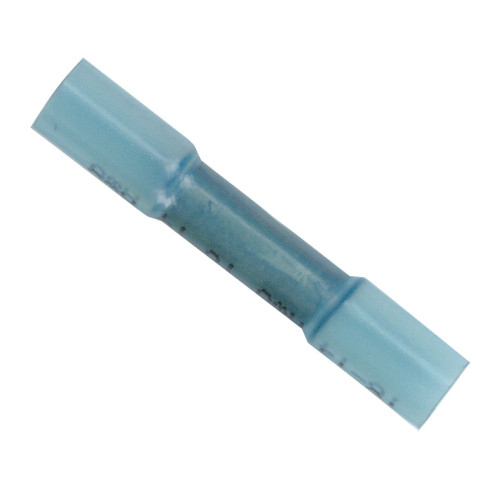


Description
Ancor 22-18 AWG Heat Shrink Butt Connectors 500pk | Boat Supply Store
Ensure robust electrical integrity in demanding marine environments with these Ancor 22-18 AWG heat shrink butt connectors. Engineered for superior sealing, their proprietary heat-activated adhesive lining creates an impervious barrier against saltwater, oil, and UV exposure, crucial for offshore fishing vessels. With a high shrink ratio of 3:1, they deliver excellent strain relief on wiring rated from 22-18 AWG, operating reliably between -40°C and 110°C.
Key Features
- Impervious Seal against saltwater, oil, acids, and sunlight via heat-activated adhesive.
- Superior Strength and burn resistance with cross-linked polyolefin tubing.
- Excellent Durability from nylon insulator resisting water, chemicals, and vibration.
- Maximum Current Flow and corrosion resistance with tinned pure copper construction.
- Maximum Connector Strength achieved through a brazed seam.
- Secure Connection with the highest shrink ratio, reducing to 1/3 size.
- Certified Quality Assurance with UL Listed and CSA Recognized ratings.
- Reliable Performance across a wide temperature range of -40°C to 110°C.
Specifications
| Product Specifications | |
|---|---|
| Ancor 22-18 AWG Heatshrink Butt Connectors | 500-pack |
| Tubing Material | Cross-linked polyolefin |
| Insulator Material | Nylon |
| Adhesive Type | Heat-activated |
| Certifications | UL Listed, CSA Recognized |
| Shrink Ratio | 3:1 (shrinks to 1/3 size) |
| Operating Temperature Range | -40°C to 110°C |
| Conductor Material | Tinned pure copper |
| Seam Type | Brazed |
| Wire Gauge Range | 22-18 AWG (0.3-0.8 mm²) |
Who This Is For
Marine electricians and boat owners undertaking electrical repairs or installations demanding long-term, watertight connections. DIYers can also utilize these for reliable and vibration-resistant circuit termination on recreational watercraft.
How It Compares
| Feature | Ancor 22-18 AWG Heat Shrink Butt Connectors 500pk | Competitor |
|---|---|---|
| Wire Gauge | 22-18 AWG | 16-14 AWG; 22-18 AWG |
| Quantity | 500 | 10; 50 |
| Insulator Material | Nylon | Polyolefin; Polyolefin |
| Seal Type | Heat Activated Adhesive | Heat Shrink Adhesive; Heat Shrink Adhesive |
Common Concerns Answered
Will these connectors fail if heat is applied unevenly?
Consistent, uniform heat application with a proper heat gun is critical to activate the adhesive lining and achieve a perfect, waterproof seal. Following installation instructions minimizes this risk.
Are these connectors more expensive than non-marine alternatives?
While the initial cost may be higher, Ancor's specialized marine-grade materials, including the heat-activated adhesive and nylon insulator, provide superior longevity and reliability in harsh saltwater environments, justifying the investment.
Is it difficult to achieve a good seal?
With basic electrical knowledge and the correct heat application, achieving a reliable seal is straightforward. The connectors are designed for straightforward installation using a heat gun.
Frequently Asked Questions
What is the wire gauge range for these Ancor heat shrink butt connectors?
These Ancor connectors are designed for wire gauges ranging from 22 AWG to 18 AWG, corresponding to wire cross-sectional areas of 0.3 to 0.8 mm².
What is the operating temperature range for these connectors?
These connectors are rated for operation within a temperature range of -40°C to 110°C (-40°F to 230°F).
Are these connectors waterproof and resistant to marine environments?
Yes, the heat-activated adhesive lining creates an impervious seal against saltwater, oil, acids, and sunlight, making them highly resistant to harsh marine environments.
What is the shrink ratio of these Ancor heat shrink connectors?
These Ancor heat shrink connectors have a high shrink ratio, reducing to one-third of their original size upon proper heat application, ensuring a tight and secure connection.
What is the primary benefit of the nylon insulator in these connectors?
The nylon insulator provides excellent resistance to sunlight, water, oil, chemicals, vibration, and cut-through damage, contributing to the connector's overall durability and reliability in marine applications.