
Description
Ancor 14/2 AWG Duplex Cable Red/Yellow 100' | Boat Supply Store
Designed for the demanding marine environment, this 14/2 AWG duplex cable provides robust electrical connections resistant to harsh conditions. Its construction ensures long-term reliability, crucial for offshore vessels or coastal cruisers operating in saltwater environments. The cable features a 600V rating and a temperature range of 105°C dry / 75°C wet, meeting stringent safety and performance benchmarks. This specific Ancor product offers exceptional flexibility and durability, making it an ideal choice for powering critical systems aboard your vessel.
Key Features
- Superior marine-grade construction for ultimate durability.
- Ultra-flexible tinned copper stranding ensures easy routing and vibration resistance.
- Premium vinyl insulation exceeds UL 1426 standards for enhanced protection.
- Exceptional resistance to corrosion and electrolysis prolongs service life.
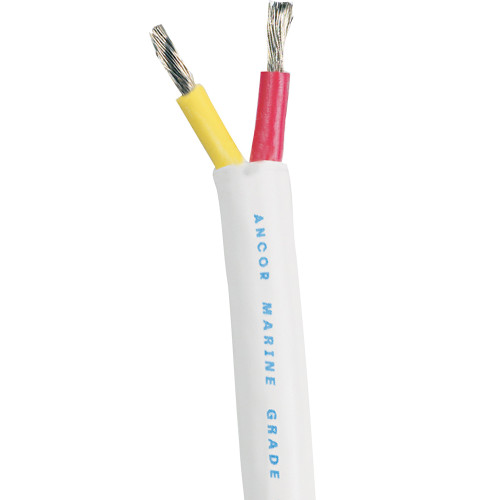
- Color-coded conductors (Red/Yellow) adhere to ABYC standards for proper identification.
- White common jacket offers superior abrasion resistance and easy stripping.
- Maintains flexibility in extreme cold (-40°F/C) for year-round usability.
- Rated for 600V and high temperatures (105°C dry / 75°C wet) for safe operation.
Specifications
| Product Specifications | |
|---|---|
| Gauge | 14/2 AWG |
| Conductor Colors | Red/Yellow |
| Jacket Color | White |
| Length | 100' |
| Voltage Rating | 600V |
| Temperature Rating (Dry) | 105°C |
| Temperature Rating (Wet) | 75°C |
| Flexibility Temperature | -40°F/C |
| Stranding Type | Ultra flexible (Type 3/Class K) |
| Material | Tinned Copper |
| Insulation Type | Premium Vinyl |
| Standards Compliance | UL 1426 |
Who This Is For
Marine electricians and boat builders requiring high-quality, reliable wiring solutions for new installations or refits. DIY boat owners seeking durable and corrosion-resistant cable for essential electrical systems on their vessels.
How It Compares
| Feature | Ancor 14/2 AWG Duplex Cable Red/Yellow 100' | Competitor |
|---|---|---|
| Gauge | 14/2 AWG | 14 AWG |
| Conductor Count | 2 | 2 |
| Jacket Color | White | White |
| Stranding Type | Ultra flexible (Type 3/Class K) | Stranded |
| Exceeds UL 1426 Standards | Yes | Yes/Not Specified |
| Temperature Rating (Dry) | 105°C | 105°C |
| Temperature Rating (Wet) | 75°C | 75°C |
Common Concerns Answered
Is the outer jacket difficult to strip?
While some users report occasional difficulty in achieving a perfectly clean strip of the white outer jacket without nicking conductors, this is typically resolved with proper tools and practice, ensuring a secure connection.
Is this cable expensive?
The Ancor Safety Duplex Cable has a higher price point due to its specialized marine-grade construction and superior resistance to harsh environments. This investment ensures long-term reliability and safety, justifying the cost for critical boat systems.
How does this compare to non-marine grade wire?
This cable is engineered with tinned copper and specialized insulation exceeding UL 1426 standards, offering significantly greater resistance to corrosion, electrolysis, UV, and abrasion than generic electrical wire, which is essential for marine applications.
Frequently Asked Questions
What is Ancor Safety Duplex Cable used for?
Ancor Safety Duplex Cable is used for general marine DC and AC electrical wiring applications, including power distribution, lighting circuits, and connecting various onboard electrical devices where durability and environmental resistance are paramount.
What gauge is this Ancor Safety Duplex Cable?
This Ancor Safety Duplex Cable is 14/2 AWG, indicating two 14 AWG conductors.
What is the length of this Ancor Safety Duplex Cable?
The length of this Ancor Safety Duplex Cable is 100 feet.
What are the temperature ratings for this cable?
This cable has a temperature rating of 105°C when dry and 75°C when wet, and remains flexible down to -40°F/C.
Is this cable resistant to corrosion and electrolysis?
Yes, the tinned copper stranding and premium vinyl insulation are specifically designed to provide maximum protection against corrosion and electrolysis, which are common issues in marine environments.