

Description
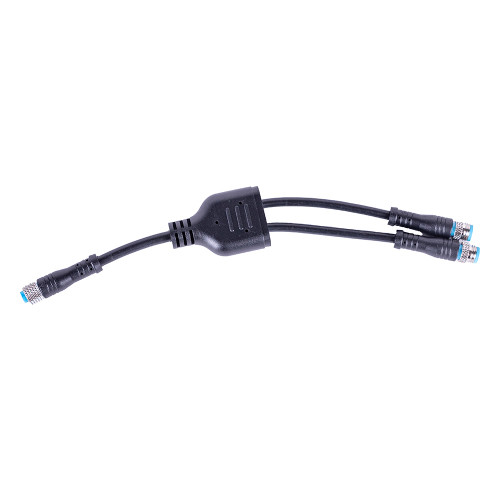
Aquatic AV RGB Y-Splitter for Marine Lighting | Boat Supply Store
For boaters seeking to expand their vessel's RGB LED lighting system, this splitter facilitates the connection of multiple accessories to a single controller output. It effectively replicates a single RGB signal, allowing for synchronized illumination effects across various boat sections without signal degradation. This accessory is engineered to withstand demanding marine conditions, ensuring reliable performance on the water.
Key Features
- Splits a single RGB output into two dedicated channels.
- Connect multiple RGB accessories from one source.
- Engineered specifically for marine environments and harsh conditions.
- Facilitates synchronized lighting effects across multiple fixtures.
- Maintains signal integrity for consistent illumination.
- Simplifies wiring for expanded RGB lighting setups.
- Ensures coordinated color transitions and brightness.
- Provides a cost-effective solution for lighting expansion.
Specifications
| Product Specifications | |
|---|---|
| Type | RGB Y-Splitter |
| Number of RGB Outputs | 2 |
Who This Is For
Boat owners aiming to enhance their vessel's aesthetic and functional lighting by connecting multiple RGB accessories to a single control output. This product is ideal for creating cohesive and synchronized lighting displays across different areas of their boat.
How It Compares
| Feature | Aquatic AV RGB Y-Splitter for Marine Lighting | General LED |
|---|---|---|
| RGB Functionality | Yes | No, Likely No |
| Marine Grade | Yes | No, No |
| Number of RGB Outputs | 2 | N/A, 2 |
Common Concerns Answered
Will this splitter work with my existing RGB controller?
While this splitter is designed for broad compatibility with standard RGB controllers, users have occasionally reported difficulties finding precisely matching controllers. We recommend verifying your controller's output specifications to ensure seamless integration.
What if I experience signal issues with long cable runs?
Concerns about signal degradation on very long runs have been noted. For optimal performance, it is advisable to use quality wiring and consider signal boosters if extending beyond typical lengths recommended for RGB systems.
Are there compatibility issues with other brands of marine LED lights?
Users appreciate the ability to expand their lighting setups and achieve synchronized effects, suggesting good general compatibility. However, as with any specialized component, cross-brand compatibility should be confirmed if integrating with non-Aquatic AV lighting fixtures.
Frequently Asked Questions
What is an RGB Y-Splitter used for on a boat?
An RGB Y-splitter on a boat is used to divide a single RGB LED controller output into two separate outputs. This allows you to connect two different sets of RGB lights or accessories, such as accent lighting and underwater lights, to the same controller for synchronized color and effect changes.
How does the Aquatic AV RGB Y-Splitter work?
The Aquatic AV RGB Y-Splitter takes the signal from a single RGB controller output and duplicates it across two identical outputs. This ensures that both connected accessories receive the same color, brightness, and effect commands from the controller simultaneously.
Can I connect multiple RGB lights to one output using this splitter?
Yes, you can connect multiple RGB accessories to one output using this splitter, as it provides two distinct outputs from a single source. However, ensure the total power draw of the connected lights does not exceed the capacity of your RGB controller's output.
Is this splitter compatible with all RGB LED marine lights?
This splitter is designed to be compatible with standard RGB LED marine lights that utilize a common anode configuration. For absolute certainty, it is best to consult the specifications of both your controller and the lights you intend to connect.
What is the difference between an RGB Y-splitter and a standard splitter?
An RGB Y-splitter specifically duplicates the Red, Green, and Blue color signals, plus the common wire, to control color-changing LED lights. A standard splitter typically only duplicates power and ground, or a single signal wire, and is not suitable for managing the complex color sequencing required by RGB LEDs.