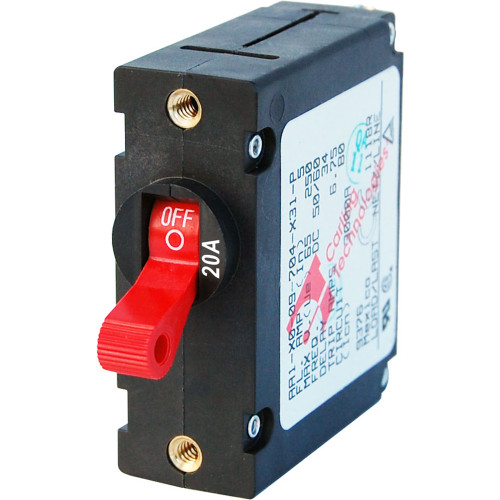

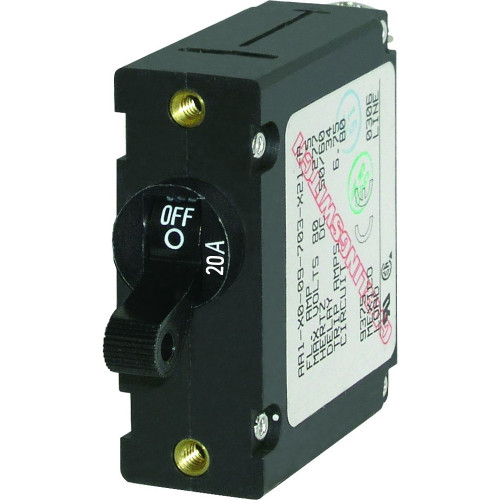
Description
Blue Sea 7212 AC/DC 20A Single Pole Breaker | Boat Supply Store
Protecting critical onboard electronics from overcurrent and short circuits is paramount, and this breaker provides robust single-pole protection for both AC and DC systems. Engineered with a magnetic-hydraulic, trip-free mechanism, it ensures reliable operation up to 277V AC and 65V DC. This breaker meets rigorous ABYC standards and carries multiple international certifications (UL 1077, TUV, CE, CSA), guaranteeing compliance for installations on offshore fishing vessels navigating the Gulf of Mexico or coastal cruisers along the Texas coast.
Key Features
- Integrated Switching for simplified panel design.
- Electronics Protection with a quick trip magnetic mechanism.
- Trip Free Operation prevents re-engagement during fault conditions.
- Dual AC/DC Capability for versatile system integration.
- Marine Grade Compliance meeting ABYC standards.
- Universal Certifications including UL 1077, TUV, CE, and CSA.
- Durable Construction for demanding marine environments.
- 20 Amp Rating for specific circuit protection needs.
Specifications
| Product Specifications | |
|---|---|
| Brand | Blue Sea Systems |
| Model | 7212 |
| SKU | CWR20574 |
| Amperage Rating | 20 Amp |
| Poles | Single Pole |
| Circuit Breaker Type | Magnetic Hydraulic - Trip Free |
| Maximum AC Voltage | 277 Volts AC |
| Maximum DC Voltage | 65 Volts DC |
| Rated Switch Cycle | 10,000 at rated amperage and voltage |
| Standards Met | ABYC |
| Certifications | UL 1077 Recognized, TUV Certified, CE marked, CSA Certified |
Who This Is For
Ideal for marine electricians and meticulous boat owners requiring dependable AC/DC circuit protection and integrated switching. Boat builders will find this breaker essential for outfitting electrical panels on new constructions.
How It Compares
| Feature | Blue Sea 7212 AC/DC 20A Single Pole Breaker | Carling Technologies CA1 |
|---|---|---|
| Amperage | 20 Amp | 20 Amp, 20 Amp |
| Maximum AC Voltage | 277 Volts AC | 250 Volts AC, Not Applicable |
| Maximum DC Voltage | 65 Volts DC | 50 Volts DC, 28 Volts DC |
| Circuit Breaker Type | Magnetic Hydraulic - Trip Free | Thermal Magnetic, Thermal |
| Integrated Switching | Yes | No, No |
| ABYC Standards | Meets | Varies by model, Varies by model |
Common Concerns Answered
Why is this breaker more expensive than non-marine specific options?
The Blue Sea 7212's price reflects its marine-grade construction, adherence to stringent ABYC standards, dual AC/DC compatibility, and advanced magnetic-hydraulic trip-free design, ensuring superior reliability and safety in harsh saltwater environments compared to general-purpose breakers.
Will I be able to find this specific amperage rating readily?
While specific amperage ratings can experience fluctuating availability due to high demand for quality marine components, the 20 Amp rating for the Blue Sea 7212 is a common requirement and is typically restocked efficiently at reputable marine suppliers.
Is this breaker truly reliable for sensitive electronics?
Absolutely. The 'Quick Trip' magnetic mechanism is specifically engineered for fast response to fault currents, providing superior protection for sensitive electronics. Its trip-free design further ensures protection by preventing the breaker from being held closed during a fault.
Frequently Asked Questions
What is the maximum voltage this circuit breaker can handle?
This Blue Sea 7212 circuit breaker can handle a maximum of 277 Volts AC and 65 Volts DC.
Is this circuit breaker suitable for both AC and DC applications?
Yes, the Blue Sea 7212 is specifically designed for use in both AC and DC marine electrical systems.
What certifications does the Blue Sea 7212 circuit breaker have?
It meets ABYC Standards and holds multiple certifications including UL 1077 Recognized, TUV Certified, CE marked, and CSA Certified.
What is the amperage rating of this circuit breaker?
The amperage rating for this Blue Sea 7212 circuit breaker is 20 Amps.
What does 'Trip Free' design mean for this circuit breaker?
A 'Trip Free' design means that the circuit breaker cannot be held closed or manually re-closed while there is an overcurrent or short circuit fault condition present, ensuring consistent protection.