
Description
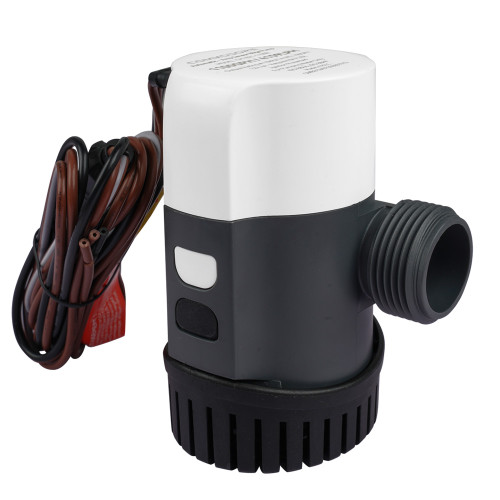
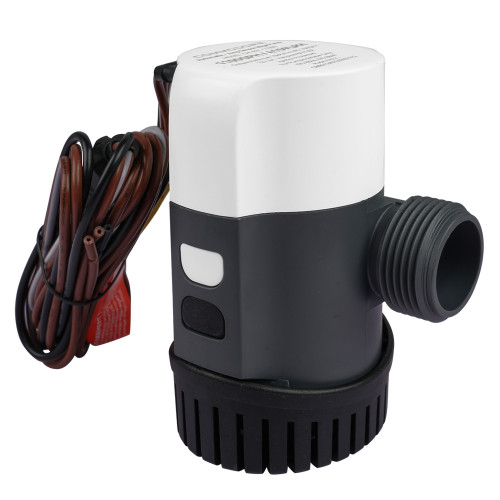
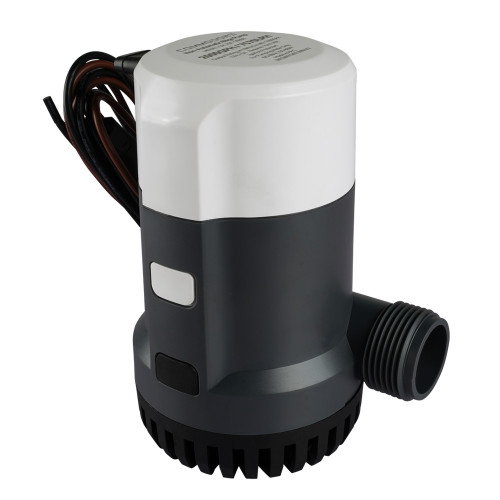
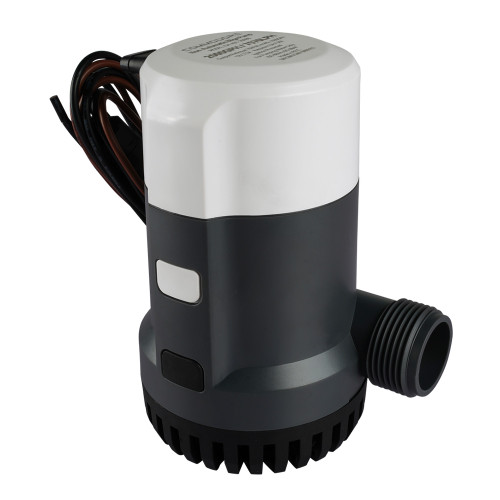
Commodore 2000 GPH Auto AMP Bilge Pump | Boat Supply Store
This Commodore 2000 GPH bilge pump provides essential automatic dewatering for vessels operating in challenging marine environments such as the Gulf Coast. Its advanced AMP sensor eliminates the need for a traditional float switch, performing water detection checks every 2.5 minutes. The 12V pump delivers a robust 2000 GPH flow rate with an 18.04' head rating and features a 1-1/8 inch outlet for efficient water expulsion.
Key Features
- High Performance 2000 GPH flow rate for rapid water removal.
- Intelligent Activation Automatic AMP sensor operation eliminates float switch failures.
- Simplified Installation Quick-connect system for wiring and plumbing.
- Reliable Operation Anti-airlock protection prevents pump cavitation.
- Durable Construction Marine-grade materials ensure longevity.
- Prevents Backflow Integrated check valve maintains system prime.
- Versatile Fittings Includes straight and 90-degree outlet adapters.
- Low Maintenance Easy-to-service design reduces downtime.
Specifications
| Product Specifications | |
|---|---|
| Voltage | 12V |
| Flow Rate | 2000 GPH |
| Current Draw | 7.5A |
| Head | 18.04' |
| Outlet Diameter | 1-1/8 inch |
| Activation Method | Automatic AMP sensor |
| Check Valve | Built-in |
| Airlock Protection | Yes |
| Hose Fittings Included | Straight and 90-degree (1-1/8 inch) |
Who This Is For
Boat owners and marine professionals requiring a dependable, automatically operating bilge pump system. Ideal for upgrading to sensor-based activation without the complexity of external float switches.
How It Compares
| Feature | Commodore 2000 GPH Auto AMP Bilge Pump | Rule |
|---|---|---|
| Flow Rate | 2000 GPH | 2000 GPH |
| Voltage | 12V | 12V |
| Automatic Activation | AMP Sensor (no float switch) | Electronic sensor |
| Quick-Connect System | Yes (motor, wiring, plumbing) | No explicit mention |
| Hose Outlet Diameter | 1-1/8 inch | 1-1/8 inch |
| Check Valve | Built-in | Integrated |
Common Concerns Answered
Are there known issues with the AMP sensor at very low water levels?
While positive sentiment prevails, some users have reported occasional calibration nuances with the AMP sensor in extremely shallow water conditions. This unit excels in standard bilge operation, and for critical low-level monitoring, supplementary manual checks are always prudent.
Is the housing material robust enough for harsh marine environments?
The pump utilizes durable marine-grade construction. For vessels subjected to exceptionally severe impacts or extreme conditions, users might consider additional protective measures based on their specific operational profile.
How does the initial cost compare to other automatic pumps?
The initial investment for the Commodore 2000 GPH Auto AMP Sensor Bilge Pump reflects its advanced sensor technology and convenient quick-connect features. This premium functionality offers significant long-term advantages in reliability and ease of maintenance over simpler float-switch models, justifying the expenditure.
Frequently Asked Questions
How does the AMP sensor work in the Commodore 2000 GPH bilge pump?
The AMP sensor continuously monitors the electrical current draw of the pump motor. When water resistance is detected, it triggers the pump to activate. The system checks for water every 2.5 minutes and runs for 0.5 seconds to detect its presence, eliminating the need for a physical float switch.
What is the flow rate of the Commodore 2000 GPH bilge pump?
The Commodore 2000 GPH bilge pump has a maximum flow rate of 2000 gallons per hour (GPH) at zero head.
Is the Commodore 2000 GPH bilge pump 12V compatible?
Yes, the Commodore 2000 GPH bilge pump is designed for standard 12V DC marine electrical systems.
What is the head rating for the Commodore 2000 GPH bilge pump?
The pump is rated for a maximum head of 18.04 feet.
How easy is it to install and maintain the Commodore 2000 GPH bilge pump?
Installation and maintenance are significantly simplified by the quick-connect wiring and plumbing system. This design allows for rapid disconnection of the motor and base for servicing or replacement, reducing labor time and complexity.