

Description
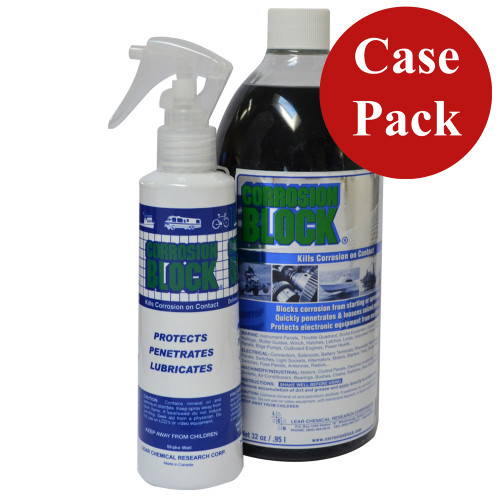
Corrosion Block 32oz Pump Spray | Boat Supply Store
Combat persistent electrochemical degradation on marine vessels and industrial equipment with this advanced anti-corrosion treatment. Its unique polar bonding chemistry actively displaces existing saltwater within corrosion cells, initiating evaporation while simultaneously depositing a durable, hydrophobic film. This 32oz pump spray formulation ensures robust protection for metal components and sensitive electronics, particularly vital for vessels operating in the high-salinity environments found along the Texas Gulf Coast.
Key Features
- Actively Protects metal and electronics using advanced polar bonding chemistry
- Penetrates Corrosion Cells, replacing saltwater which then evaporates
- Leaves a Clean, Clear, moisture-proof, hydrophobic film
- Acts as an 'OFF SWITCH' for corrosion
- Deeply Penetrates joints, connectors, and around fasteners
- Kills Corrosion on contact
- Non-Toxic and Non-Flammable
- Safe for Use in 'Safety First' industrial environments
Specifications
| Product Specifications | |
|---|---|
| Volume | 32oz Bottle w/ Pump |
| Flammability | Non-Flammable |
| Toxicity | Non-Toxic |
| Formulation | Fluid with polar bonding chemistry |
| Residue Type | Hydrophobic film |
| Application | Pump spray |
Who This Is For
Boat owners and marine mechanics requiring superior corrosion prevention for metal and electronics in harsh, high-moisture conditions. Also ideal for industrial maintenance professionals safeguarding assets in demanding environments.
How It Compares
| Feature | Corrosion Block 32oz Pump Spray | Competitor |
|---|---|---|
| Volume | 32oz Bottle w/Pump | 11.25 oz aerosol, 12 oz aerosol |
| Application Method | Pump Spray | Aerosol, Aerosol |
| Flammability | Non-Flammable | Flammable, Flammable |
| Residue Type | Clean, Clear, Hydrophobic Film | Oily Film, Waxy Film |
| Corrosion Cell Penetration | Actively Penetrates and Replaces | Forms Barrier, Forms Barrier |
| Toxicity | Non-Toxic | Irritant, Irritant |
Common Concerns Answered
How does Corrosion Block differ from basic rust inhibitors?
Corrosion Block's advanced polar bonding chemistry actively penetrates and eliminates existing corrosion cells by displacing saltwater, whereas basic rust inhibitors often only form a barrier layer.
Is the pump applicator always convenient?
While excellent for targeted application, some users find the pump applicator less convenient for covering very large surface areas compared to aerosol sprays.
Is Corrosion Block a cost-effective solution?
The initial investment for Corrosion Block may be higher than some basic rust preventatives, but its superior long-lasting protection and advanced formulation provide significant value and prevent costly repairs.
Frequently Asked Questions
What is Corrosion Block and how does it work?
Corrosion Block is a highly effective corrosion inhibitor that utilizes advanced polar bonding chemistry. It actively penetrates existing corrosion cells, displaces moisture, and leaves behind a durable, hydrophobic film that prevents future corrosion.
Is Corrosion Block safe to use on electronics?
Yes, Corrosion Block is specifically formulated to be safe for use on electronics. Its non-toxic nature and ability to displace moisture make it ideal for protecting sensitive electrical components.
What types of corrosion does Corrosion Block prevent?
Corrosion Block prevents various forms of corrosion, including galvanic corrosion and oxidation, particularly those exacerbated by saltwater, humidity, and environmental exposure. It effectively combats the electrochemical process that degrades metal.
How long does Corrosion Block last?
The longevity of Corrosion Block's protection depends on the environmental conditions. However, its durable, hydrophobic film provides extended protection in harsh marine and industrial settings, significantly outlasting traditional barrier-only products.
Can Corrosion Block be used in saltwater environments?
Absolutely. Corrosion Block is exceptionally effective in saltwater environments. It actively works to displace saltwater within corrosion cells, offering superior protection against salt-induced degradation.