

Description
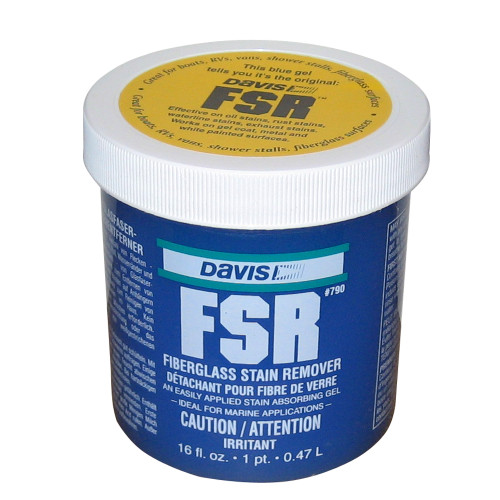
Davis FSR Big Job Fiberglass Stain Remover 2L | Boat Supply Store
Combat pervasive hull discoloration and surface marks with a high-capacity fiberglass stain remover engineered for extensive cleaning. This 2-liter gel formulation actively lifts stubborn contaminants like oil, rust, exhaust fumes, and waterline rings without necessitating abrasive mechanical processes such as sanding or compounding. It is specifically designed for efficient application on large surface areas, proving effective on gelcoat and painted finishes with proper pre-application testing, making it an ideal solution for preparing a boat for dry storage or resale.
Key Features
- Powerful stain absorbing gel formula lifts tough contaminants
- Removes oil, rust, exhaust, waterline, and transom stains effectively
- Safe for white painted surfaces and gelcoat (always test first)
- Non-abrasive; eliminates the need for sanding or compounding
- Easy application via brush, sponge, or cloth
- Fast-acting; requires minimal dwell time
- Ideal for large clean-up projects on boats and RVs
- Versatile use on shower stalls and furniture
Specifications
| Product Specifications | |
|---|---|
| Volume | 2 Liter (67.8 fl oz) |
| Formulation | Gel |
| Application Method | Apply with brush, sponge, or cloth; wait; wipe/rinse |
Who This Is For
Owners of boats, RVs, or any marine-grade fiberglass surfaces experiencing persistent staining from sources like oil, rust, exhaust, or waterline marks. This product is ideal for those seeking a potent, non-abrasive solution for large-scale cleaning tasks that avoids mechanical damage.
How It Compares
| Feature | Davis FSR Big Job Fiberglass Stain Remover 2L | Competitor |
|---|---|---|
| Formulation | Gel | Liquid, Liquid/Paste |
| Volume | 2 Liter (67.8 fl oz) | 32 fl oz, 16 fl oz |
| Stain Type Focus | Oil, rust, exhaust, waterline, transom, road soil | Oxidation, chalking, rust, waterline stains, Oxidation, chalking, minor scratches |
| Abrasion | Non-abrasive | Non-abrasive, Mildly abrasive |
| Application Method | Apply with brush, sponge, or cloth; wait; wipe/rinse | Apply with cloth, let sit, rinse, Apply with cloth, rub, wipe off |
Common Concerns Answered
Is Davis FSR Big Job safe for all fiberglass and painted surfaces?
While generally safe, it is crucial to test Davis FSR Big Job on an inconspicuous area of your gelcoat or painted surface first to ensure finish compatibility, especially on older or custom finishes.
What if a stain is very old or deep?
For exceptionally old or deeply ingrained stains, multiple applications of Davis FSR Big Job may be required to achieve complete removal. Patience and repeat treatments are key to success on challenging stains.
How does the gel formulation differ from liquid removers?
The gel formulation of Davis FSR Big Job allows it to adhere more effectively to vertical surfaces, providing extended contact time for stain absorption compared to traditional liquid cleaners that can run off quickly.
Frequently Asked Questions
What types of stains can Davis FSR Big Job Fiberglass Stain Remover remove?
Davis FSR Big Job is formulated to remove a broad spectrum of stubborn stains including oil, rust, exhaust fumes, waterline marks, and transom stains from fiberglass and painted surfaces.
Is Davis FSR Big Job safe for gelcoat and painted surfaces?
Yes, it is safe for white painted surfaces and gelcoat when used as directed. However, it is always recommended to test in a small, inconspicuous area first to verify compatibility with your specific finish.
How do I apply Davis FSR Big Job Fiberglass Stain Remover?
Apply the gel using a brush, sponge, or cloth. Allow it to dwell for a few minutes to absorb the stain, then wipe or rinse the area clean.
Does Davis FSR Big Job require sanding or compounding?
No, Davis FSR Big Job is a non-abrasive formula and does not require any sanding or compounding to effectively remove stains.
How long should I leave Davis FSR Big Job on a stain?
The product requires only a few minutes of dwell time to actively lift and absorb stains. The exact time may vary slightly depending on the severity and type of stain.