

Description
Garmin GT17M-THF SS 1kW CHIRP Transducer | Boat Supply Store
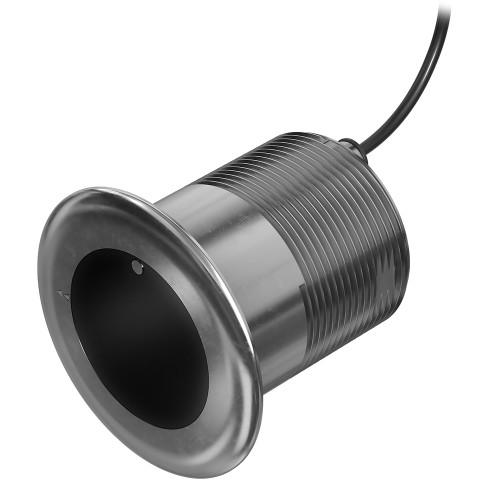
Identify submerged structure and game fish with unparalleled clarity using the Garmin GT17M-THF SS transducer. This 1kW mid-band CHIRP sonar operates within an 80-165 kHz frequency range, providing a 9-18 degree beamwidth for precise target separation. Its flush-mount stainless steel thru-hull design minimizes drag and is engineered for optimal performance across hull deadrise angles from 8 to 15 degrees, ensuring clear bottom readings up to 2,400 ft in freshwater.
Key Features
- Delivers 1 kW mid-band CHIRP sonar (80–165 kHz) for detailed underwater views.
- Provides clear definition of fish arches, structure, and bottom depth.
- Achieves maximum depth performance to 2,400' in freshwater and 1,800' in saltwater.
- Features 9–18 degree beamwidths for focused sonar returns.
- Includes fast-response water temperature sensing for environmental data.
- Offers a flush-mounted thru-hull design with a 12-degree tilt for optimal integration.
- Ensures simple plug-and-play operation with Auto-ID technology.
- Constructed with a durable stainless steel housing and stem for longevity.
Specifications
| Product Specifications | |
|---|---|
| 1 kW Mid-Band CHIRP | 80-165 kHz |
| Beamwidth | 9-18 degrees |
| Maximum Depth (Freshwater) | 2,400 ft |
| Maximum Depth (Saltwater) | 1,800 ft |
| Water Temperature Sensing | Yes |
| Connector Type | 8-pin |
| Housing Material | Stainless steel |
| Hull Deadrise Support | 8 to 15 degrees |
| Tilt for Flush Mount | 12 degrees |
Who This Is For
Anglers seeking high-definition mid-band CHIRP sonar for precise fish and structure identification, and boaters who prefer low-drag, flush-mounted thru-hull installations on various hull types.
How It Compares
| Feature | Garmin GT17M-THF SS 1kW CHIRP Transducer | SideVision |
|---|---|---|
| Transducer Frequency | Mid-band CHIRP (80-165 kHz) | Mid-band CHIRP (80-165 kHz), 320-380 kHz |
| Transducer Power | 1 kW | 1 kW, 300W |
| Transducer Maximum Depth | 2400 ft freshwater; 1800 ft saltwater | — |
| Housing Material | Stainless steel | Bronze, Plastic |
| Installation Type | Thru-hull (flush mount with 12-degree tilt) | Thru-hull, Thru-hull |
| Number of PINs | 8-pin | 8-pin, null |
Common Concerns Answered
What if my hull deadrise angle is outside the 8-15 degree range?
For hull deadrise angles significantly outside the 8-15 degree range, a fairing block may be required to achieve optimal transducer alignment and performance. Consult your vessel's specific hull specifications and consider professional installation for precise setup.
Is 1kW enough power for all my sonar needs?
While 1kW provides substantial power for most recreational and sportfishing applications, users requiring extreme depth penetration or highly specialized sonar functions may explore higher-power transducer options.
The price is a consideration, are there less expensive options?
The Garmin GT17M-THF SS is an investment in superior mid-band CHIRP sonar performance. While lower-priced transducers exist, they typically offer reduced power, narrower frequency bands, or less robust construction, impacting clarity and depth capabilities.
Frequently Asked Questions
What is the maximum depth for the Garmin GT17M-THF SS transducer?
The transducer is capable of reaching depths up to 2,400 ft in freshwater and 1,800 ft in saltwater.
What is the frequency range of the Garmin GT17M-THF SS transducer?
This transducer operates within the mid-band CHIRP frequency range of 80-165 kHz.
What is the beamwidth of the Garmin GT17M-THF SS transducer?
The beamwidth for this transducer ranges from 9 to 18 degrees.
Is the Garmin GT17M-THF SS transducer compatible with all Garmin chartplotters?
This 8-pin transducer features Auto-ID technology, ensuring plug-and-play compatibility with many compatible Garmin chartplotters. Always verify specific model compatibility in your chartplotter's manual or on the Garmin website.
What type of installation does the Garmin GT17M-THF SS transducer require?
The GT17M-THF SS requires a flush-mount thru-hull installation, which involves drilling a hole through the boat's hull. It includes a 12-degree tilt to accommodate various hull angles without a fairing block for deadrise angles between 8 and 15 degrees.