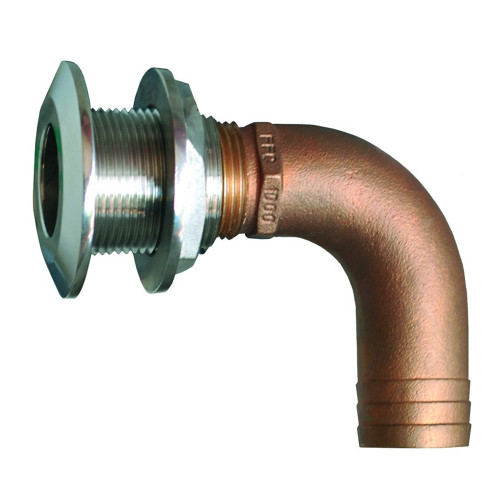


Description
Johnson Pump 3/4" 90° Thru-Hull Connector White | Boat Supply Store
Achieve a flush, professional installation for your vessel's plumbing with this 90-degree thru-hull connector from Johnson Pump. Engineered with a unique deck plate key system, it eliminates visible threads for a superior aesthetic finish. This fitting features a 3/4" hose barb, ideal for routing livewell plumbing or discharge lines on a variety of saltwater or freshwater vessels.
Key Features
- Flush Installation with innovative deck plate key system
- Eliminates Visible Threads for a professional, clean look
- 90-Degree Angle enables efficient and concealed hose routing
- Simplified Finishing negates the need for cutting threads
- Built to Johnson Pump Standards for marine durability
- Secure Fastening via the specialized deck plate key
- White Composite Construction for a discreet appearance
- 3/4" Hose Barb accommodates standard marine hoses
Specifications
| Product Specifications | |
|---|---|
| Brand | Johnson Pump |
| Hose Size | 3/4" |
| Angle | 90 Degree |
| Finish | White |
| Securing Mechanism | Deck Plate Key |
Who This Is For
Boat owners and marine technicians demanding a superior aesthetic in their vessel's plumbing installations. Ideal for applications where a clean, finished appearance is critical and standard thru-hull fittings are insufficient.
How It Compares
| Feature | Johnson Pump 3/4" 90° Thru-Hull Connector White | Perko 0499DP090A 90 Degree Thru |
|---|---|---|
| Hose Size | 3/4" | 3/4" |
| Angle | 90 Degree | 90 Degree |
| Securing Mechanism | Deck Plate Key | Standard Nut |
| Finish | White | Polished |
| Material | High-Quality Plastic/Composite | Bronze |
Common Concerns Answered
What are the benefits of a neat, finished installation with this connector?
A neat installation enhances the overall appearance of your vessel's interior and bilge spaces, preventing snagging hazards and presenting a professional finish often sought by discerning boat owners and during refits.
Will this connector hold up in a saltwater environment?
While constructed from high-quality plastic/composite for a clean aesthetic, long-term durability in harsh marine environments compared to bronze should be considered. Regular inspection and maintenance are recommended for all below-waterline fittings.
What happens if I lose the deck plate key?
The specialized deck plate key is crucial for installation and removal. If lost, replacement keys may need to be sourced from the manufacturer or a specialized marine supplier, highlighting the importance of secure storage.
Frequently Asked Questions
What is the purpose of a deck plate key for this thru-hull connector?
The deck plate key engages with internal splines on the outside nut of the thru-hull fitting. It allows the nut to be securely tightened or loosened from the exterior surface, providing a clean finish by not requiring direct access to the nut from the interior.
How does the deck plate key secure the outside nut?
The deck plate key fits into a recessed slot on the outside of the thru-hull body. Turning the key engages it with the corresponding splines on the nut, allowing for rotational force to be applied for tightening or loosening without exposing threaded components.
Is this connector suitable for saltwater applications?
This fitting is designed for marine applications and can be used in saltwater. However, like all marine hardware, proper installation, regular inspection, and maintenance are essential for optimal longevity and performance in corrosive environments.
What type of hose barb is compatible with this 3/4" connector?
This 3/4" hose barb is designed to accept standard 3/4" marine grade hose with appropriate hose clamps, such as double-clamped systems for critical applications like bilge pump discharge lines.
What are the benefits of a neat, finished installation with this connector?
A neat installation with this connector eliminates protruding threads through the hull interior, resulting in a cleaner, more aesthetically pleasing, and safer bilge area. It also simplifies the installation process by negating the need for specialized cutting or finishing of threads.