
Description
Maretron Micro Elbow 90° NMEA 2000 Connector | Boat Supply Store
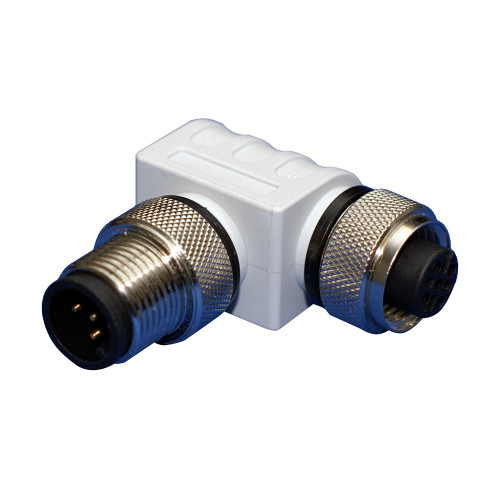
Professionally manage NMEA 2000 network cabling in confined marine engine rooms or tight helm stations with this specialized connector. It effectively terminates runs to create a precise 90-degree bend, eliminating cable strain that can lead to network failures, a critical concern for offshore fishing vessels. Constructed from marine-grade nickel-plated brass with integrated waterproof seals, this connector ensures signal integrity and network reliability in harsh saltwater environments.
Key Features
- Eliminates cable strain with sharp 90-degree bends
- Ensures waterproof connectivity for NMEA 2000 networks
- Facilitates clean routing in restricted compartments
- Maximizes NMEA 2000 network longevity
- Constructed for extreme marine conditions
- Secures installation with integrated mounting hole
- Compatible with standard Micro-C cordsets
- Certified for NMEA 2000 network standards
Specifications
| Product Specifications | |
|---|---|
| Brand | Maretron |
| MPN | ELB-CM-CF |
| Connector Type | NMEA 2000 Micro-C Male to Female |
| Angle | 90 degrees |
| Material | Nickel-plated brass |
| Waterproof Rating | IP67 (when properly connected) |
| Mounting Hole | Yes |
| Operating Temperature | -40°C to +85°C (-40°F to +185°F) |
| Voltage Rating | 30V DC |
Who This Is For
Marine electronics installers and boat owners requiring meticulous NMEA 2000 network organization in tight quarters. System integrators will find this essential for creating professional, strain-free cable runs within limited spaces.
How It Compares
| Feature | Maretron Micro Elbow 90° NMEA 2000 Connector | Competitor |
|---|---|---|
| Functionality | 90-degree elbow connector | T-connector |
| Material | Nickel-plated brass | Plastic |
| Waterproof Seals | Yes | Yes |
| Mounting Hole | Yes | No |
Common Concerns Answered
Is the higher cost of the Maretron Micro Elbow justified?
The Maretron Micro Elbow's robust nickel-plated brass construction and integrated mounting hole offer superior durability and installation security compared to standard plastic T-connectors. This specialized component is designed to prevent cable strain and damage in critical NMEA 2000 networks, providing long-term reliability that justifies the investment for complex or high-stress installations.
Can I find the Maretron Micro Elbow readily available?
While its specialized nature can sometimes lead to limited availability, Boat Supply Store maintains stock to meet the demands of critical marine installations. We recommend checking current inventory or placing orders in advance for significant projects.
What are the primary advantages of using an elbow connector versus a T-connector?
An elbow connector, like the Maretron Micro Elbow, is specifically designed to redirect cable runs by 90 degrees without introducing stress points that can occur when forcing standard T-connectors into tight bends. This prevents damage to the cable and connector interfaces, ensuring the integrity of your NMEA 2000 network, particularly in confined spaces where standard routing is challenging.
Frequently Asked Questions
What is the Maretron Micro Elbow used for?
The Maretron Micro Elbow is used to create a 90-degree turn in NMEA 2000 network cabling, allowing for cleaner routing and preventing cable strain in tight marine environments.
How does the Maretron Micro Elbow connect to other NMEA 2000 components?
It connects directly to existing NMEA 2000 Micro-C female ports on cordsets or backbone terminators, and its male end connects to another Micro-C component, effectively redirecting the cable path by 90 degrees.
Is the Maretron Micro Elbow waterproof?
Yes, the Maretron Micro Elbow features waterproof seals, providing a reliable and protected connection in harsh marine conditions.
What material is the Maretron Micro Elbow made of?
The Maretron Micro Elbow is constructed from durable, marine-grade nickel-plated brass for optimal corrosion resistance and longevity.
Can the Maretron Micro Elbow be used to make 90-degree turns in NMEA 2000 cabling?
Absolutely. Its primary function is to facilitate sharp, 90-degree bends in NMEA 2000 cabling, ensuring efficient and strain-free routing.