
Description
Mastervolt Charge Mate Pro 90 | Boat Supply Store
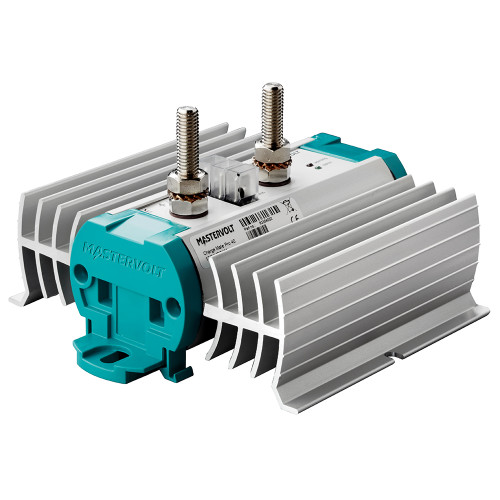
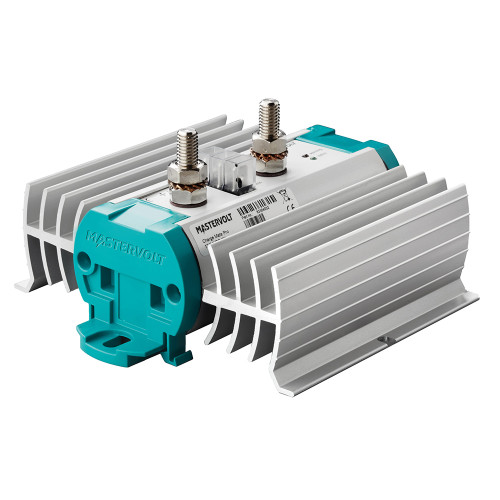
For vessels and vehicles with dual battery configurations requiring intelligent power distribution, this electronic charge relay ensures optimal battery health. It provides a 90A output current limit for the secondary bank while maintaining a maximum voltage drop of 0.2V, guaranteeing efficient charging from a single source. This unit effectively prioritizes the main battery, prevents reverse current flow, and is suitable for all battery chemistries including Lithium-Ion, making it ideal for offshore fishing vessels requiring consistent power for critical equipment.
Key Features
- Current Limited electronic charge relay for precise secondary battery management.
- High Efficiency with reverse current protection to safeguard battery banks.
- Effective Distribution of charger or alternator current across two battery banks.
- Isolation between batteries when discharging, connectivity when charging.
- Prioritizes Main Battery by limiting charge current to the secondary bank.
- Blocks Return Current preventing discharge from the secondary to the primary.
- Universal Compatibility with all battery types, including Lithium-Ion.
- Robust IP65 Enclosure with marine-grade corrosion resistance and aluminum heat sinks.
Specifications
| Product Specifications | |
|---|---|
| Output Current Limit (Secondary Battery) | 90A |
| Automatic Voltage Detection | 12/24V |
| Maximum Voltage Drop | 0.2V |
| Battery Type Compatibility | All types (including Lithium-Ion) |
| Protection Degree | IP65 |
| Dimensions | 157 x 140 x 80 mm |
| Weight | 0.88 kg |
| CE Compliance | Yes |
Who This Is For
Marine and mobile users with dual battery systems requiring prioritized or current-limited charging. This includes owners of boats with bow thrusters, high-power demand equipment, or those utilizing Lithium-Ion batteries.
How It Compares
| Feature | Mastervolt Charge Mate Pro 90 | Victron Energy Cyrix |
|---|---|---|
| Max Output Current (Secondary Battery) | 90 A | 200 A, 100 A |
| Current Limiting for Secondary Battery | Yes | No, No |
| Voltage Drop | Max 0.2 V | 0.2 V, 0.2 V |
| Battery Type Compatibility | All types (including Lithium-Ion) | All battery types, All battery types |
| Protection Degree | IP65 | IP65, IP67 |
Common Concerns Answered
How does the Mastervolt Charge Mate Pro 90 prevent a flat starter battery?
The Charge Mate Pro 90 intelligently connects both battery banks when charging is detected, and isolates them when discharging. By prioritizing the main battery and limiting charge to the secondary bank, it ensures the starter battery receives adequate charge and is not depleted by high-demand secondary loads.
What are the potential complexities or limitations of this unit?
Some users may find the initial setup or understanding of the specific current limiting feature requires careful review of the manual. Additionally, limited availability of specific replacement electronic parts could be a consideration for long-term maintenance.
Is the Mastervolt Charge Mate Pro 90 a reliable solution for managing dual batteries?
Customer sentiment is overwhelmingly positive, with users consistently appreciating its efficiency and reliability in managing dual battery systems effectively, particularly for demanding marine applications.
Frequently Asked Questions
What is the maximum charge current the Charge Mate Pro 90 can handle for the secondary battery?
The Mastervolt Charge Mate Pro 90 limits the charge current to the secondary battery to a maximum of 90A.
Can the Charge Mate Pro 90 be used with Lithium-Ion batteries?
Yes, the Charge Mate Pro 90 is suitable for all battery types, including Lithium-Ion batteries.
What is the voltage drop across the Charge Mate Pro 90?
The Mastervolt Charge Mate Pro 90 features a low voltage drop of a maximum of 0.2V.
Does the Charge Mate Pro 90 offer an emergency start function?
Yes, an optional emergency start function with a bypass switch is available.
How does the Charge Mate Pro 90 prioritize charging the main battery?
It prioritizes the main battery by limiting the charge current directed to the secondary battery, ensuring the primary bank receives sufficient charge first.