
Description
McMurdo FastFind 220 PLB | Boat Supply Store
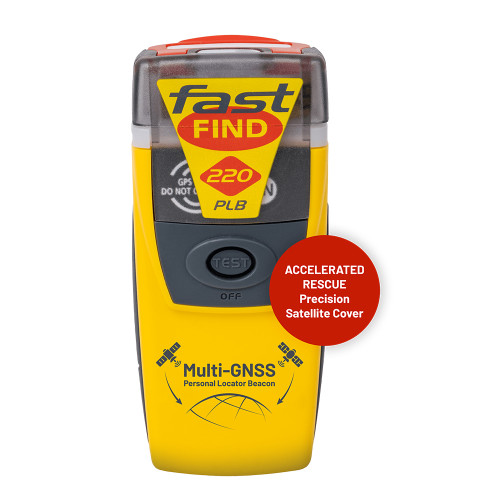
For critical offshore operations and single-handed voyages, this compact distress alert device provides immediate location data to rescue services. It operates on the 406 MHz COSPAS-SARSAT satellite system, transmitting your registered identity and precise GPS coordinates. The FastFind 220 is designed for rapid deployment, ensuring your distress signal reaches authorities within minutes, even in remote marine environments like the Gulf of Mexico.
Key Features
- Instant activation for immediate distress signaling.
- Precise GPS positioning for accurate rescue location.
- Satellite transmitted alerts to global rescue networks.
- Compact and lightweight for easy stowage and access.
- Waterproof design to withstand harsh marine conditions.
- Long-lasting battery for extended operational readiness.
- Self-test function for verification of operational status.
- Clear visual and audible indicators for user confirmation.
Specifications
| Product Specifications | |
|---|---|
| Activation | Manual |
| Battery Life (Standby) | 5 years |
| Battery Type | Non-hazardous, user-replaceable lithium battery |
| COSPAS-SARSAT Classification | Class 2 (-20°C to +55°C) |
| Dimensions | 174 x 86 x 40 mm |
| Emergency Transmissions | Minimum 24 hours |
| Frequency | 406 MHz (with 121.5 MHz homing) |
| GPS | Integrated |
| Weight | 280g (including battery) |
| Waterproof Rating | IP67 |
Who This Is For
This Personal Locator Beacon is essential for solo mariners and offshore adventurers operating beyond VHF radio range. It provides critical emergency communication for boaters undertaking long-distance cruising or operating in remote waters.
How It Compares
| Feature | McMurdo FastFind 220 PLB | ACR ResQLink |
|---|---|---|
| Activation | Manual | Manual |
| GPS | Integrated | Integrated |
| Battery Life (Standby) | 5 years | 5 years |
| Weight | 280g | 153g |
| Waterproof Rating | IP67 | IP67 |
Common Concerns Answered
How do I register my PLB?
Registration is mandatory and links your device to your personal and vessel details with the national authority. This process ensures rescuers have critical information when a distress signal is activated. Refer to your local authority's registration portal for specific instructions.
What is the operational range of a PLB?
PLBs transmit via the COSPAS-SARSAT satellite system, offering global coverage. Once activated, the signal is relayed to ground stations and then to rescue coordination centers, regardless of your proximity to shore-based communication infrastructure.
How often does the battery need replacement?
The non-hazardous lithium battery has a minimum standby life of 5 years. You will need to replace the battery and have the unit resealed by a certified technician according to the manufacturer's schedule.
Frequently Asked Questions
What is the primary function of a PLB?
A PLB's primary function is to transmit a distress alert, including your unique identity and GPS location, to international search and rescue services when activated in an emergency.
Does the FastFind 220 have a built-in homing signal?
Yes, the McMurdo FastFind 220 incorporates a 121.5 MHz homing transmitter that activates upon distress signaling, aiding rescue teams in pinpointing your exact location once they are in the vicinity.
Can I use this PLB for non-emergency signaling?
No, PLBs are strictly for life-threatening emergencies. Activating a PLB without a genuine emergency can lead to significant fines and misuse of vital rescue resources.
What are the temperature operating limits?
This device is classified as Class 2, meaning it is rated for operation in temperatures ranging from -20°C to +55°C (-4°F to +131°F).
How do I perform a self-test?
The device features a self-test function that can be initiated by following the instructions in the user manual. This test verifies that the battery, GPS, and transmitter are functioning correctly without transmitting a live distress signal.