

Description
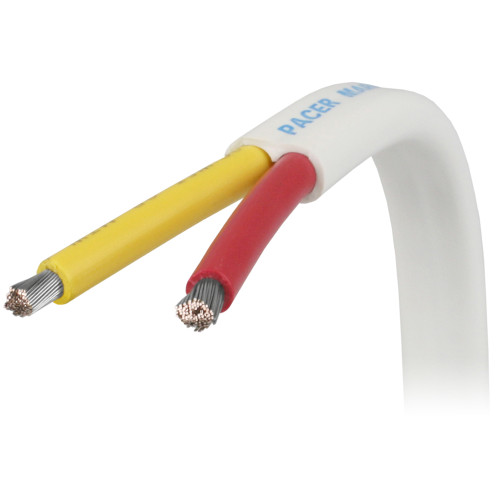
Pacer 14/2 AWG Duplex Cable - Red/Yellow | Boat Supply Store
This Pacer 14/2 AWG Safety Duplex Cable ensures reliable electrical connections in demanding marine environments, ideal for powering essential boat systems. It features finely stranded, tinned copper conductors per ASTM B172 Class K, providing exceptional flexibility and corrosion resistance, crucial for intermittent connections common on vessels. The durable, moisture-resistant PVC jacket is rated for 600-V and operates within a -20 C to 105 C temperature range, meeting stringent UL 1426, U.S.C.G. 33 CFR part 183, and ABYC E-11.14 standards.
Key Features
- Superior Corrosion Resistance with finely stranded, tinned copper conductors.
- Enhanced Durability via a moisture-resistant, flexible PVC jacket.
- Flame Retardant for increased safety aboard.
- Broad Environmental Resistance to acid, alkali, abrasion, gasoline, and oil.
- Easy Jacket Removal thanks to internal talcum powder coating.
- High Flexibility for simplified routing and installation.
- Industry-Leading Compliance exceeding UL, U.S.C.G., and ABYC standards.
- Reliable Low-Voltage Performance for AC and DC systems.
Specifications
| Product Specifications | |
|---|---|
| Conductor Type | Type III annealed finely stranded tinned copper ASTM B172 Class K |
| AWG | 14/2 |
| Length | 100' |
| Conductor Color | Red/Yellow |
| Insulation Material | Flexible PVC |
| Insulation Temperature Rating | -20 C to 105 C |
| Voltage Rating | 600-V |
| Resistance | Acid, Alkali, Abrasion, Flame, Gasoline, Oil, Moisture |
| Standards Compliance | UL 1426, U.S.C.G. 33 CFR part 183, ABYC E-11.14 |
Who This Is For
Marine enthusiasts, boat builders, and DIYers seeking robust, compliant electrical wiring for low-voltage AC and DC applications. Ideal for new installations or upgrades requiring dependable power transmission in harsh maritime conditions.
How It Compares
| Feature | Pacer 14/2 AWG Duplex Cable - Red/Yellow | Competitor |
|---|---|---|
| Conductor Type | Finely Stranded Tinned Copper ASTM B172 Class K | Tinned Copper |
| AWG | 14 | 14 |
| Number of Conductors | 2 | 2 |
| Jacket Material | PVC | PVC |
| Voltage Rating | 600-V | 600V |
| Temperature Rating (Insulation) | -20 C to 105 C | 105°C |
| Resistance | Acid, Alkali, Abrasion, Flame, Gasoline, Oil, Moisture | Oil, Fuel, UV, Saltwater, Cold Flow |
| Standards Compliance | UL 1426, U.S.C.G. 33 CFR part 183, ABYC E-11.14 | UL 1426, ABYC E-11 |
Common Concerns Answered
Is this cable difficult to strip cleanly?
While some users report occasional difficulty, the internal talcum powder coating is designed to facilitate easier jacket removal and minimize conductor damage.
Why is this cable more expensive than non-marine grade wire?
This Pacer cable utilizes marine-grade materials, including finely stranded tinned copper and a specialized PVC jacket, specifically engineered for the corrosive and demanding conditions of a marine environment, ensuring superior longevity and safety.
Is the higher price point justified for a boat electrical project?
The investment in this Pacer cable is justified by its adherence to stringent marine safety standards (UL 1426, U.S.C.G., ABYC), superior material quality for corrosion and moisture resistance, and the inherent durability required for long-term reliable operation on water.
Frequently Asked Questions
What is the voltage rating of the Pacer 14/2 AWG Safety Duplex Cable?
The Pacer 14/2 AWG Safety Duplex Cable has a voltage rating of 600-V.
What type of copper conductors does this cable use?
This cable uses Type III annealed finely stranded tinned copper conductors, manufactured to ASTM B172 Class K specifications.
What materials is the jacket made of, and what are its properties?
The jacket is made of flexible PVC and is resistant to moisture, acid, alkali, abrasion, flame, gasoline, and oil.
What environmental factors is this cable resistant to?
This cable is resistant to acid, alkali, abrasion, flame, gasoline, oil, and moisture.
What standards does this Pacer cable meet or exceed?
This Pacer cable meets or exceeds UL 1426, U.S.C.G. 33 CFR part 183, and ABYC E-11.14 standards.