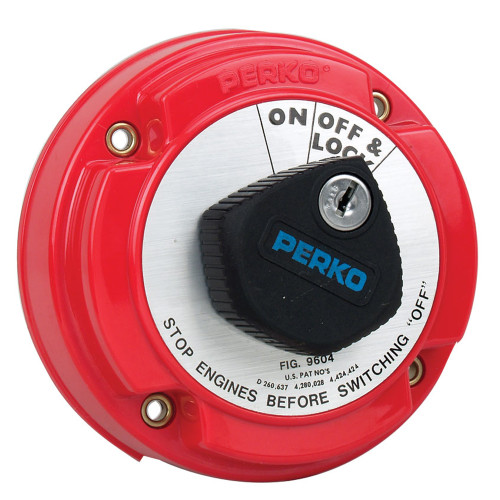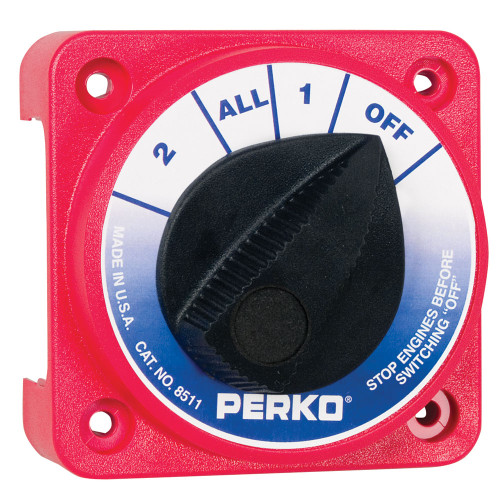

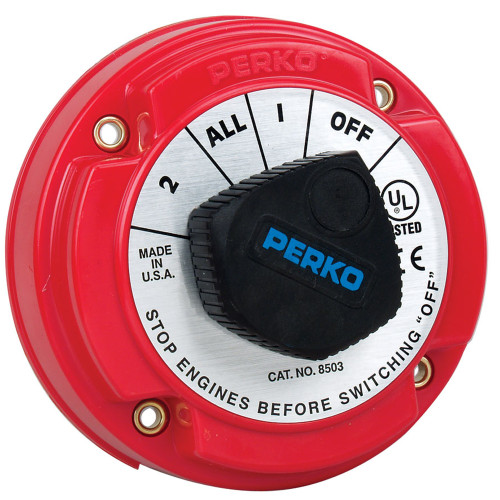
Description
Perko 8503DP Battery Switch w/Field Disconnect | Boat Supply Store
Safeguard your vessel's electrical system with the Perko 8503DP, engineered to prevent alternator damage during shut-down with non-unitized alternators. This medium-duty switch is built for 6-32V marine systems, handling 250 AMPS continuous and 360 AMPS intermittent (5 min) loads with robust polycarbonate construction and ignition protection. Its 5/16" terminal studs ensure secure connections for reliable power management on offshore fishing trips or coastal cruising.
Key Features
- Prevent alternator damage with dedicated field disconnect
- Ensure safety with ignition protection for explosive atmospheres
- Handle up to 250 AMPS continuous and 360 AMPS intermittent loads
- Operate across 6-32 volt marine electrical systems
- Benefit from durable polycarbonate body with brass terminals
- Secure connections with 5/16" terminal studs
- Ideal for medium-duty marine applications
- Reliable performance in harsh marine environments
Specifications
| Product Specifications | |
|---|---|
| Brand | Perko |
| MPN | 8503DP |
| SKU | CWR33116 |
| Model | 8503DP |
| Type | Medium Duty Battery Selector Switch with Alternator Field Disconnect |
| Voltage Rating | 6-32V |
| Continuous Amperage Rating | 250 AMPS |
| Intermittent Amperage Rating | 360 AMPS (5 Mins.) |
| Terminal Stud Size | 5/16" |
| Body Material | Polycarbonate |
| Terminals | Brass |
| Ignition Protection | Yes |
| Alternator Field Disconnect | Yes |
Who This Is For
Boat owners and marine technicians requiring a dependable and safe battery selector switch for medium-duty systems, particularly those with non-unitized alternators needing alternator field disconnect protection. This unit is essential for vessels where electrical system integrity and safety are paramount.
How It Compares
| Feature | Perko 8503DP Battery Switch w/Field Disconnect | Competitor |
|---|---|---|
| Amperage Rating (Continuous) | 250 AMPS | 350 A, 150 A |
| Amperage Rating (Intermittent) | 360 AMPS (5 Mins.) | 450 A (5 min), 250 A |
| Voltage Rating | 6 to 32 Volt | 48V DC, 32V DC |
| Terminal Stud Size | 5/16" | 3/8", 5/16" |
| Alternator Field Disconnect | Yes | No, No |
| Ignition Protected | Yes | Yes, Yes |
| Body Material | Polycarbonate | Plastic, Plastic |
Common Concerns Answered
Is the 250 AMP continuous rating sufficient for my high-demand system?
The Perko 8503DP is rated for medium-duty applications with a 250 AMP continuous capacity. For extremely high-draw systems, users may find this limiting, and a higher-rated switch should be considered to prevent overload.
Will the 5/16" terminal studs accommodate my large gauge wiring?
The 5/16" terminal studs on the Perko 8503DP are standard for many marine applications. For very large gauge wires that may not fit directly, appropriate adapters or specialized ring terminals will be required to ensure a secure and safe connection.
Can I lock this battery switch to prevent unauthorized use?
This specific model, Perko 8503DP, is designed without a key lock feature. If key-lock security is a primary requirement for your vessel, you will need to select a different model that includes this functionality.
Frequently Asked Questions
What is the continuous amperage rating of the Perko 8503DP battery switch?
The Perko 8503DP battery switch has a continuous amperage rating of 250 AMPS.
What is the intermittent amperage rating of the Perko 8503DP battery switch?
The intermittent amperage rating for the Perko 8503DP battery switch is 360 AMPS for a duration of 5 minutes.
What is the maximum voltage for the Perko 8503DP battery switch?
The Perko 8503DP battery switch is designed for marine electrical systems operating from 6 to 32 Volts.
What is the terminal stud size on the Perko 8503DP battery switch?
The terminal stud size on the Perko 8503DP battery switch is 5/16 inches.
Does the Perko 8503DP battery switch have an alternator field disconnect feature?
Yes, the Perko 8503DP battery switch features a crucial alternator field disconnect function specifically for non-unitized alternators.