
Description
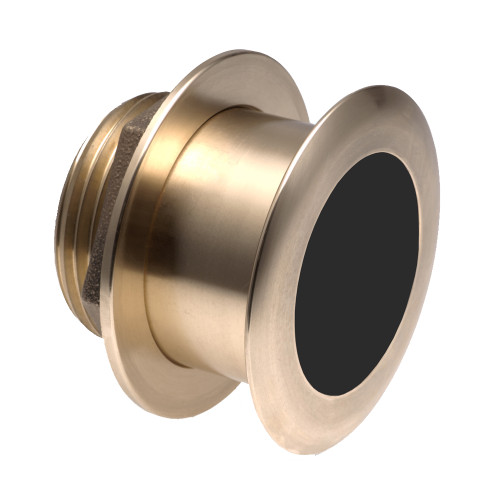
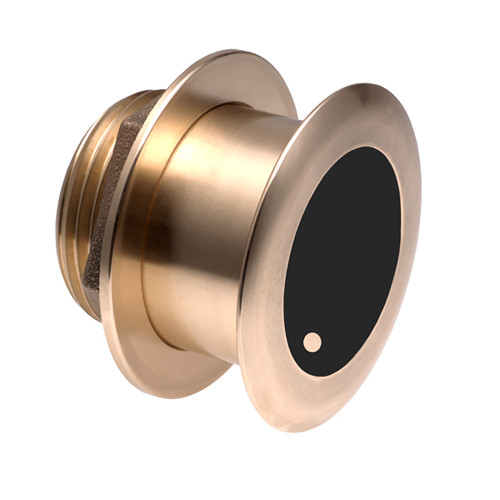
Raymarine B175M 1kW Bronze CHIRP Transducer | Boat Supply Store
Achieve unparalleled detail of submerged structures and fish targets, even at higher boat speeds, with this 1kW CHIRP transducer. Its bronze construction ensures superior acoustic transmission and reception in saltwater environments, while the 20-degree tilt is engineered for optimal hull angle compensation. This transducer is ideal for locating structure and discerning individual baitfish from gamefish in deep water trolling scenarios.
Key Features
- Unrivaled Sonar Clarity through broadband CHIRP technology
- 1kW RMS Power Output for deep water penetration and target separation
- Durable Bronze Housing for robust saltwater performance
- 20-Degree Hull Mount Tilt compensates for deadrise angles
- Wide Beamwidth covers a larger area of the water column
- Accurate Depth Readings up to 3000 feet
- High-Frequency Performance for fine detail resolution
- Built for Offshore Angling and serious sportfishing
Specifications
| Product Specifications | |
|---|---|
| Power Output | 1000W RMS |
| Frequency | Wide Spectrum CHIRP |
| Beamwidth | Varies by frequency (consult manual) |
| Depth Range | Up to 3000 ft |
| Hull Angle | 20 degrees |
| Material | Bronze |
| Connector | Raymarine 12-pin |
| Dimensions | 7 inches L x 6 inches W x 8 inches H (approximate) |
Who This Is For
Serious offshore anglers and serious sportfishing captains who demand the highest level of detail and performance from their fishfinder systems. This transducer is engineered for boats with moderate deadrise hulls seeking to maximize bottom discrimination and fish detection capabilities at speed.
How It Compares
| Feature | Raymarine B175M 1kW Bronze CHIRP Transducer | Airmar |
|---|---|---|
| Power Output | 1000W RMS | 1000W RMS |
| Material | Bronze | Bronze |
| Hull Angle | 20 degrees | 20 degrees |
| Depth Range | 3000 ft | — |
Common Concerns Answered
Will this transducer work with my existing Raymarine MFD?
The Raymarine B175M utilizes a standard 12-pin connector and is designed to be compatible with a wide range of Raymarine multifunction displays that support CHIRP sonar technology. Please verify your specific MFD model's transducer compatibility for optimal performance.
Is bronze the best material for saltwater?
Yes, bronze is the industry standard for high-performance transducers in saltwater environments due to its excellent acoustic properties, corrosion resistance, and durability, ensuring consistent signal transmission and longevity.
How does the 20-degree tilt benefit my installation?
The integrated 20-degree tilt allows the transducer to be mounted on hulls with moderate deadrise angles, ensuring the acoustic beam is directed straight down into the water column for accurate readings, even when the boat is at rest or underway.
Frequently Asked Questions
What is CHIRP sonar and how does it differ from traditional sonar?
CHIRP (Compressed High Intensity Radar Pulse) transmits a continuous sweep of frequencies, offering improved target resolution, reduced noise, and greater depth penetration compared to traditional single-frequency sonar pulses.
What is the primary advantage of a 1kW transducer?
A 1kW transducer provides significantly more power output, allowing for greater depth penetration and better target separation, which is crucial for distinguishing individual fish or baitfish schools in deeper waters.
Can this transducer be used for freshwater fishing?
While optimized for saltwater, the Raymarine B175M's advanced CHIRP technology and power output will still provide excellent performance and detail for freshwater applications, especially in deeper lakes or reservoirs.
What is the recommended installation depth for this transducer?
For optimal performance, especially in rough seas, transducers like the B175M should be mounted at a depth that ensures the transducer face is always submerged, typically at least 6 inches below the waterline.
How does the 20-degree tilt address hull deadrise?
The 20-degree tilt is pre-angled to align the transducer's sonar beam perpendicular to the water's surface when installed on hulls with a 20-degree deadrise, ensuring the signal is transmitted directly downwards for accurate bottom imagery.