
Description
Raymarine P79S Smart Sensor Depth | Boat Supply Store
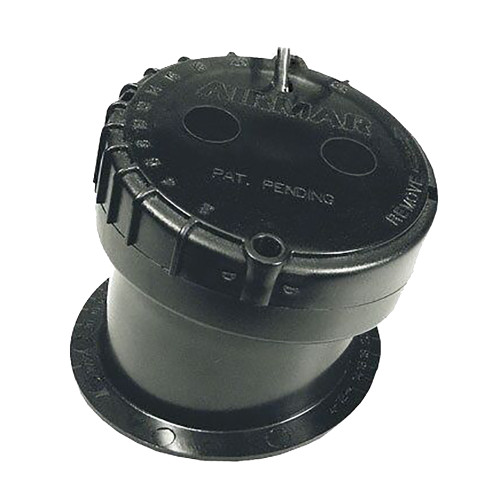
This depth-only transducer eliminates hull penetrations by mounting internally on solid fiberglass hulls up to 8 meters. It delivers processed depth data directly to your NMEA 2000 network with 60W power output and a 235 kHz frequency, preventing interference. The unit utilizes an antifreeze coupling for optimal signal transmission through the hull, ensuring accurate readings without external protrusions.
Key Features
- Non-invasive in-hull mounting for seamless integration.
- Processed data delivered directly via NMEA 2000.
- Antifreeze coupling for superior signal penetration on solid fiberglass.
- 235 kHz frequency to eliminate interference with other transducers.
- Adjustable plastic base for precise in-hull positioning.
- Eliminates hull drilling, preserving vessel integrity.
- Compact design suitable for smaller vessels (up to 8m/25').
- NMEA 2000 certified for robust network connectivity.
Specifications
| Product Specifications | |
|---|---|
| Depth-Only | Yes |
| Power | 60W |
| Frequency | 235 kHz |
| Beamwidth | 7° |
| Maximum Depth (NMEA 2000) | 150m (500') |
| Installation Type | In-hull |
| Mounting Base | Adjustable plastic |
Who This Is For
Owners of smaller boats (up to 8m/25') with solid fiberglass hulls seeking a reliable, non-intrusive depth sounder. It is particularly suited for trailered or lifted vessels where external transducer placement is impractical or undesirable.
How It Compares
| Feature | Raymarine P79S Smart Sensor Depth | Competitor |
|---|---|---|
| Installation Type | In-hull | Thru-hull, Thru-hull |
| Hull Drilling Required | No | Yes, Yes |
| Smart Sensor Technology | Yes | Yes, No |
| Depth Range (NMEA 2000) | 150m (500') | Up to 150m (500'), Up to 1500' (460m) for CHIRP |
| Frequency | 235 kHz | 235 kHz, CHIRP 150-240 kHz |
Common Concerns Answered
How does the in-hull installation affect accuracy compared to thru-hull transducers?
The P79S utilizes an antifreeze fill and is specifically designed for solid fiberglass hulls to optimize signal transmission, mitigating potential signal degradation common with some in-hull installations. Careful placement and calibration are essential for peak performance.
What are the limitations of the P79S sensor?
This sensor is exclusively for depth readings and does not provide temperature or speed data. Optimal performance requires precise placement and calibration during installation.
Will the P79S interfere with other sounding devices on my boat?
No, the P79S operates at a 235 kHz frequency, a band specifically chosen to prevent interference with other common echo sounder frequencies.
Frequently Asked Questions
What is the maximum depth range of the Raymarine P79S Smart™ Sensor?
The P79S Smart™ Sensor has a maximum depth range of 150 meters (500 feet) when connected via NMEA 2000.
Can the P79S be installed on a boat with a solid fiberglass hull?
Yes, the P79S Smart™ Sensor is specifically designed for installation on solid fiberglass hulls.
What is the frequency of the Raymarine P79S transducer?
The Raymarine P79S transducer operates at a frequency of 235 kHz.
Does the P79S require drilling holes in the hull for installation?
No, the P79S Smart™ Sensor is an in-hull transducer and does not require drilling holes through the hull.
What is the power output of the P79S Smart™ Sensor?
The P79S Smart™ Sensor has a power output of 60W.