
Description
Raymarine NMEA0183 to SeaTalkng Converter Kit | Boat Supply Store
This converter kit addresses the need to integrate older NMEA0183 VHF radios into modern Raymarine SeaTalkng networked systems. It effectively translates isolated NMEA0183 data into the SeaTalkng protocol, enabling communication with other SeaTalkng devices without requiring a full VHF replacement. For instance, a charter captain operating a 40-foot sportfisher out of Port Aransas can leverage existing NMEA0183 DSC features on their current VHF by interfacing it with their new Raymarine MFD. The kit is specifically engineered for connecting NMEA0183 VHF units to a SeaTalkng backbone, facilitating essential data sharing.
Key Features
- Connect isolated NMEA0183 VHF radios to the SeaTalkng network.
- Facilitate data integration between legacy VHF units and modern Raymarine systems.
- Enable seamless communication within the Raymarine ecosystem.
- Expand your marine electronics system without replacing your current VHF.
- Ensure compatibility for existing NMEA0183 VHF installations.
- Upgrade your onboard communication capabilities efficiently.
- Retain essential VHF functionality within a new network.
- Simplify the integration of older and newer marine electronics.
Specifications
| Product Specifications | |
|---|---|
| Protocol Conversion | NMEA0183 to SeaTalkng |
| Input Data | NMEA0183 (isolated VHF) |
| Output Data | SeaTalkng |
Who This Is For
Boat owners with an existing NMEA0183 VHF radio seeking to integrate it with a Raymarine SeaTalkng network. It is also for those upgrading to a SeaTalkng system who wish to retain their current VHF unit.
How It Compares
| Feature | Raymarine NMEA0183 to SeaTalkng Converter Kit | Garmin GXM 53 SiriusXM Weather Receiver |
|---|---|---|
| Functionality | Converts NMEA0183 (isolated VHF) to SeaTalkng | SiriusXM Weather and Audio Receiver |
| Input Protocol | NMEA0183 | SiriusXM Satellite Data |
| Output Protocol | SeaTalkng | NMEA 2000 |
Common Concerns Answered
Is this kit compatible with all NMEA0183 VHF radios?
While designed for NMEA0183 input, compatibility is generally high. However, it's recommended to consult your specific VHF radio's manual for NMEA0183 output configuration to ensure optimal integration.
What if I have trouble with the initial setup?
Some users report occasional difficulty with initial setup. Careful attention to wiring and ensuring proper isolation of the NMEA0183 signal are crucial steps to mitigate these challenges, as detailed in the installation guide.
Is the installation process complicated?
The installation requires a basic understanding of marine electronics wiring and NMEA0183/SeaTalkng protocols. Proper isolation of NMEA0183 signals is critical for successful integration, suggesting a moderate installation complexity.
Frequently Asked Questions
What is the purpose of the Raymarine VHF NMEA0183 to SeaTalkng Converter Kit?
Its purpose is to enable an existing NMEA0183 VHF radio to communicate data with a Raymarine SeaTalkng network, facilitating system expansion and data sharing without replacing the VHF unit.
How do I connect an NMEA0183 VHF radio to my SeaTalkng network using this kit?
This kit provides the necessary interface to convert the NMEA0183 output from your VHF radio to the SeaTalkng protocol, allowing it to be connected and recognized by your SeaTalkng network devices.
Is this kit compatible with all NMEA0183 VHF radios?
The kit is designed to work with NMEA0183 signals. Verify your VHF's NMEA0183 output capabilities and wiring specifications to ensure a successful connection.
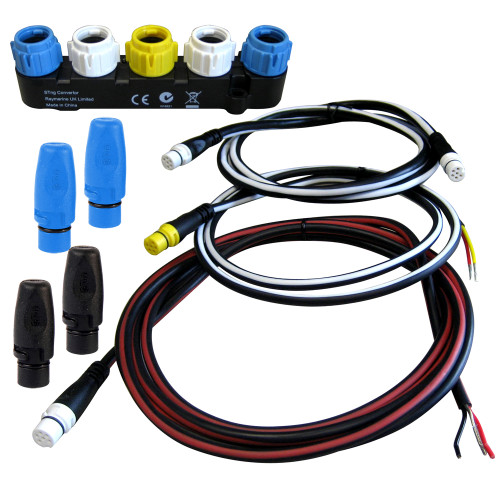
What components are included in the Raymarine E70196 kit?
The kit includes the necessary hardware and cabling to perform the NMEA0183 to SeaTalkng conversion, specifically designed for integrating a VHF radio into a SeaTalkng system.
Can I use this converter to send data from SeaTalkng to an NMEA0183 device?
This converter is specifically designed to convert NMEA0183 data *from* a VHF radio *to* SeaTalkng. It does not facilitate the transmission of data from SeaTalkng to an NMEA0183 device.