

Description
Sea-Dog Battery Terminal Wing Nut Set | Boat Supply Store
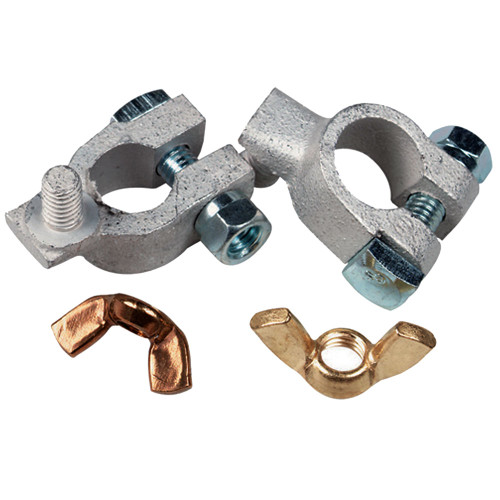
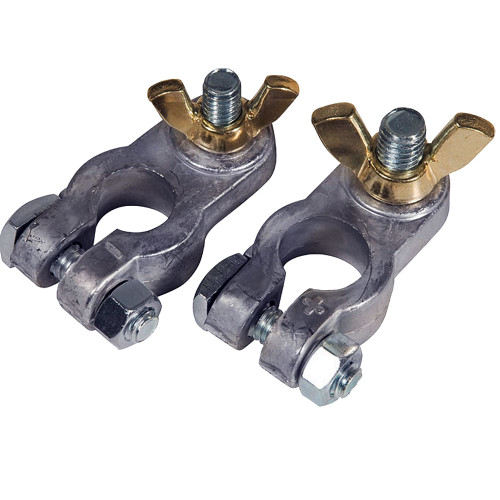
Facilitate rapid battery maintenance and ensure correct electrical connections with these Sea-Dog Battery Terminal Wing Nut Style connectors. Constructed from die-cast lead, these terminals effectively convert standard battery posts to stud connectors, simplifying accessory attachment. Adhering to USCG polarity regulations, this set provides a secure and compliant solution for managing your vessel's power system, ideal for frequent battery access required during offshore fishing trips.
Key Features
- Converts standard battery posts to stud connectors for versatile accessory integration.
- Permits swift disconnection via the convenient wing nut mechanism, ideal for storage or maintenance.
- Ensures correct installation with polarity-specific design, meeting USCG regulations.
- Constructed from durable die-cast lead for reliable electrical conductivity.
- Streamlines battery management for routine checks and seasonal layups.
- Simplifies electrical cable attachment to battery studs.
- Provides a clear visual indicator of correct polarity connection.
- Offers a cost-effective solution for compliant battery terminal management.
Specifications
| Product Specifications | |
|---|---|
| construction | Die cast lead |
| style | Wing nut |
| function | Converts battery posts to stud connectors |
| compliance | USCG polarity specific |
Who This Is For
Boat owners and marine enthusiasts requiring a straightforward method for battery connection and disconnection. This product is ideal for those who prioritize ease of use and adherence to USCG electrical regulations for their vessel.
How It Compares
| Feature | Sea-Dog Battery Terminal Wing Nut Set | Competitor |
|---|---|---|
| Style | Wing Nut Style | Stud |
| Disconnection Method | Wing Nut (Quick Disconnect) | Wrench Required |
| Material | Die Cast Lead | Brass, Tin-plated brass |
| Converts Post to Stud | Yes | Yes |
| Polarity Specific | Yes | No |
Common Concerns Answered
Are die-cast lead terminals as durable as brass?
While die-cast lead is softer than brass, these Sea-Dog terminals are engineered for marine electrical applications. Careful tightening is recommended to prevent stripping the wing nut mechanism, ensuring longevity.
What maintenance is required to prevent the wing nut from becoming stiff?
To maintain optimal performance, periodically clean the wing nut threads and apply a small amount of dielectric grease or anti-seize compound. This prevents corrosion and ensures smooth operation, especially in marine environments.
Is the softer lead material a concern for electrical conductivity?
No, die-cast lead offers excellent conductivity for battery terminals. The primary consideration with lead is its mechanical hardness; electrical performance remains robust for marine battery applications.
Frequently Asked Questions
How do Sea-Dog Battery Terminal Wing Nut Style terminals convert battery posts?
These terminals are designed with a clamping mechanism that fits over standard top-post batteries, and they incorporate threaded studs to which your accessory cables attach, effectively converting the post to a stud connector.
What is the purpose of the wing nut style on these battery terminals?
The wing nut design allows for tool-less, quick disconnection and reconnection of battery cables, simplifying battery maintenance, charging, or removal without the need for wrenches.
Are these battery terminals polarity specific?
Yes, these Sea-Dog battery terminals are polarity specific, meaning they are clearly marked for positive and negative connections to ensure compliance with USCG regulations and prevent incorrect installation.
What material are the Sea-Dog Battery Terminal Wing Nut Style terminals made of?
The Sea-Dog Battery Terminal Wing Nut Style terminals are constructed from durable die-cast lead, chosen for its conductivity and machinability in this application.
What is the California Proposition 65 warning for this product?
This product may contain chemicals known to the State of California to cause cancer and birth defects or other reproductive harm. For more information, visit www.P65Warnings.ca.gov.