
Description
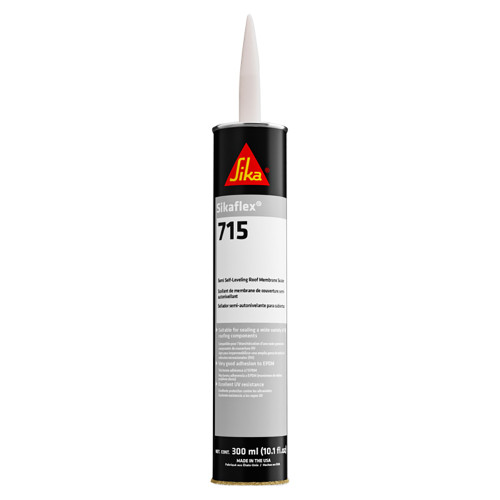
Sika Sikaflex-715 White Sealant for Marine Roofs | Boat Supply Store
For sealing challenging marine roof penetrations and RV components, this one-component silane terminated polymer sealant provides critical weatherproofing. It cures with atmospheric humidity and adheres to EPDM, metals, and plastics without a primer, boasting excellent UV resistance. With a Shore A hardness of 10 and a tensile strength of 0.6 MPa, it offers a durable yet flexible seal suitable for service temperatures from -50°C to 90°C.
Key Features
- Primerless Adhesion to challenging substrates like EPDM and metals.
- Semi Self-Leveling flow for effective roof sealing applications.
- Excellent UV Resistance for long-term performance in direct sunlight.
- Isocyanate Free formulation for improved user safety.
- Low VOC Content to meet environmental standards.
- Very Good Dispensing Characteristics for controlled application.
- Moisture-Curing mechanism for convenient application.
- White Color for discreet and aesthetic finishes.
Specifications
| Product Specifications | |
|---|---|
| Color | White |
| Chemical Base | Silane Terminated Polymer (STP) |
| Cure Mechanism | Moisture-curing |
| Density | 1.52 kg/l |
| Shore A Hardness | 10 |
| Tensile Strength | 0.6 MPa |
| Application Temperature Range | 5-40°C |
| Service Temperature Range | -50°C to 90°C |
| Flow Characteristic | Semi self-leveling |
Who This Is For
Experienced professional users and marine technicians requiring a high-performance sealant for challenging RV roofing and deck applications. It is ideal for situations demanding primerless adhesion to difficult substrates and a semi self-leveling flow.
How It Compares
| Feature | Sika Sikaflex-715 White Sealant for Marine Roofs | Competitor |
|---|---|---|
| Chemical Base | Silane Terminated Polymer | Polyurethane |
| Cure Mechanism | Moisture-curing | Moisture-curing |
| Self-Leveling | Semi self-leveling | Non-sagging |
| Shore A Hardness | 10 | 30-40, 40-50 |
| Tensile Strength | 0.6 MPa | 1.7 MPa |
| UV Resistance | Very good | Good |
| Primerless Adhesion | Yes, to difficult substrates | Requires primer for some substrates |
| Paintable | No | Yes |
Common Concerns Answered
Can I paint over Sikaflex®-715?
No, Sikaflex®-715 is not designed to be painted over. This limitation is noted by users and is important for aesthetic planning in your marine application.
Is surface preparation critical for Sikaflex®-715?
Yes, careful surface preparation is required for optimal adhesion, even with its primerless capabilities. Ensure surfaces are clean, dry, and free from contaminants for the best bond.
Is the semi self-leveling nature of Sikaflex®-715 difficult to manage?
The semi self-leveling characteristic, while beneficial for roof sealing, can be messy if not applied carefully. Experienced users will find it easier to manage its flow for precise application.
Frequently Asked Questions
What specific surfaces can Sikaflex®-715 adhere to without a primer?
Sikaflex®-715 offers primerless adhesion to a wide range of challenging substrates including EPDM, various metals, and common plastics used in marine and RV construction.
Is Sikaflex®-715 a fully self-leveling sealant?
No, Sikaflex®-715 possesses a semi self-leveling characteristic, meaning it will flow slightly after application to fill gaps, particularly beneficial for horizontal surfaces like roofs.
How does Sikaflex®-715 cure?
Sikaflex®-715 is a one-component sealant that cures via reaction with atmospheric humidity. This moisture-curing process allows it to form a durable seal without the need for external catalysts.
What is the application temperature range for Sikaflex®-715?
This sealant can be applied effectively within an ambient temperature range of 5°C to 40°C (41°F to 104°F), ensuring flexibility for most common installation conditions.
What is the primary difference between Sikaflex®-715 and polyurethane-based sealants like 4200FC?
Sikaflex®-715 is a Silane Terminated Polymer (STP) sealant offering excellent primerless adhesion to challenging substrates and a semi self-leveling flow, whereas polyurethane sealants typically have higher tensile strength but may require primers and are non-sagging.