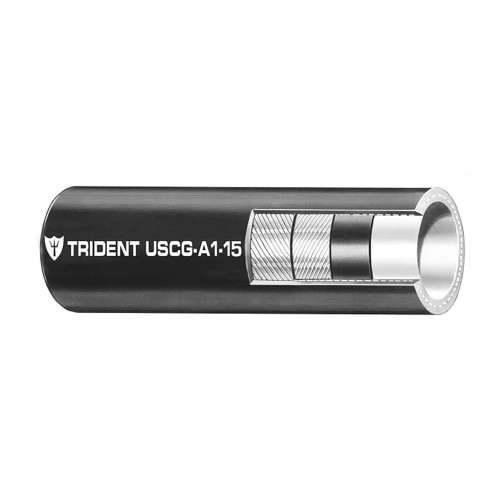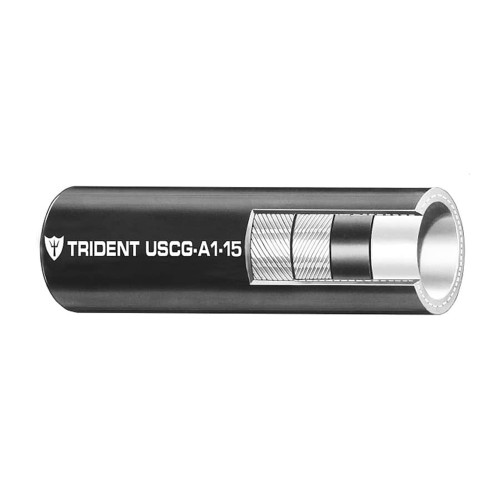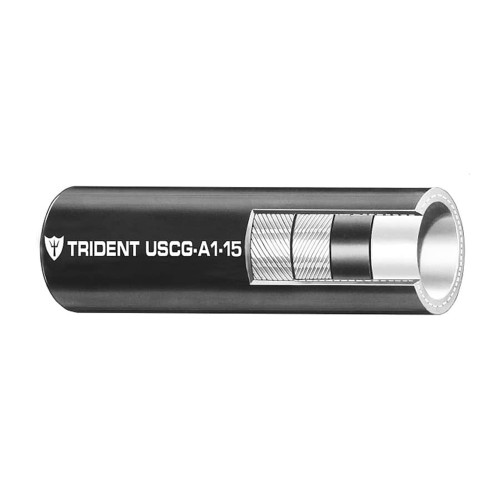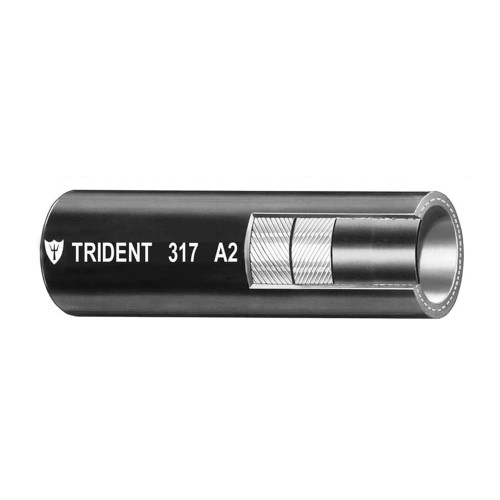

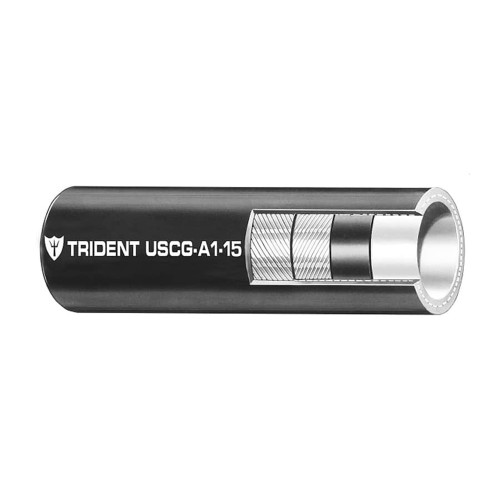
Description
5/16" Low Permeation Fuel Line Hose | Boat Supply Store
For marine engine owners and mechanics requiring absolute fuel integrity, this 5/16" low permeation fuel line hose from Trident Marine offers superior protection against vapor loss and degradation. Its construction incorporates a 0.611" outer diameter and a 400 psi burst pressure, ensuring robust performance in demanding marine environments. This hose is engineered for compatibility with gasoline up to E85 and diesel up to B100, making it ideal for vessels operating on the Texas coast or any waterway utilizing modern fuel blends.
Key Features
- Unrivaled Low Permeation Type A1-15 Fuel Line Hose
- Superior Compatibility for Gasoline (up to E85) and Diesel (up to B100)
- Advanced Nylon Internal Barrier Prevents Fuel Contact with Rubber
- Exceptional Resistance to Fuel Permeation, Aging, Fire, Heat, Cold, and Ozone
- Excellent Bend-ability for Efficient Routing
- Certified NMMA Type Accepted & CE Certified
- Engineered for Long-Term Durability
- Sold by the Foot for Custom Length Applications
Specifications
| Product Specifications | |
|---|---|
| Inner Diameter | 5/16" |
| Outer Diameter | 0.611" |
| Burst Pressure | 400 psi |
| Working Pressure | 100 psi |
| Temperature Range | -20F to 212F |
| Bend Radius | 1.75" |
| Construction | Nylon internal barrier, NBR/PVC blend cover, and polyester reinforcement |
| Certifications Exceeded | ABYC H-24 & H-33, SAE J1527, ISO 7840, USCG Type A1-15, CARB Executive Order RM-17-008, EPA Certified low permeation Type A1-10 |
Who This Is For
Marine engine owners and mechanics demanding high-performance, low-permeation fuel delivery systems for both gasoline and diesel applications. This hose is essential for vessels using ethanol and biodiesel blends who prioritize safety and longevity.
How It Compares
| Feature | 5/16" Low Permeation Fuel Line Hose | Competitor |
|---|---|---|
| Inner Diameter | 5/16" | 3/8" | 5/16" |
| Fuel Compatibility | Gasoline (up to E85), Diesel (up to B100) | Gasoline, Diesel, Ethanol up to E10 | Gasoline, Diesel, Ethanol up to E10 |
| Temperature Range | -20F to 212F | -20°F to 180°F | -20°F to 180°F |
| USCG Type | A1-15 | A2 | A2 |
| Permeation Rate | Low Permeation (Exceeds ABYC H-24 & H-33, SAE J1527, ISO 7840, USCG Type A1-15; CARB Executive Order RM-17-008 and EPA Certified low permeation Type A1-10) | SAE J1527 Type R2 | SAE J1527 Type R2 |
Common Concerns Answered
What is the return policy for this fuel line hose?
Due to the nature of fuel system components, this product cannot be returned to the point of purchase. For any issues, please contact the manufacturer directly for assistance.
Is this hose significantly more expensive than standard options?
While this low-permeation hose may have a higher upfront cost compared to non-barrier hoses, its advanced construction and superior resistance to fuel degradation offer a greater long-term value and enhanced safety, justifying the investment.
What should I do if I encounter a problem with the hose?
For any product issues, direct contact with the manufacturer is required for resolution, as returns to the point of purchase are not permitted.
Frequently Asked Questions
What types of fuel is the Trident Marine 5/16" Low Permeation Fuel Line Hose compatible with?
This fuel line hose is compatible with gasoline up to E85 and diesel fuel up to B100 blends.
What are the temperature limitations for this fuel line hose?
The operating temperature range for this fuel line hose is from -20°F to 212°F (-29°C to 100°C).
What certifications does this fuel line hose meet?
This fuel line hose exceeds ABYC H-24 & H-33, SAE J1527, ISO 7840, USCG Type A1-15, CARB Executive Order RM-17-008, and is EPA Certified low permeation Type A1-10. It is also NMMA Type Accepted and CE certified.
Can this fuel line hose be used for both gasoline and diesel applications?
Yes, this fuel line hose is designed for use with both gasoline (up to E85) and diesel (up to B100) applications.
What is the burst pressure and working pressure of this hose?
This hose has a burst pressure of 400 psi and a working pressure of 100 psi.