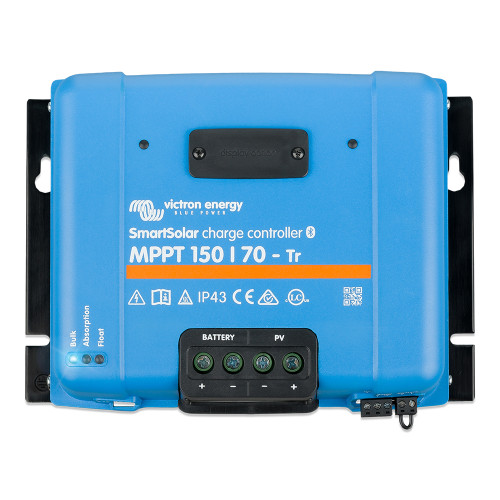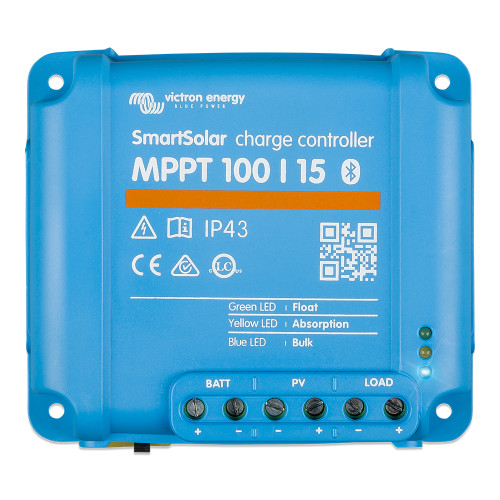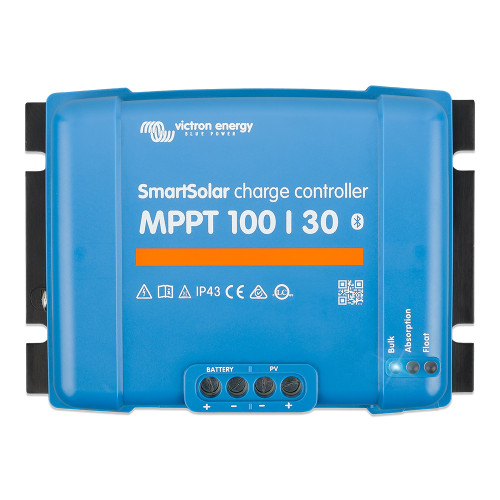


Description
Victron SmartSolar MPPT 150/35 Solar Charge Controller | Boat Supply Store
This advanced Maximum Power Point Tracking (MPPT) solar charge controller is engineered to optimize energy harvest from photovoltaic arrays for marine battery banks. It intelligently tracks the maximum power point of the solar array, ensuring up to 30% more power output compared to PWM controllers, even under adverse shading conditions. With a maximum solar input voltage of 150V and a maximum charge current of 35A, it is capable of efficiently charging 12V, 24V, and 48V battery systems, making it ideal for offshore cruising vessels demanding reliable power generation.
Key Features
- Maximize solar energy capture with MPPT technology
- Optimize charging for 12V, 24V, and 48V battery systems
- Handle high solar input voltage up to 150V
- Deliver maximum charge current of 35A
- Ensure system safety with UL Approval
- Monitor performance remotely via Bluetooth (optional accessory)
- Prevent overcharging and deep discharge of batteries
- Operate efficiently in variable light conditions
Specifications
| Product Specifications | |
|---|---|
| Rated Charge Current | 35A |
| Rated Load Current | 20A |
| Maximum Solar Array Power | 12V: 450W / 24V: 900W / 48V: 1800W |
| Maximum Solar Array Open Circuit Voltage | 150V |
| Maximum Efficiency | 98% |
| Nominal Battery Voltage | 12/24/48V Auto Select |
| Battery Voltage Range | 9-70V |
| Operating Temperature | -30 to +60 °C |
| Enclosure | IP67 (dust and water protected, when mounted with glands) |
| Communication | Bluetooth |
| Dimensions (H x W x D) | 130 x 214 x 47 mm |
| Weight | 1.25 kg |
Who This Is For
This controller is designed for boaters who require robust and efficient solar charging for their vessel's deep cycle battery banks, particularly those with larger solar arrays or variable shading challenges. It is an excellent choice for extended cruising or off-grid liveaboard situations where reliable, optimized power generation is critical.
How It Compares
| Feature | Victron SmartSolar MPPT 150/35 Solar Charge Controller | EPEVER Tracer |
|---|---|---|
| Maximum Solar Input Voltage | 150V | 100V |
| Maximum Charge Current | 35A | 30A |
| Nominal Battery Voltages Supported | 12/24/48V Auto Select | 12/24V Auto Select |
| Maximum Efficiency | 98% | 97% |
| Communication Port | Bluetooth | RS485 |
| Enclosure Rating | IP67 | IP30 |
Common Concerns Answered
Will this controller adequately charge my batteries under varying sunlight conditions?
Yes, the MPPT technology actively tracks the maximum power point of your solar array, delivering up to 30% more power than PWM controllers, especially beneficial during partial shading or in cooler temperatures, ensuring optimal battery charging.
Is this controller safe for my sensitive marine electronics?
The Victron SmartSolar MPPT 150/35 is UL Approved, indicating it meets stringent safety standards. It also incorporates intelligent battery management to prevent overcharging and deep discharge, protecting your battery bank and connected systems.
Can I monitor the system's performance remotely?
While this model does not have integrated Wi-Fi, it is Bluetooth-enabled, allowing for convenient remote monitoring of charging status, power production, and battery voltage via the VictronConnect app on your smartphone or tablet (requires optional accessory).
Frequently Asked Questions
What is the maximum solar array wattage this controller can handle?
The maximum solar array power depends on your battery voltage: 450W for 12V systems, 900W for 24V systems, and 1800W for 48V systems.
Can this controller be used with different battery types like Lithium Iron Phosphate (LiFePO4)?
Yes, the Victron SmartSolar MPPT controllers support a wide range of battery types, including Lead-Acid (AGM, Gel, Flooded) and Lithium variants. Specific charging parameters can be configured via the VictronConnect app.
What is the advantage of an MPPT controller over a PWM controller?
MPPT controllers intelligently adjust their internal resistance to find the solar panel's maximum power point, yielding significantly more harvested energy (up to 30% more) compared to the fixed voltage of PWM controllers, especially in fluctuating light or temperature conditions.
How does the 150V maximum solar input voltage benefit my system?
A higher maximum solar input voltage allows you to wire solar panels in series, reducing the number of parallel connections needed and minimizing voltage drop over longer cable runs, which is particularly advantageous for larger boat installations.
What is the meaning of 'auto select' for nominal battery voltage?
The controller automatically detects and configures itself to the correct nominal battery voltage (12V, 24V, or 48V) upon initial connection, simplifying installation and reducing the risk of configuration errors.