

Description
Victron VE.Bus BMS V2 for LiFePO4 Batteries | Boat Supply Store
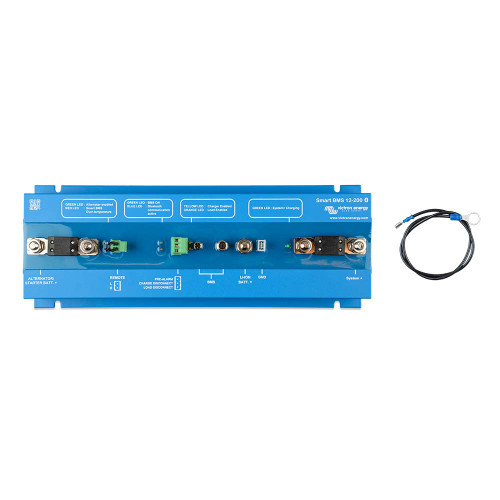
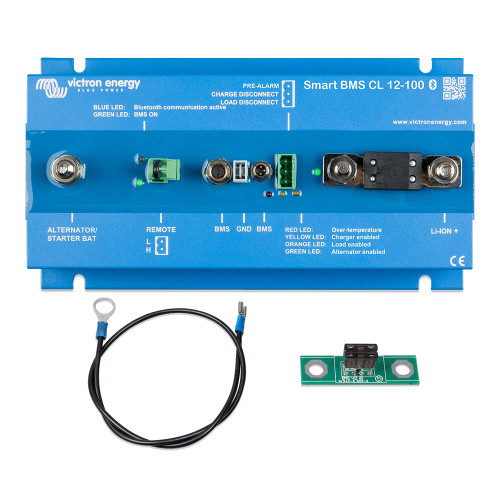
Protecting your vessel's critical power systems requires robust battery management. This unit provides advanced oversight for Victron 12.8V and 25.6V Smart LiFePO4 batteries operating within 12-48VDC VE.Bus inverter or inverter/charger configurations. It actively monitors individual cell voltages and temperatures, preventing damage by disabling loads via dedicated 'Load Disconnect' terminals during under-voltage events and halting charging if over-voltage, under-temperature, or over-temperature conditions are detected. Integration with GX devices allows for enhanced system control, including disabling VE.Direct and VE.Can solar chargers, ensuring optimal performance and longevity for your marine power infrastructure.
Key Features
- Protects Victron LiFePO4 batteries (12.8V & 25.6V Smart)
- Interfaces with Victron VE.Bus inverters and inverter-chargers
- Monitors cell voltage and temperature for proactive safety
- Prevents over/under voltage and over/under temperature damage
- Disables loads via 'Load Disconnect' terminal during under-voltage
- Halts charging via 'Charge Disconnect' terminal on critical cell conditions
- Integrates with GX devices for advanced system control and solar charger management
- Provides auxiliary power for GX device continuity during shutdowns
Specifications
| Product Specifications | |
|---|---|
| Battery Management System (BMS) | for Victron LiFePO4 Batteries (12.8V & 25.6V Smart) |
| System Voltage | 12-48VDC |
| Interface | Victron VE.Bus inverters and inverter-chargers |
| Monitoring | Cell voltage and temperature |
| Terminals | Load disconnect, charge disconnect, remote on/off |
| Integration | GX device compatibility |
| Auxiliary Power | Input/output terminals |
Who This Is For
Owners of Victron LiFePO4 batteries (12.8V & 25.6V Smart) integrated into Victron VE.Bus inverter or inverter/charger systems. Ideal for those utilizing GX devices for advanced system monitoring and control.
How It Compares
| Feature | Victron VE.Bus BMS V2 for LiFePO4 Batteries | Victron Energy VE.Bus BMS |
|---|---|---|
| VE.Bus Communication | Yes | Yes |
| GX Device Compatibility | Yes | No |
| Remote On/Off Terminals | Yes | No |
| Auxiliary Power Terminals | Yes | No |
| Solar Charger Control via GX | Yes | No |
Common Concerns Answered
The initial setup seems complex. Is this difficult to configure?
While initial configuration requires a solid understanding of DC wiring and VE.Bus communication protocols, especially when integrating with GX devices, the system's advanced capabilities offer significant long-term benefits in battery protection and system management. Consult the provided manual for detailed setup instructions.
This seems more expensive than other BMS options. Why the higher cost?
The VE.Bus BMS V2's price reflects its advanced integration within the Victron ecosystem, offering seamless communication with VE.Bus inverters and GX devices. This level of system synergy and advanced control features differentiates it from simpler, non-integrated BMS solutions.
Is this BMS suitable for a basic battery setup, or is it overkill?
This BMS is specifically designed for Victron LiFePO4 batteries within VE.Bus systems, especially those utilizing GX devices. For simpler, non-Victron integrated battery setups, alternative BMS solutions might be more cost-effective, but they will not offer the same level of system integration and control.
Frequently Asked Questions
What is the Victron VE.Bus BMS V2?
The Victron VE.Bus BMS V2 is an advanced battery management system designed to protect Victron Energy LiFePO4 batteries (12.8V & 25.6V Smart) within 12-48VDC VE.Bus inverter or inverter/charger systems.
What batteries is the Victron VE.Bus BMS V2 compatible with?
It is compatible with Victron Energy's 12.8V and 25.6V Smart LiFePO4 batteries.
What is the voltage range for the Victron VE.Bus BMS V2?
The VE.Bus BMS V2 is designed for systems operating within a 12-48VDC range.
How does the VE.Bus BMS V2 protect Victron LiFePO4 batteries?
It monitors individual cell voltages and temperatures, and uses 'Load Disconnect' and 'Charge Disconnect' terminals to prevent cell over/under voltage, over/under temperature, and over-temperature conditions, thereby safeguarding battery health and longevity.
Does the VE.Bus BMS V2 require a GX device?
While not strictly mandatory for basic battery protection, a GX device is highly recommended to unlock the full potential of the VE.Bus BMS V2, including advanced system control, solar charger management, and remote monitoring capabilities.