

Description
Whitecap Locking T-Handle Latch Chrome/Nylon | Boat Supply Store
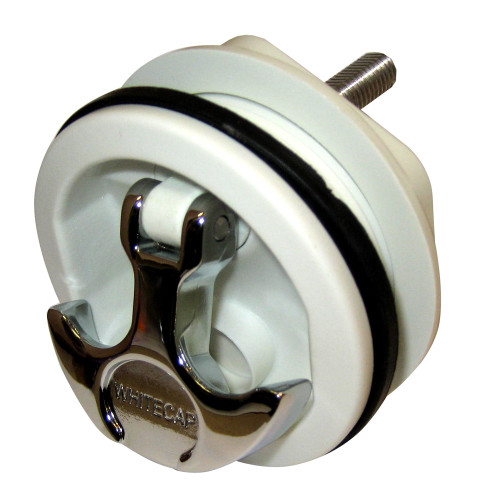
Secure your freshwater vessel's compartments with this robust Whitecap T-Handle Latch, engineered for durability and ease of use. Its chrome-plated zamac handle ensures corrosion resistance in freshwater environments, while the white nylon body provides a clean aesthetic. Designed for a 2-1/2" cut-out diameter, this locking latch accommodates surface depths from 1/8" to 3/4" with its short offset cam bar.
Key Features
- Secure Locking T-Handle design for enhanced safety.
- Durable Chrome Plated Zamac handle resists corrosion in freshwater.
- Robust White Nylon body for longevity and aesthetics.
- Reliable Short Offset Cam Bar ensures positive engagement.
- Sealed Neoprene O-ring prevents water ingress.
- Convenient Key fastener included for immediate installation.
- Optimized for freshwater applications only.
- Precise Fitment with 2-1/2" cut-out diameter.
Specifications
| Product Specifications | |
|---|---|
| Brand | Whitecap |
| SKU | CWR56304 |
| MPN | S-0226WC |
| Material | Chrome Plated Zamac/White Nylon |
| Locking Mechanism | Yes |
| Cam Bar Type | Short Offset |
| Surface Depth | 1/8"-3/4" |
| Cut-Out Diameter | 2-1/2" |
| Overall Diameter | 3" |
| Intended Use | Freshwater Only |
| Included | Neoprene O-ring and Key fastener |
Who This Is For
Boat owners and marine fabricators requiring a reliable locking T-handle latch specifically for freshwater applications on compartments, hatches, or doors. It is ideal for small boats, dinghies, or interior cabin areas where security and a clean appearance are paramount.
How It Compares
| Feature | Whitecap Locking T-Handle Latch Chrome/Nylon | Competitor |
|---|---|---|
| Material | Chrome Plated Zamac/White Nylon | Chrome-plated brass |
| Locking Mechanism | Yes | Yes |
| Cam Bar Type | Short Offset | Offset |
| Intended Use | Freshwater Only | Saltwater Rated |
| Cut-Out Diameter | 2-1/2" | 2-1/4" |
| Surface Depth | 1/8"-3/4" | Up to 1-1/2" |
Common Concerns Answered
Is this latch suitable for saltwater use?
No, this Whitecap T-Handle Latch is strictly engineered and rated for freshwater applications only. Its materials are not designed to withstand the corrosive effects of saltwater.
What happens if the cam bar is too short for my door thickness?
The specified surface depth for this latch is 1/8" to 3/4". If your door or hatch is thicker than 3/4", the short offset cam bar may not engage securely, potentially compromising the latch's ability to hold shut. Consider alternative latches with longer cam bars for thicker materials.
Why is it freshwater only and what does that mean for performance?
The freshwater-only designation means the chrome-plated zamac and white nylon components are optimized to resist corrosion and maintain integrity within freshwater environments. In saltwater, these materials can degrade faster, leading to premature failure and reduced functionality.
Frequently Asked Questions
What materials are used in the construction of this Whitecap T-Handle Latch?
The handle is constructed from chrome-plated zamac for durability and corrosion resistance in freshwater, and the body is made from white nylon for longevity and a clean aesthetic.
What is the required cut-out diameter for installation?
A precise 2-1/2" diameter cut-out is required for the installation of this T-Handle latch.
What is the maximum door or hatch thickness this latch can accommodate?
This latch is designed for surface depths ranging from 1/8" to 3/4", accommodating doors or hatches within this thickness range.
Does the latch come with a key and any other necessary hardware?
Yes, this Whitecap T-Handle Latch includes a key for its locking mechanism, as well as a neoprene O-ring and key fastener for secure installation.
Can I use this latch on my offshore fishing boat operating in the Gulf of Mexico?
No, this specific latch is rated for freshwater use only and is not suitable for saltwater environments such as the Gulf of Mexico due to potential corrosion and material degradation.