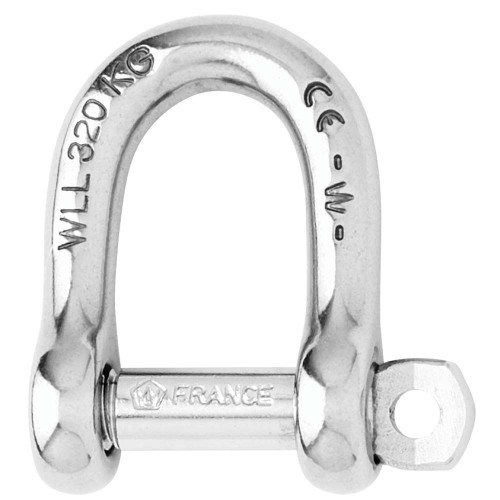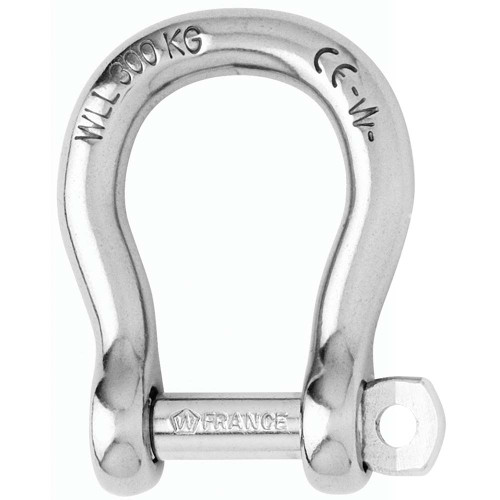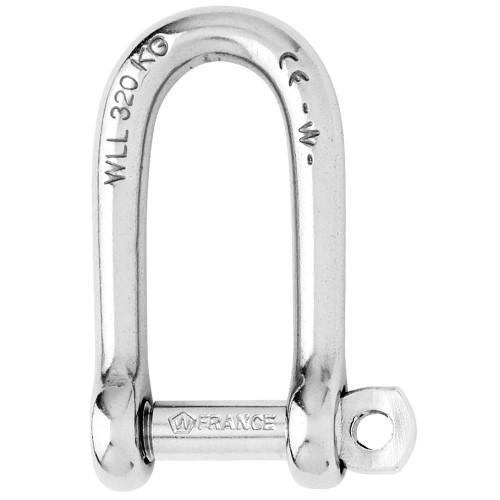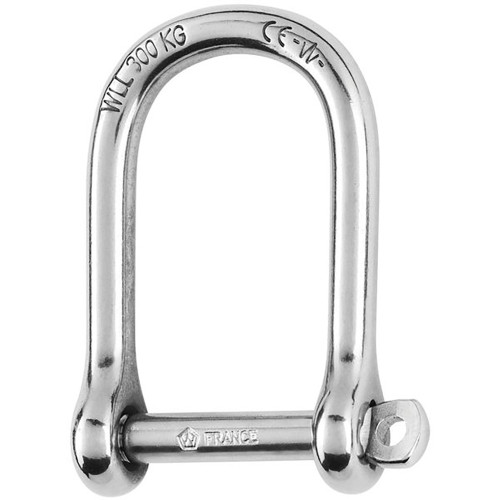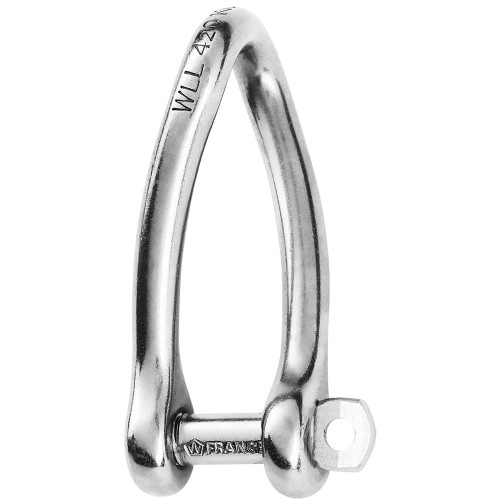

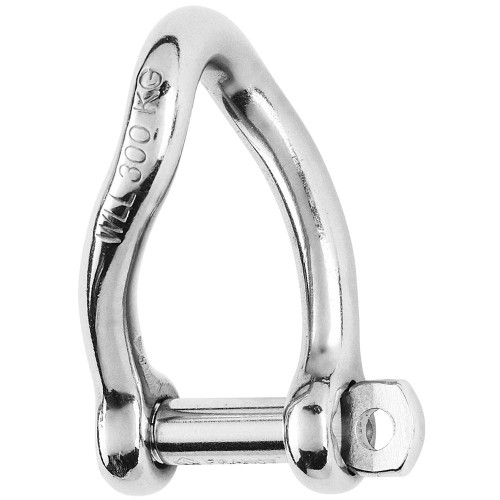
Description
Wichard 6mm Self-Locking Twisted Shackle | Boat Supply Store
Engineered for uncompromising security, this 6mm Wichard Self-Locking Twisted Shackle is forged from marine-grade 316L stainless steel, providing superior corrosion resistance and exceptional strength. Its innovative self-locking pin mechanism actively prevents accidental loosening under vibration, crucial for applications requiring a secure 90-degree angle connection. With a substantial Working Load of 1320 lb and a Breaking Load of 3300 lb, it ensures reliability for critical rigging on coastal cruisers or offshore racers.
Key Features
- Unparalleled Security with self-locking pin mechanism against accidental loosening
- Exceptional Strength forged from 316L stainless steel for ultimate durability
- Superior Corrosion Resistance inherent to 316L stainless steel for marine environments
- Optimized for 90-Degree Angles due to the functional twisted design
- High Load Capacities featuring a 1320 lb Working Load and 3300 lb Breaking Load
- Vibration-Resistant Locking ensures pin retention during active use
- Intuitive Operation of the secure pin locking into indentations
- Robust Construction trusted by demanding marine applications
Specifications
| Product Specifications | |
|---|---|
| Wichard Self-Locking Twisted Shackle | 6mm (1/4") diameter |
| Material | Forged from 316L stainless steel |
| Pin Mechanism | Self-locking pin mechanism |
| Working Load | 1320 lb |
| Breaking Load | 3300 lb |
| Dimension A | 1-3/16" |
| Dimension B | 15/32" |
| Dimension C | 15/64" |
| Dimension D | 15/32" |
| Dimension D diameter | 15/64" |
| Dimension E | 13/64" |
| Dimension F | 1-49/64" |
| Weight | 0.06 lb |
Who This Is For
Sailors and marine professionals demanding absolute security for critical rigging points, particularly where a 90-degree angle is beneficial. Ideal for applications where vibration is a concern and a consistently reliable connection is paramount.
How It Compares
| Feature | Wichard 6mm Self-Locking Twisted Shackle | Competitor |
|---|---|---|
| Material | 316L Stainless Steel | 316 Stainless Steel |
| Working Load (lb) | 1320 | 1100, 1300 |
| Breaking Load (lb) | 3300 | 2750, 3200 |
| Locking Mechanism | Self-locking pin into indentations | Quick Connect Pin, Spring Loaded Pin |
| Twisted Design | Yes | Yes |
Common Concerns Answered
Why is this shackle more expensive than others?
The higher price point reflects the advanced self-locking pin mechanism and the use of premium 316L stainless steel, ensuring superior security, corrosion resistance, and durability for critical marine applications.
Is the locking mechanism difficult to operate?
While offering enhanced security, the locking mechanism is designed for intuitive operation. Users find it slightly firmer than simpler designs, which is a direct benefit of its robust engagement and vibration resistance.
Will this shackle loosen over time with boat motion?
No, the innovative self-locking pin mechanism is specifically engineered to prevent loosening caused by vibrations and movement, providing a consistently secure connection.
Frequently Asked Questions
What is the working load limit of the Wichard Self-Locking Twisted Shackle (6mm)?
The working load limit for the Wichard Self-Locking Twisted Shackle (6mm) is 1320 lb.
What is the breaking load limit of the Wichard Self-Locking Twisted Shackle (6mm)?
The breaking load limit for the Wichard Self-Locking Twisted Shackle (6mm) is 3300 lb.
What material is the Wichard Self-Locking Twisted Shackle made from?
This Wichard Self-Locking Twisted Shackle is forged from high-quality 316L stainless steel.
What are the typical applications for a self-locking twisted shackle?
Self-locking twisted shackles are ideal for securing lines, blocks, or deck hardware where a 90-degree angle is beneficial, and consistent security against loosening from vibration is essential, such as halyard systems or boom attachments.
How does the self-locking mechanism work on this Wichard shackle?
The self-locking pin on this Wichard shackle engages with specific indentations within the shackle body, creating a positive lock that resists dislodging due to vibration or movement, ensuring the pin remains secure.