
Description
303 Marine Fabric Guard 1 Gallon | Boat Supply Store
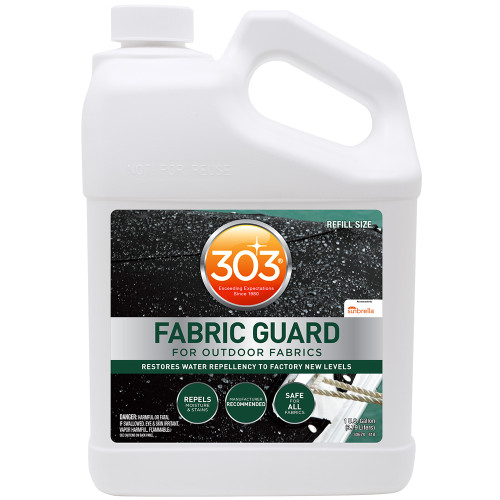
Restore lost water repellency and defend against oil and water-based stains on critical marine textiles with 303 Marine Fabric Guard. This specialized formula is the sole product endorsed by leading fabric manufacturers for its ability to return factory-level hydrophobic properties without impacting fabric color, feel, flammability, or breathability. Ideal for protecting canvas boat covers, sails subjected to saltwater spray, and outdoor seating in humid coastal environments, it ensures continued performance and longevity.
Key Features
- Restores lost water repellency to marine fabrics
- Protects against oil and water-based stains
- Safe for synthetic and natural fibers
- Maintains fabric color, feel, flammability, or breathability
- Recommended by leading outdoor fabric manufacturers
- Ensures factory-level protection
- Economical 1 Gallon container
- Made in the U.S.A.
Specifications
| Product Specifications | |
|---|---|
| Volume | 1 Gallon |
| Form | Fabric Protector Spray |
| Compatibility | Synthetic and natural fibers |
| Origin | Made in the U.S.A. |
Who This Is For
Boat and RV owners seeking to maintain the water and stain resistance of their outdoor fabrics, including boat covers, awnings, and cushions. Essential for preserving the integrity of sails and outdoor leather seating exposed to the elements.
How It Compares
| Feature | 303 Marine Fabric Guard 1 Gallon | Competitor |
|---|---|---|
| Product Type | Fabric Protector Spray | Waterproofing Wax, Fabric Protector Spray |
| Volume | 1 Gallon | — |
| Manufacturer Recommendation | Recommended by fabric manufacturers | Not specified, Not specified for marine fabrics |
| Stain Protection | Oil and water-based stains | Water repellency, Water and stain resistance |
| Fabric Feel Alteration | Does not alter | May alter, May alter |
Common Concerns Answered
How can I ensure the best results from 303 Marine Fabric Guard?
For optimal performance, always thoroughly clean and dry fabric prior to application. This addresses occasional user reports of reduced efficacy when fabric is not properly prepped, ensuring the protectant bonds correctly.
Is the application process difficult for a 1-gallon container?
While application can be time-consuming for extensive areas, the 1-gallon size offers cost-effectiveness for maintaining multiple boat components or larger marine textiles. Even application via spraying is recommended for best results.
What if the product doesn't seem to work as expected?
User feedback indicates that thorough fabric cleaning before application is critical for achieving expected performance. If issues persist, verify the fabric type's compatibility and ensure even application and adequate drying time.
Frequently Asked Questions
How often should I reapply 303 Marine Fabric Guard?
Reapplication frequency depends on environmental exposure, but a general guideline is annually or after significant weather events. Monitor water beading; if water begins to soak into the fabric, it is time to reapply.
Can 303 Marine Fabric Guard be used on all types of marine fabrics?
Yes, it is safe for use on both synthetic and natural fibers commonly found in marine applications, including canvas, vinyl, and certain types of outdoor leather.
Will 303 Marine Fabric Guard change the color or feel of my fabric?
No, a key benefit of 303 Marine Fabric Guard is that it is specifically formulated not to alter the fabric's original color, texture, flammability, or breathability.
Is 303 Marine Fabric Guard safe for use on outdoor furniture and awnings?
Absolutely. Its protective properties are ideal for outdoor furniture cushions, patio umbrellas, awnings, and other textiles exposed to the elements, enhancing their durability and resistance to stains and water.
What is the coverage area for a 1-gallon container of 303 Marine Fabric Guard?
Coverage varies based on the porosity and weave of the fabric, but a 1-gallon container typically covers approximately 100-200 square feet of fabric with a single coat. Ensure complete saturation for optimal protection.