

Description
Ancor NMEA 2000 Inline Terminator | Boat Supply Store
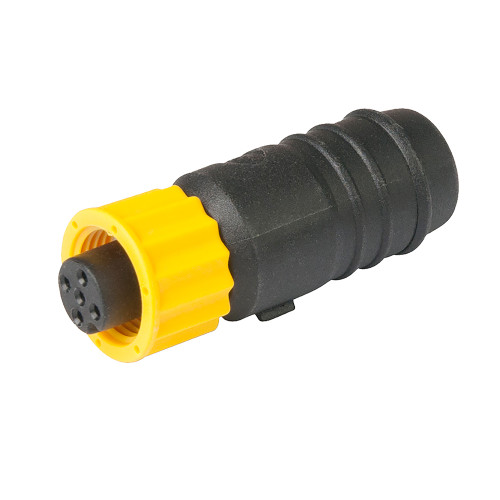
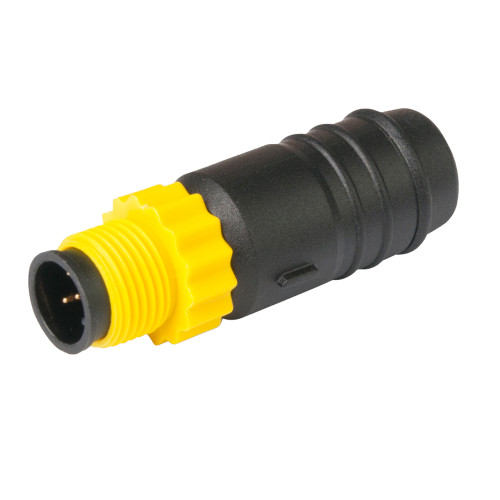
Maintain robust signal integrity on your vessel's NMEA 2000 network with this specialized inline terminator. Designed to be installed directly between backbone and drop cables, it efficiently terminates the network at its end point, preventing signal reflection and ensuring reliable data flow for critical navigation instruments. This compact solution is essential for builders of integrated marine electronic systems on offshore fishing rigs or coastal cruisers requiring stable communication between devices.
Key Features
- Space-saving inline design eliminates bulky end-of-line connectors.
- Ensures proper network termination for optimal data transmission.
- Directly connects between NMEA 2000 backbone and drop cables.
- Maintains critical termination at the network's operational end.
- Simplifies installation by integrating termination directly into the cable run.
- Robust construction for marine environments.
- Reduces clutter by avoiding separate termination points.
- Essential for maintaining NMEA 2000 network stability.
Specifications
| Product Specifications | |
|---|---|
| Brand | Ancor |
| MPN | 270114 |
| SKU | CWR80192 |
| Product Type | NMEA 2000 Inline Terminator |
| Design | Inline |
Who This Is For
Marine electronics installers and boat owners building or maintaining NMEA 2000 networks require this compact terminator. It is ideal for those seeking an efficient and integrated solution for network termination on their vessel.
How It Compares
| Feature | Ancor NMEA 2000 Inline Terminator | Set of 2 |
|---|---|---|
| Type | Inline Terminator | End-of-line Terminator |
| Connection Style | Connects between backbone and drop cable | Connects to the end of a backbone cable |
| Space Saving Design | Yes (Inline) | No |
Common Concerns Answered
Is this terminator difficult to install?
No, installation is straightforward. It requires a basic understanding of NMEA 2000 network topology and involves simply plugging the terminator into the appropriate T-connector or backbone cable, integrating seamlessly into your existing setup.
Why would I use an inline terminator instead of a standard one?
The Ancor inline terminator offers a unique, space-saving design by integrating directly between backbone and drop cables, simplifying network termination in specific configurations where end-of-line placement is needed without a separate physical end.
Are these terminators difficult to find?
While their specialized nature can sometimes limit immediate availability, their effectiveness and unique design are highly valued by experienced installers and boat owners who understand the benefits of an integrated termination solution.
Frequently Asked Questions
What is an NMEA 2000 inline terminator used for?
An NMEA 2000 inline terminator is used to absorb excess signal energy at the end of a network backbone segment, preventing signal reflections that can corrupt data. This specific inline version integrates directly into the cable run between backbone and drop cables.
How does an inline terminator differ from a standard terminator?
A standard terminator is typically placed at the physical end of a backbone cable, often requiring a dedicated port on a T-connector. An inline terminator is designed to fit between two cables, effectively acting as the end termination within the cable run itself.
Where should an inline terminator be placed in an NMEA 2000 network?
This inline terminator is placed at the operational end of a NMEA 2000 backbone segment, connecting between the last backbone device's drop cable and the main backbone cable, or at the very end of the backbone run where a second T-connector would normally accommodate a standard terminator.
Can I use multiple inline terminators on a single NMEA 2000 network?
Generally, an NMEA 2000 network requires only two terminators, one at each end of the main backbone. If this inline terminator is used to terminate one end, a second terminator (inline or standard) will be needed for the opposite end of the backbone.
What is the purpose of terminating an NMEA 2000 network?
Terminating an NMEA 2000 network with the correct resistance (typically 120 ohms) is crucial to absorb signal energy and prevent reflections. These reflections can interfere with data transmission, leading to intermittent device operation or complete network failure.