

Description
ProMariner 70A Dual Alternator Battery Isolator | Boat Supply Store
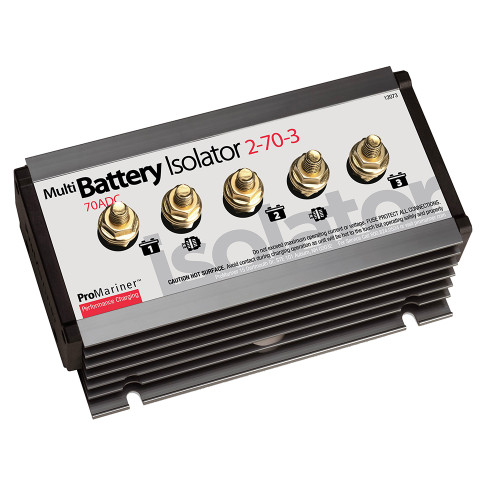
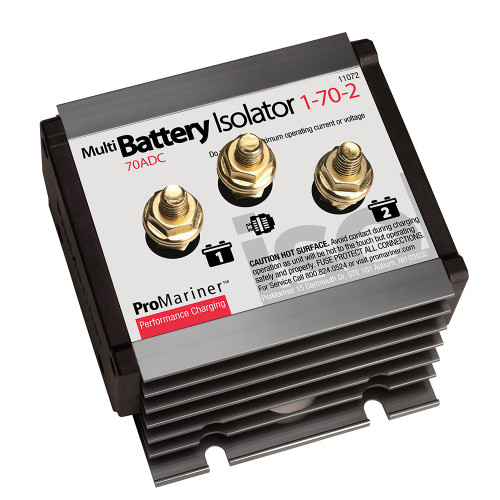
This ProMariner 12072 battery isolator is engineered for vessels demanding robust and independent charging of multiple battery banks from dual alternators. Its 70 Amp rating efficiently manages power distribution, preventing parasitic drain between batteries and ensuring each bank receives optimal charge. Featuring gold-plated terminals, it guarantees superior conductivity and corrosion resistance crucial for harsh marine environments, supporting DC devices from 10 to 70 amps.
Key Features
- Dual alternator input for versatile charging configurations
- Dual battery output for independent battery management
- 70 Amp rating handles substantial charging demands
- Gold-plated terminals ensure superior electrical conductivity and corrosion resistance
- Improved charging efficiency maximizes battery lifespan
- Reliable power management for complex electrical systems
- Prevents battery discharge between banks
- Optimized for marine environments
Specifications
| Product Specifications | |
|---|---|
| Brand | ProMariner |
| Model | 12072 |
| Alternator Inputs | 2 |
| Battery Outputs | 2 |
| Amperage Rating | 70 Amp |
| Terminal Type | Gold-plated |
| Suitable for DC Devices | 10 to 70 Amps |
Who This Is For
Boat owners with dual battery systems and/or dual alternators seeking to ensure optimal, independent charging of each battery bank. This isolator is ideal for maximizing battery life and maintaining consistent system power.
How It Compares
| Feature | ProMariner 70A Dual Alternator Battery Isolator | Competitor |
|---|---|---|
| Amperage Rating | 70 Amps | 120 Amps, 70 Amps |
| Number of Alternator Inputs | 2 | 1, 1 |
| Number of Battery Outputs | 2 | 2, 4 |
| Terminal Type | Gold-plated | Standard, Standard |
Common Concerns Answered
What if I'm not comfortable with complex wiring?
While installation requires basic DC electrical knowledge, understanding of circuits, and proper marine wiring techniques, some users find the diagrams challenging for complex dual-alternator setups. Consulting a marine electrician or referring to detailed technical guides can mitigate this concern.
What happens if I exceed the amperage rating?
Exceeding the 70 Amp rating can lead to overheating. It is crucial to correctly match the isolator's capacity to your vessel's charging system demands to prevent component damage and ensure safe operation.
Are there alternatives for simpler setups?
Yes, simpler single-alternator isolators exist, but for boats with dual alternators requiring independent charging of two battery banks, this ProMariner unit is specifically designed for that functionality, justifying its targeted application.
Frequently Asked Questions
What is a battery isolator and why do I need one?
A battery isolator is an electronic device that allows a single alternator to charge multiple batteries independently. You need one to prevent the batteries from discharging into each other and to ensure each battery receives an optimal charge, extending their lifespan and improving system reliability.
How does the ProMariner 12072 battery isolator improve charging efficiency?
It utilizes efficient diode technology to separate charging circuits and employs gold-plated terminals for superior electrical conductivity, minimizing voltage drop and ensuring that each connected battery receives a full and independent charge from the alternator.
Can this battery isolator handle multiple alternators and batteries?
Yes, the ProMariner 12072 is specifically designed with two alternator inputs and two battery outputs, making it capable of managing power from two alternators to two separate battery banks.
What is the amperage rating of the ProMariner 12072?
The ProMariner 12072 battery isolator has a robust amperage rating of 70 Amps, suitable for managing DC loads ranging from 10 to 70 amps.
Are the terminals on this isolator gold-plated?
Yes, the ProMariner 12072 features gold-plated terminals, which provide excellent corrosion resistance and enhanced electrical conductivity for reliable connections in marine environments.