

Description
PropOne 500ml Foul-Release Kit for Propellers | Boat Supply Store
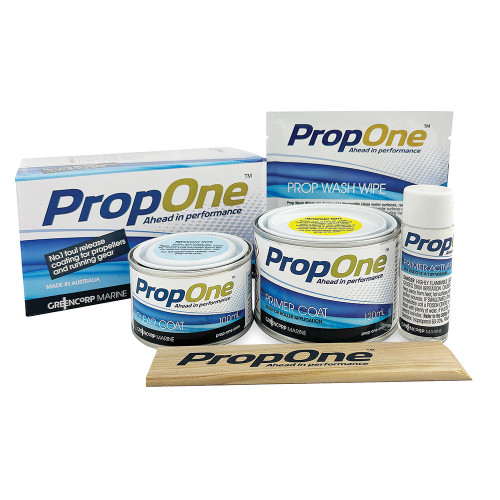
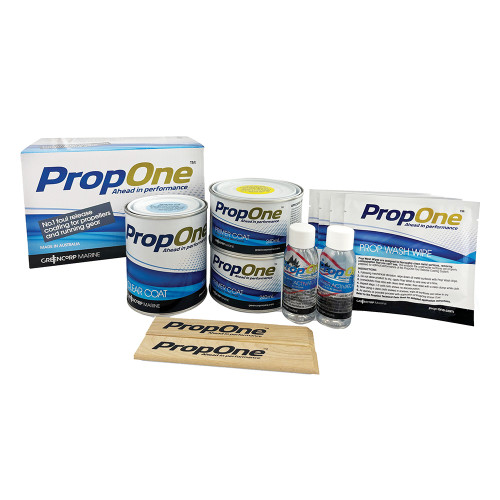
This foul-release coating system combats marine growth on propellers and running gear, directly addressing drag and suboptimal fuel efficiency. The PropOne Kit includes 2 x 120mL Primer Coat and 1 x 200mL Clear Coat, engineered for comprehensive application. Its proven formulation is ideal for vessels operating in environments prone to biofouling, such as the Gulf Coast, where maintaining clean running gear is critical for optimal performance.
Key Features
- No.1 foul-release coating for propellers and running gear
- Proven track record of over 10+ years
- Most popular with twin shaft boats
- Comprehensive kit includes primer, activator, clear coat, and application tools
- Reduces drag for improved fuel efficiency
- Prevents adhesion of marine growth
- Long-lasting protection
- High performance coating system
Specifications
| Product Specifications | |
|---|---|
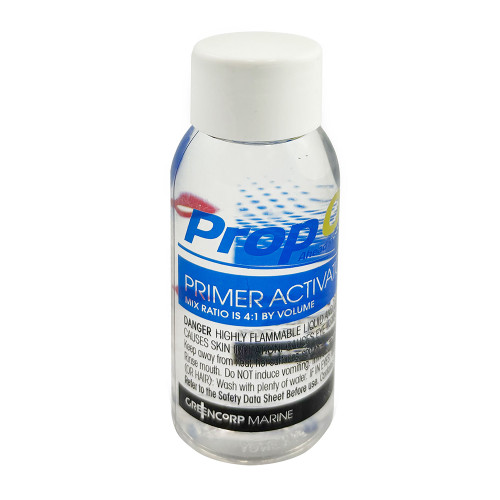
| Kit Contents | 2 x 120mL Primer Coat, 2 x 30mL Primer Activator, 1 x 200mL Clear Coat, 2 x Prop Wash Wipes, 2 x Stirring Sticks |
| Coverage | Designed to cover two 36-inch propellers and their running gear |
| Volume | 500ml (approx.) |
Who This Is For
Boat owners seeking to eliminate marine growth and enhance propulsive efficiency on their propellers and running gear. Particularly beneficial for owners of multi-engine vessels, such as twin-engine setups, where maintaining optimal performance is paramount.
How It Compares
| Feature | PropOne 500ml Foul-Release Kit for Propellers | Competitor |
|---|---|---|
| Coating Type | Foul-Release | Ablative Antifouling |
| Primary Mechanism | Prevents adhesion of marine growth | Wears away to expose fresh biocide |
| Drag Reduction | High | Moderate |
| Kit Contents | Primer, Activator, Clear Coat, Wipes, Stir Sticks | Paint only |
| Volume | 500ml (approx.) | 1 Quart |
Common Concerns Answered
Is the initial cost higher than traditional antifouling paints?
While the initial investment in the PropOne Kit may appear higher than some traditional antifouling paints, the long-term benefits of reduced drag, improved fuel efficiency, and extended maintenance intervals often provide a superior return on investment over the operational life of the coating.
Does PropOne require a complex application process?
The application of PropOne requires attention to detail, including careful surface preparation and multi-coat application following specific instructions. While not as simple as a spray application, many boaters find the process manageable and less intricate than traditional antifouling paint application, especially given its superior performance characteristics.
How does PropOne compare to traditional antifouling paints?
PropOne is a foul-release coating that prevents marine growth from adhering, whereas traditional antifouling paints rely on biocides to deter growth. This difference in mechanism results in significantly lower drag and higher fuel efficiency with PropOne, backed by over a decade of successful application.
Frequently Asked Questions
How long does PropOne last on a propeller?
PropOne offers a long-lasting foul-release coating with a proven track record of over 10 years of successful application, indicating exceptional durability under marine conditions.
What is the coverage of the PropOne Kit - 500ml?
The PropOne Kit - 500ml is specifically designed to provide adequate coverage for two 36-inch propellers and their associated running gear.
Can PropOne be used on running gear in addition to propellers?
Yes, PropOne is a foul-release coating system specifically designed for both propellers and running gear, providing comprehensive protection.
Is PropOne difficult to apply?
The application of PropOne requires careful surface preparation and adherence to multi-coat instructions. While it demands attention to detail, it is generally considered less complex than applying traditional antifouling paint by many users.
What is the difference between the primer and the clear coat in the PropOne kit?
The primer coat in the PropOne kit is formulated to create an optimal surface for adhesion of the foul-release clear coat, ensuring a durable bond. The clear coat is the final layer that provides the slick, foul-releasing surface designed to prevent marine growth.