
Description
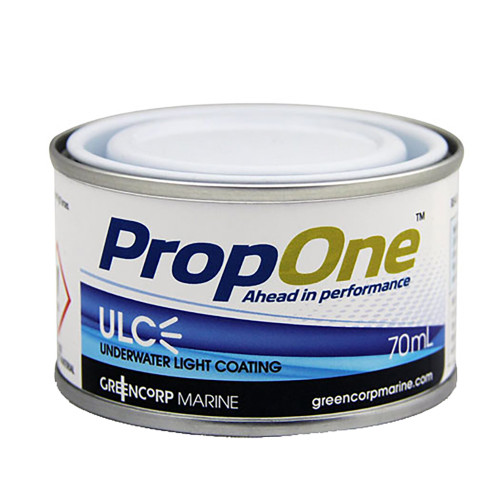
PropOne Underwater Light Coating 70ml | Boat Supply Store
Maintain optimal underwater lighting performance by preventing marine organism adhesion with PropOne Underwater Light Coating (ULC). This 70ml optically clear, foul-release formula creates a slick surface on light lenses and fittings, drastically reducing cleaning time and effort for boaters operating in fouling-prone waters. Suitable for glass, polyamide, brass, and composite materials, its single-coat application ensures ease of use without chemical biocides.
Key Features
- Optically Clear coating ensures maximum light transmission.
- Foul-Release surface prevents strong adhesion of marine organisms.
- Minimal Maintenance required for underwater lighting systems.
- Simple, One-Coat Application streamlines maintenance tasks.
- Versatile Application on glass, polyamide lenses, brass, and plastic/composite fittings.
- Environmentally Friendly formulation avoids chemical poisons.
- Reduces Cleaning Time significantly compared to untreated surfaces.
- Maintains Light Performance by preventing obscuration from growth.
Specifications
| Product Specifications | |
|---|---|
| Brand | PropOne |
| SKU | CWR108377 |
| Volume | 70ml |
| MPN | 2059 |
| Lens Compatibility | Glass, Polyamide |
| Fitting Compatibility | Brass, Plastic/Composite |
Who This Is For
Boat owners and marine professionals requiring a non-toxic, easy-to-apply solution to maintain the clarity and functionality of their underwater lights. Ideal for those seeking to minimize maintenance cycles while adhering to environmentally conscious practices.
How It Compares
| Feature | PropOne Underwater Light Coating 70ml | Competitor |
|---|---|---|
| Product Type | Foul-Release Coating | Antifouling Paint |
| Primary Application | Underwater light lenses and fittings | Boat Hulls, Propellers, running gear |
| Mechanism of Action | Foul-release (prevents strong adhesion) | Biocide release |
| Environmental Impact | Non-toxic, no chemical poisons | Contains biocides |
| Optical Clarity | Optically clear | Opaque |
| Volume | 70ml | 1 Gallon, 1 Quart |
Common Concerns Answered
How durable is PropOne ULC against heavy marine growth?
While PropOne ULC's durability can vary with localized fouling pressure and specific water conditions, its foul-release mechanism significantly reduces the effort required for removal when reapplication is eventually needed. Periodic reapplication is recommended for optimal, consistent protection.
Is reapplication of PropOne ULC a difficult process?
Reapplication of PropOne ULC is designed to be straightforward. Ensuring proper surface preparation and application is key to its performance, but the process itself remains a simple, single-coat application, making periodic upkeep manageable.
Will PropOne ULC perform as well as traditional antifouling paints?
PropOne ULC utilizes a different, environmentally friendly mechanism. Instead of biocides, it creates a slick surface preventing strong adhesion, which leads to easier cleaning. While traditional paints rely on leached chemicals, ULC offers a non-toxic alternative focused on preventing settlement and simplifying removal.
Frequently Asked Questions
How does PropOne ULC prevent marine growth?
PropOne ULC creates a low-surface-energy, foul-release coating. This slick surface prevents marine organisms like barnacles and algae from adhering strongly, allowing them to be easily wiped away.
What surfaces can PropOne ULC be applied to?
PropOne ULC is suitable for application on glass lenses, polyamide lenses, brass fittings, and plastic or composite light housings.
How is PropOne ULC applied?
The application process is a simple, one-coat application. Proper surface preparation, including ensuring the surface is clean and dry, is crucial for optimal performance.
How easy is it to remove marine growth after applying PropOne ULC?
Marine growth that does adhere can typically be removed with minimal effort using a soft sponge or a gloved hand, significantly reducing scrubbing time.
Is PropOne ULC environmentally harmful?
No, PropOne ULC is environmentally friendly. It does not utilize chemical poisons or biocides to prevent marine growth; instead, it relies on a physical foul-release mechanism.